

Is There Uber in Zimbabwe?
Uber does not operate in Zimbabwe, and there are no immediate signs that it plans to.
That might sound like a problem if you’re used to opening one app and getting a ride anywhere in the world, but in practice, getting around Harare, Bulawayo and Victoria Falls is straightforward.
Zimbabwe has its own thriving ride-hailing scene, led by Bolt, inDrive and a homegrown newcomer called Tap & Go, alongside local players who paved the way before the international names arrived.
This guide walks through exactly which apps work, how locals and drivers actually expect to be paid, and what changes once you leave the capital for smaller towns like Victoria Falls.
One thing worth flagging early: if you search app stores for “Uber” in Zimbabwe, you may come across an app called Uberzim. Despite the name, it has no connection to Uber Technologies Inc., the global company. It’s an independently registered Zimbabwean ride-hailing venture that has simply adopted a similar name and branding. It’s not the Uber you know, and you shouldn’t expect Uber’s global support, pricing or driver standards.
If your goal is genuinely to use Uber, the honest answer is that you can’t, not in Zimbabwe, at least for now.
The Top Ride-Hailing Apps in Zimbabwe
Bolt
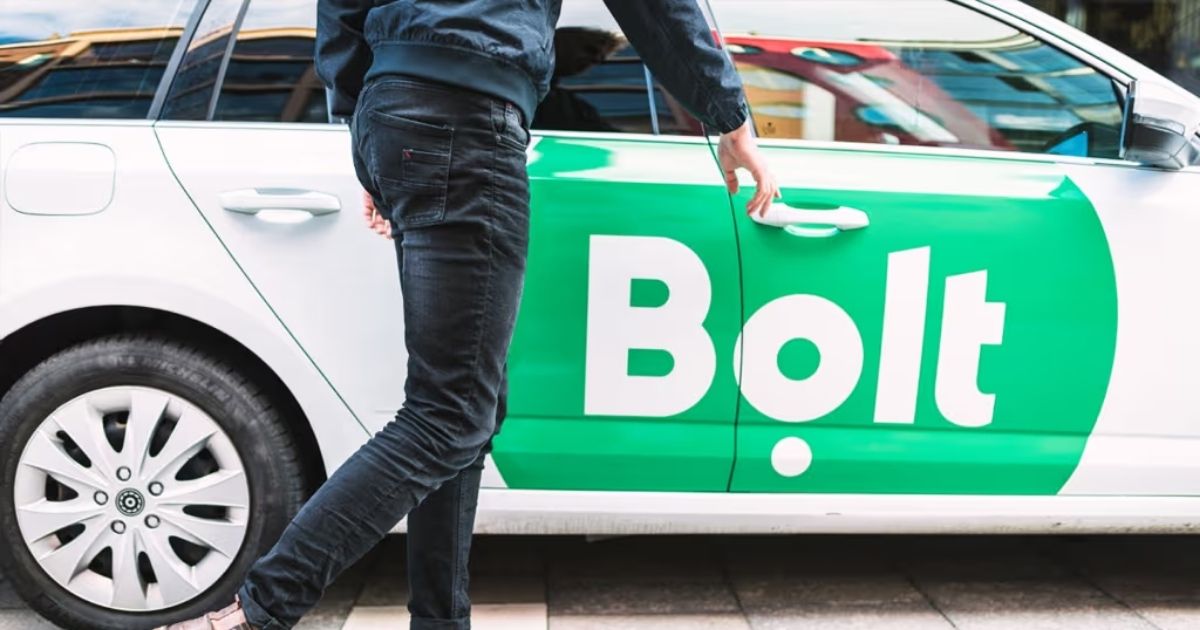
Bolt is the closest thing Zimbabwe has to a familiar international ride-hailing experience, and for many tourists it’s the natural first download.
The Estonian company launched in Harare in 2024, following earlier expansions into South Africa and Zambia, and it has built up a solid base of drivers in the capital since then.
The interface will feel instantly recognisable if you’ve used Bolt or Uber elsewhere: you enter your destination, get an upfront fare estimate, and are matched with a nearby driver.
There’s no haggling and no guesswork about the price before you commit, which makes it a comfortable entry point if this is your first ride-hailing experience in the country.
Its strongest coverage is in Harare, so treat it as your default in the capital rather than assuming the same density of drivers in smaller towns.
inDrive
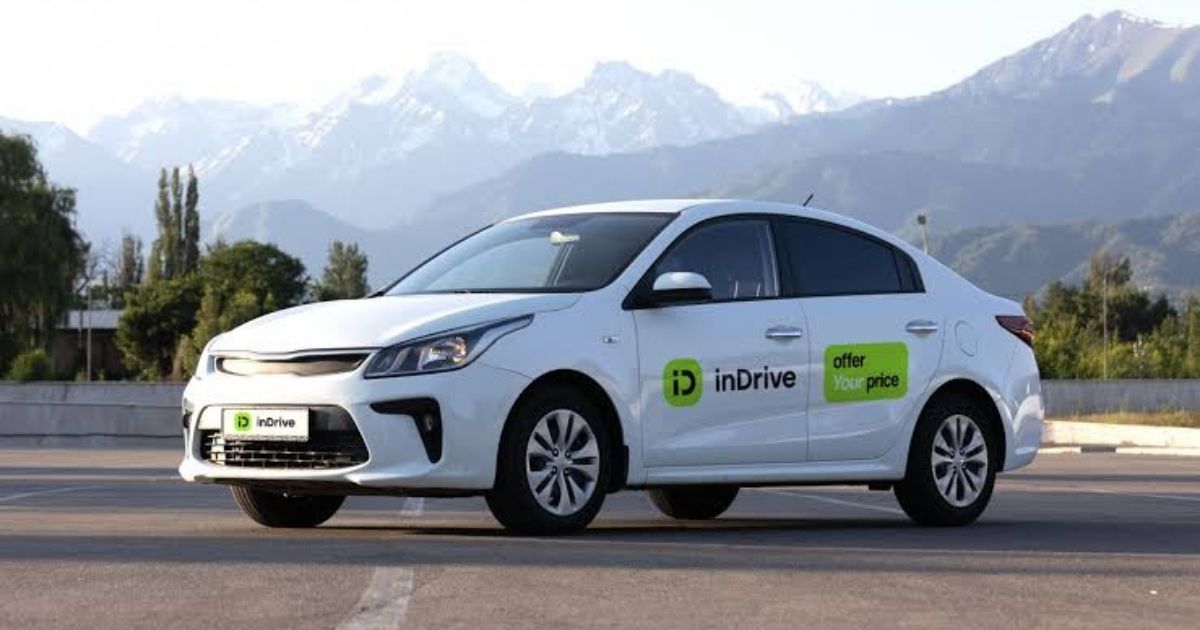
inDrive is arguably the most useful app for visitors anywhere in Zimbabwe, and it has a genuinely different model worth understanding before you arrive.
Rather than the app setting a fixed algorithmic price, you propose a fare for your trip and nearby drivers can accept it, counter it, or ignore it.
It rewards a bit of local knowledge: if you have a rough sense of what a similar trip costs (ask your hotel, or check what a comparable route cost a fellow traveller), you’ll avoid both overpaying out of unfamiliarity and offering so little that no driver takes the job.
The good thing is that it will give you a recommended fare for the distance, so you will have a rough idea about the price you should offer for a ride.
inDrive entered Zimbabwe in Harare in 2023 and expanded to Bulawayo shortly after, and it now has the widest driver network of any app operating in the country, urban and semi-urban alike.
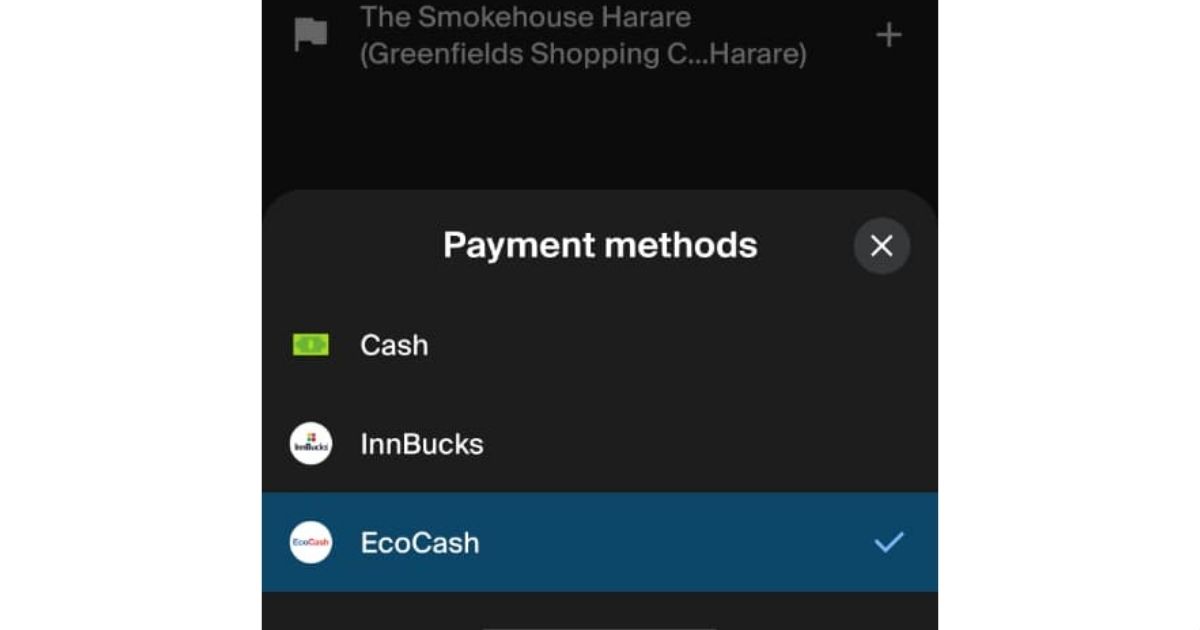
It has also rolled out in-app integration with EcoCash and InnBucks, Zimbabwe’s two largest mobile money platforms, so you can now settle a fare directly through the app rather than relying purely on cash at the end of the trip.
Many Zimbabweans and long-term expats still consider it their default app, and that cashless option makes it a more comfortable choice for tourists than it was previously.
Tap & Go
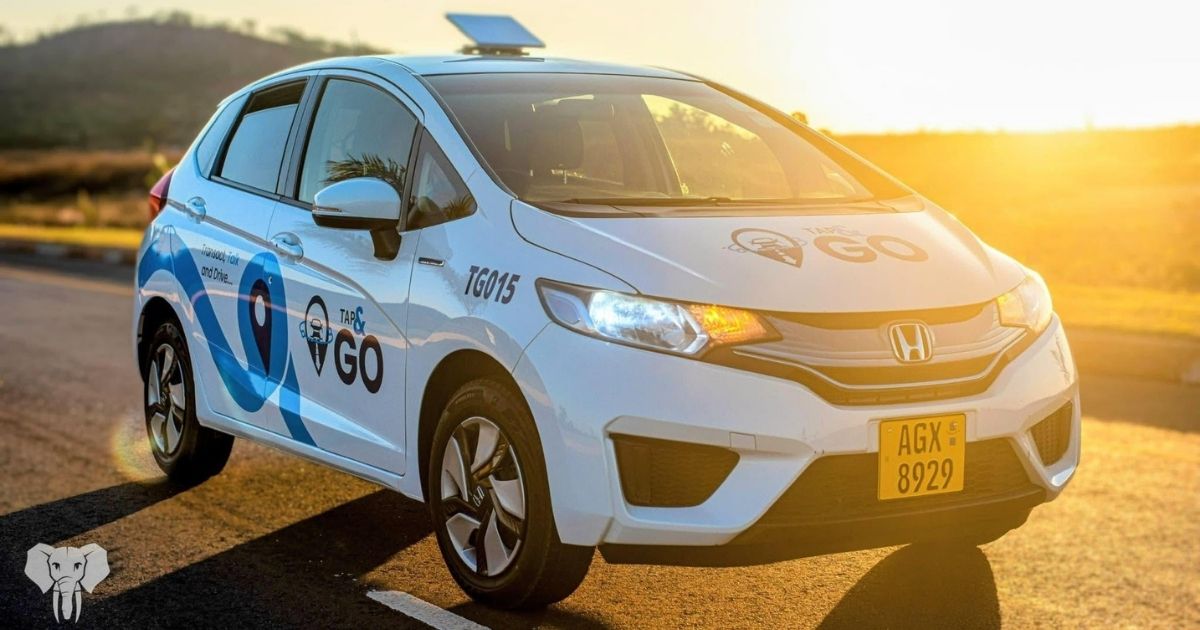
Tap & Go is a locally built platform that has quickly carved out a reputation as the most tourist-friendly option on this list, and its feature set genuinely stands out.
All vehicles in its fleet run on Starlink satellite Wi-Fi, so you can stay connected even on routes where mobile data drops out, which is useful if you’re trying to keep a map open or message ahead to your accommodation.
Drivers go through a KYC (know-your-customer) verification process before joining the platform, which adds a layer of accountability that isn’t guaranteed elsewhere.
The app also runs on a wallet system, letting you top up credit and earn points on completed trips rather than settling purely in cash each time.
It’s newer than Bolt or inDrive and still building out its driver base, so availability can be patchier outside peak times, but it’s worth having installed alongside the other two.
Other Names You Might Encounter
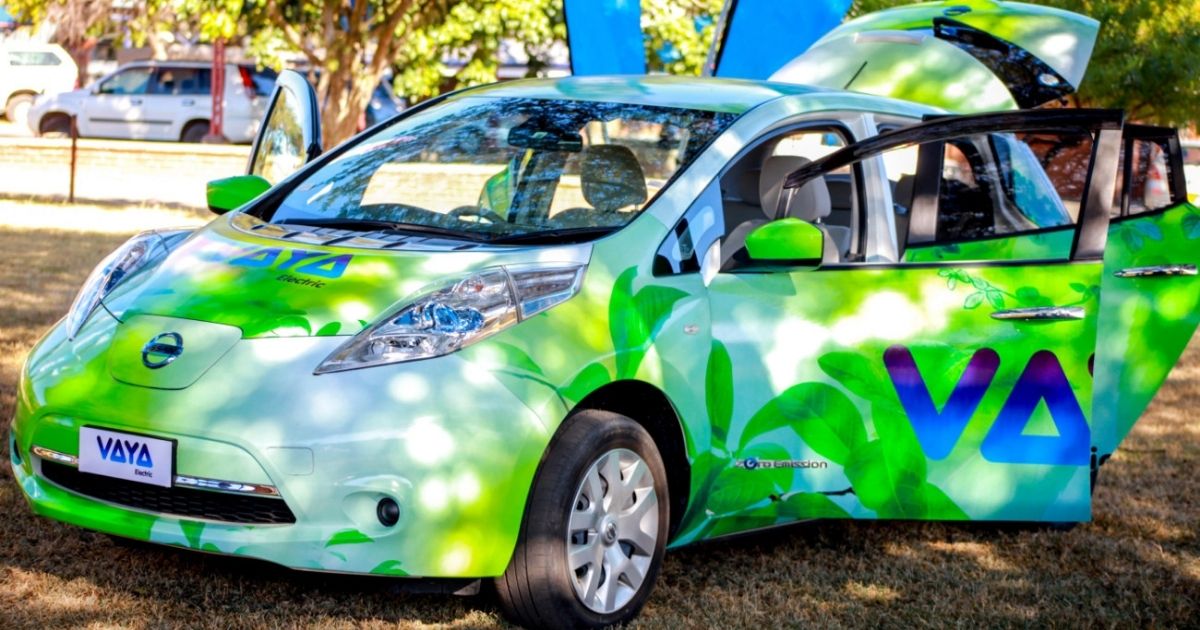
Two older local services, Vaya Africa (run by telecoms group Econet Wireless) and Hwindi, were operating in Zimbabwe’s ride-hailing space well before Bolt or inDrive arrived, and you may still see their branding on cars or hear locals mention them.
Both are worth having as backups, particularly Vaya, which integrates with EcoCash, Zimbabwe’s dominant mobile money platform.
Coverage and driver numbers for these older apps have become less consistent since the newer entrants arrived, so treat Bolt, inDrive and Tap & Go as your primary three and the rest as bonus options if one of them comes up empty.
How to Pay Your Driver
This is where Zimbabwe still differs somewhat from ride-hailing elsewhere, though the gap has narrowed.
inDrive now supports EcoCash and InnBucks payment directly within the app in Zimbabwe, so you can pay a fare without handling cash at all if you’ve topped up those wallets beforehand.
That said, cash remains widely used in practice, as plenty of drivers still prefer it. A direct EcoCash transfer arranged on the spot is also an option, so it’s worth treating the in-app option as a convenience rather than something to rely on exclusively.
Tap & Go’s own wallet system works similarly, letting you top up in advance and pay cashlessly through the app.
Bring US dollars in small denominations regardless, ideally $1 and $5 notes. Drivers very rarely carry change for larger bills, and being stuck negotiating change at the roadside is a frustrating way to end a ride, particularly if you end up paying in cash for any reason.
Zimbabwe operates a dual-currency system: the Zimbabwe Gold (ZiG) is legal tender and used for everyday local transactions, but the US dollar remains dominant in tourism, hospitality and, by extension, most ride-hailing.
You don’t need to acquire ZiG specifically for taxi fares, though you may occasionally receive a small amount as change.
Older, torn or heavily marked USD notes are sometimes refused, so where possible, bring bills in reasonable condition.
Airport Transfers & Geographic Limits
Your experience with these apps will depend heavily on where in the country you land.
At Robert Gabriel Mugabe International Airport in Harare, hailing a Bolt or inDrive is genuinely one of the easiest and often cheapest ways into the city, considerably more transparent than negotiating with the touts who sometimes approach arriving passengers before they’ve even reached the terminal exit.
Simply request your ride from inside the terminal or arrivals area once you have data or Wi-Fi, and wait at the designated pickup point rather than accepting an unsolicited offer from someone who approaches you first.
Victoria Falls tells a different story. The town itself is small enough that most attractions, restaurants and shops sit within easy reach of the main hotels, and the standard ride-hailing apps have a far thinner presence there than in Harare or Bulawayo.
Most visitors instead rely on hotel-arranged shuttles, which many lodges run to and from the airport and the Falls entrance as a matter of course, or on a small number of trusted local taxi drivers who work regularly with the tourism trade and are often recommended directly by accommodation staff.
It’s a more personal, relationship-based system than app-based hailing, and it works well once you understand that’s how it functions, rather than expecting Bolt or inDrive to have Harare-level coverage on arrival.
Connectivity & Safety Tips
Every one of these apps depends on active mobile data to function, which is easy to forget until you’re standing outside your hotel with no signal and no way to request a ride.
Download and set up whichever apps you plan to use, including verifying your phone number, while you still have hotel Wi-Fi, rather than leaving it until you’re already trying to leave.
Getting a local SIM when you land is a great idea as this will not only help with connectivity, but will also give you access to some of the local mobile money platforms.
On safety, using a tracked, app-based ride is a meaningfully better choice than hailing an unmarked car on the street, particularly at night.
Licensed metered taxis in Zimbabwe are labelled as such and come in different colours and names with a roof light and carry visible taxi registration plates. Plenty of unlicensed vehicles, known locally as mushikashika, also tout for passengers, especially around transport hubs and tourist areas.
These carry no tracking, no fare transparency and no accountability if something goes wrong.
Sticking to Bolt, inDrive or Tap & Go, all of which show you the driver’s details and let you share your live trip with someone else before you set off, removes most of that risk entirely.
Quick Answers
Does Uber operate anywhere in Zimbabwe?
No. Uber has no operations in Harare, Bulawayo, Victoria Falls or anywhere else in the country as of 2026.
What’s the Uberzim app I found in the App Store?
It’s an independent Zimbabwean company that has adopted a similar name. It is not affiliated with Uber Technologies Inc.
Which app should I download first?
For most tourists, inDrive offers the best combination of coverage and fair pricing, with Bolt as a familiar backup in Harare and Tap & Go worth adding for its Starlink connectivity and verified drivers.
Can I pay by card or mobile money?
Not by card, but inDrive now supports EcoCash and InnBucks directly in the app in Zimbabwe, and Tap & Go has its own wallet system. Cash is still worth carrying as a backup, since not every driver leans on the cashless option in practice.
Final Word
If you’re only downloading one app before you land, make it inDrive, it has the broadest coverage of drivers across the country and the negotiation model works in your favour once you know roughly what a fair price looks like.
Add Bolt for Harare and Tap & Go if you want the added comfort of Starlink Wi-Fi and verified drivers, and keep a stock of small US dollar notes in your bag regardless of which app you’re using.
Once you land in Victoria Falls, switch your expectations to hotel shuttles and trusted local drivers rather than app density.
For more on handling money once you’re on the ground, see our full currency guide covering the ZiG, the US dollar and what to expect at the till.
And if you haven’t sorted out data before you land, our guide to eSIMs and staying connected in Zimbabwe covers exactly what you need to get these apps working from the moment you land.