
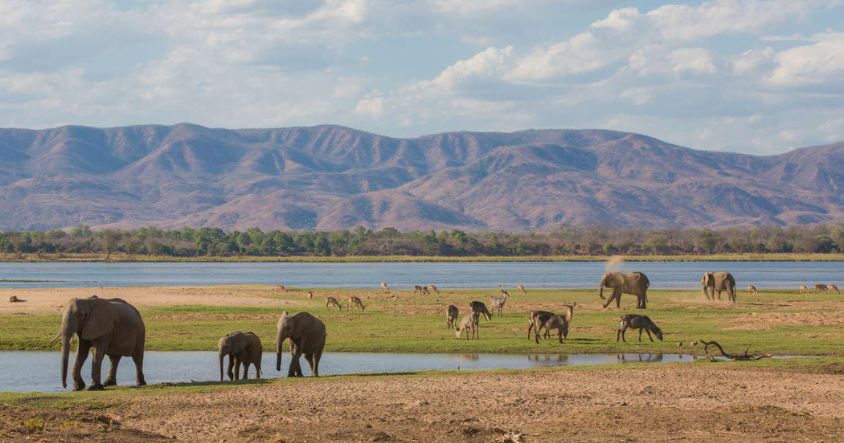
Ask any serious safari traveller to name the one African park that changed how they think about wilderness, and a disproportionate number will say Mana Pools National Park.
Not the Serengeti, with its vast migrations and tourist infrastructure. Not the Okavango Delta, for all its water and birds. Not Kruger, which is excellent, efficient, and visited by millions. Mana Pools. A 2,196 square kilometre stretch of Zimbabwe’s far north that some people have never heard of, and that those who have visited tend to struggle to describe without sounding like they are exaggerating.
The park occupies a section of the lower Zambezi valley where the floodplain broadens into a wide, flat expanse of ancient river terraces, albida woodland, and four permanent pools left behind by the meandering of the Zambezi over millennia.
The name Mana means four in Shona, referring to those pools. The Zambezi forms the northern boundary. To the south, the land rises steeply to the escarpment, a wall of rock climbing over a thousand metres from the valley floor and visible on clear mornings as a dark, jagged line above the treeline. Between the river and the escarpment is one of the last genuinely wild places left in southern Africa.
It was inscribed as a UNESCO World Heritage Site in 1984. It was also designated a Ramsar wetland of international importance in 2013.
These are not empty designations. They reflect something real about the ecological value of what exists here and about the deliberate choice that has been made to keep it that way.
A Park That Works Differently
Most national parks in Africa operate on a broadly similar model. You get in a vehicle. You drive on designated roads. You look. You photograph. You return to camp. It is a formula that works well and can deliver extraordinary wildlife sightings, but it is ultimately a passive experience, one in which the visitor observes from a sealed environment and the wildlife is the spectacle.
Mana Pools does not work this way.
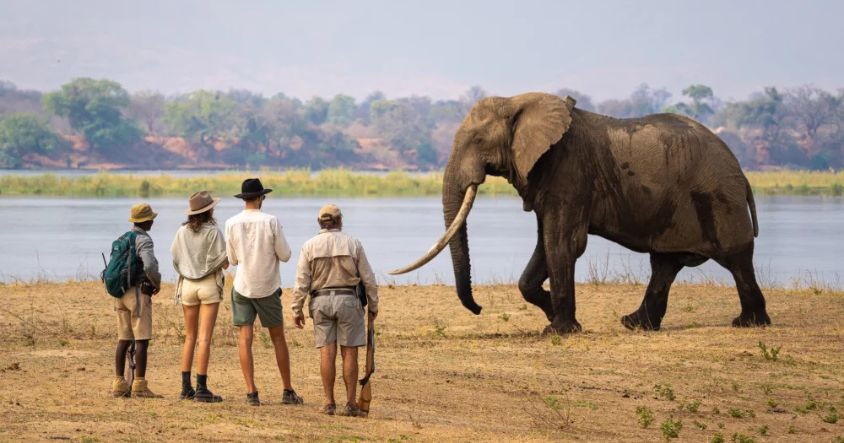
Walking safaris here are not a supplementary activity offered alongside game drives. They are the point. Mana Pools has been a walking concession since the park’s earliest days, and the culture that has grown up around this, the guides it has produced, the relationship between humans and wildlife that has developed over decades, is unlike anything you will find elsewhere on the continent.
The walking happens in open albida woodland along the Zambezi terraces, terrain where visibility is good and encounters with wildlife are conducted on foot, at eye level, with nothing between you and the animal you are watching except open air and the quiet authority of your guide.
Elephants here have spent years in the presence of walking guides and have a calm familiarity with humans on foot that makes proximity possible in ways that are simply not replicable in parks where all interaction happens from vehicles.
Buffalo, lions, leopards, wild dogs, and hippos are all encountered on foot at Mana Pools, by guides who know this landscape and these animals in a way that takes a lifetime to develop.
Importantly, it is also one of the few national parks in Africa where solo, unescorted walking is permitted for visitors with appropriate experience who obtain a permit at Nyamepi reception. This is an extraordinary privilege for those qualified to use it. It is not for first-timers.
On the Water
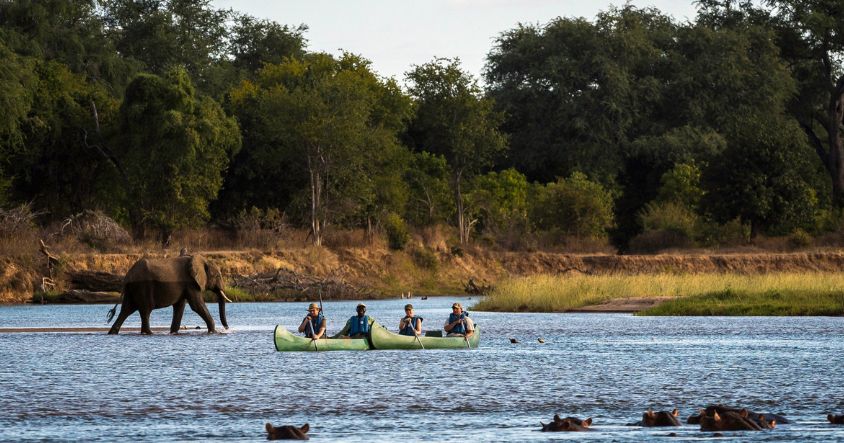
The Zambezi at Mana Pools is not the thundering, turbulent river it becomes downstream at the Victoria Falls. Here it is wide, muscular, and deceptively calm, moving steadily between sandbanks lined with riverine forest.
Canoe safaris on this stretch are among the most celebrated wildlife experiences in southern Africa, not for speed or adrenaline, but for the particular intimacy of being on the water at the same level as the animals that come to drink, wade, and swim.
Multi-day canoe trails cover the river in two-man canoes with a guide, camping on the banks at night and paddling through pods of hippos, past crocodiles stretched on the sandbars, and alongside elephants crossing in single file.
The sounds of the Zambezi at night, from inside a tent on the riverbank with no fence or wall between you and whatever is moving in the darkness beyond, produces the kind of alertness that urban life has no use for but that feels, in context, entirely right.
Day canoe trips are also available for those who want the river experience without the multi-night commitment.
The guides who lead these excursions hold separate canoe safari licences in addition to their professional guide credentials, and the best of them read the river the way others read a landscape, knowing where the hippo pods are resting, where the crocodiles haul out, and where the elephants are most likely to be moving through the water.
Combined with a walking safari stop on a sandbank or riverine island, a canoe day in Mana Pools is a complete safari experience in itself.
Tigerfish are abundant in the Zambezi at Mana Pools, and catch-and-release fishing is a popular activity for those whose interests run in that direction.
The Wildlife in Mana Pools National Park
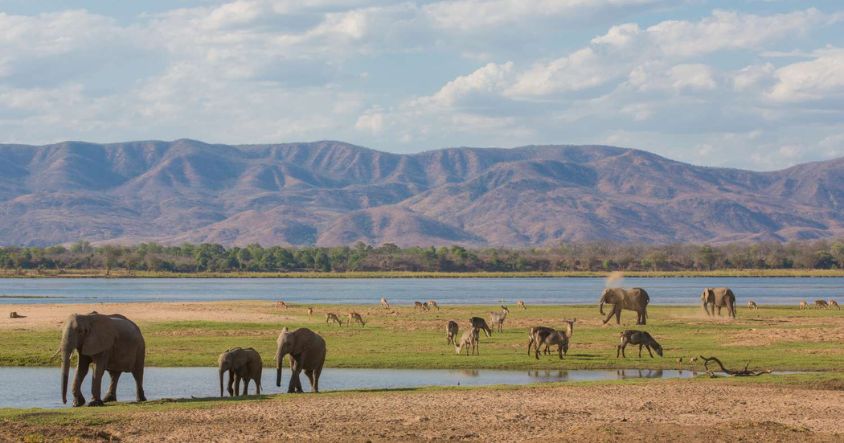
Mana Pools carries what Zimbabwe Parks and Wildlife Management Authority officially describes as the Big Four: lion, leopard, elephant, and buffalo.
Rhinos disappeared from the park by the mid-1990s, when a population that had once numbered around 500 was decimated by poaching and the survivors were removed for protection elsewhere. Their absence is the one significant gap in an otherwise extraordinary wildlife inventory.
The elephants are the defining presence. The bulls that have spent years on the Mana floodplain have developed a behaviour found almost nowhere else in Africa, standing on their hind legs to reach the seed pods hanging high in the Faidherbia albida trees.
It is a strategy that requires balance, coordination, and learned technique. The most famous of these bulls, a large male named Boswell, became widely known for this behaviour and for teaching it by example to younger bulls in the area. Watching a five-tonne animal stand upright against a tree twelve metres in front of where you are sitting requires a suspension of ordinary expectations that summarises what Mana Pools does best.
Lion sightings are reliable throughout the dry season, with prides concentrated along the floodplain as prey gathers near the permanent water of the pools and the river. Leopards are seen regularly along the riverine vegetation, particularly in the early morning and at dusk.
Wild dogs are among the most sought-after sightings in all of African safari travel, and Mana Pools is one of the best places in Zimbabwe to see them.
Packs use the open woodland and floodplain as hunting grounds during the dry season, and their hunts, fast, coordinated, and entirely without mercy, are among the most intense wildlife spectacles the park offers.
The hippo population in Mana Pools is the largest in Zimbabwe. Long Pool, the biggest of the four permanent pools and stretching over six kilometres, holds a permanent, densely packed population of hippos whose grunting and splashing provides an around-the-clock soundtrack to camps situated nearby. Nile crocodiles are similarly abundant.
The birdlife across the park numbers over 380 recorded species, with the albida woodland holding a particular variety of raptors, rollers, and migratory species during the wetter months.
The Seasons, Honestly Described
Mana Pools is a seasonal destination and the timing of a visit shapes the experience entirely.
May to July is the opening of the dry season. The park is quieter at this stage, the landscape still retains some green from the preceding rains, and wildlife begins moving towards the river as interior water sources dry up. Temperatures are comfortable, occasionally cool in the early mornings. Wild dogs are often denning in June, and sightings of adults moving between dens and hunting grounds can be excellent. For those who prefer a more peaceful park with slightly better prices, this is a good window.
August and September are when Mana Pools is at its most intense. The dry season is well-established, vegetation is open and visibility is high. The permanent pools and the river are the only water sources drawing animals from across a wide area, and the concentrations of wildlife along the floodplain reach their peak. Game drives, walks, and canoe trips in these two months produce the highest density of sightings and the most dramatic predator-prey dynamics. Book well in advance for this period, as the better camps fill months ahead of the season.
October delivers the finest wildlife viewing of the year at the cost of extraordinary heat. It is known colloquially among Zimbabwe’s bush community as suicide month, a description that requires no further elaboration. Temperatures regularly exceed 40 degrees Celsius in the valley. The wildlife viewing is genuinely remarkable, with distressed animals concentrated around the last water and predators exploiting the situation with efficiency. For those who can tolerate the heat and who prioritise wildlife density over comfort, October has few rivals. For everyone else, August and September offer most of the same spectacle at considerably lower temperatures.
November onwards the rains arrive and most camps close. Roads become impassable for vehicles that are not serious four-wheel drives, and the Zambezi begins rising over its banks. A handful of lodges in elevated, inland positions remain open into November, but the classic Mana Pools experience of floodplain walking and river canoeing is effectively unavailable until the following season.
Getting There
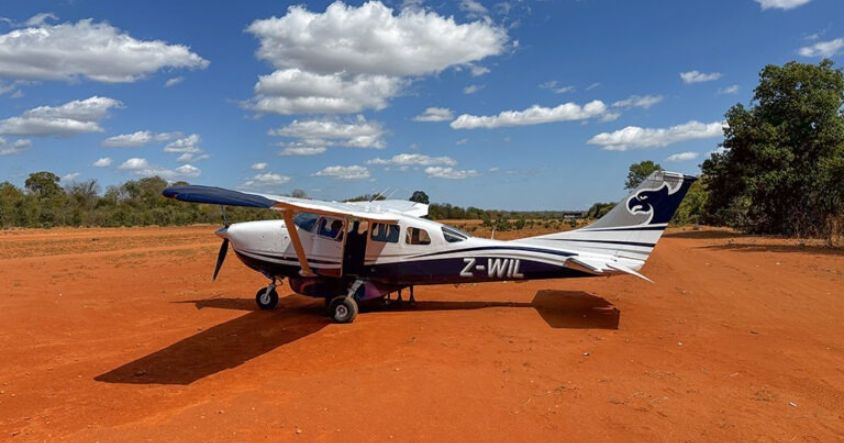
Mana Pools is remote. This is not a complaint, it is part of the offer. But it requires planning.
The most practical approach for most international visitors is to fly in by light aircraft. Charter flights connect Mana Pools with Harare, Kariba, and Victoria Falls, taking between 45 minutes and an hour and a half, depending on the departure point. The flight over the escarpment and into the valley, with the Zambezi spreading out below and the floodplain visible in both directions, is itself worth the fare.
Driving from Harare is possible and takes approximately five to six hours, the last 70 kilometres on a dirt road that requires a four-wheel drive vehicle and descends the escarpment into the valley. The road is manageable in good conditions but demands respect, particularly for drivers unfamiliar with African bush roads. Most camps and lodges strongly recommend fly-in access and will arrange transfers from whichever airport suits your itinerary best.
An entry permit is required and is obtainable at Marongora Gate, approximately 310 kilometres from Harare, which is the checkpoint at the top of the escarpment before the descent into the valley.
Where to Stay
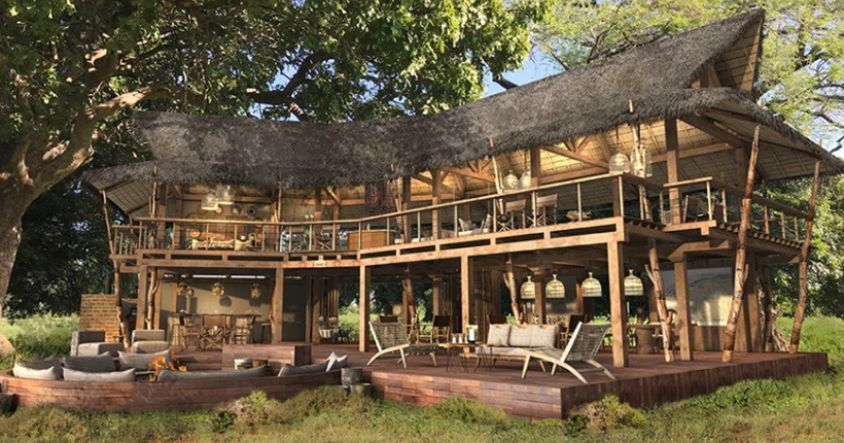
The accommodation landscape at Mana Pools is divided between ZimParks camps, where visitors stay in basic facilities and do their own activities, and private lodges and tented camps that offer the full guided experience.
Nyamatusi Camp and Nyamatusi Mahogany sit on the eastern bank of the Zambezi and are among the most luxurious options in the park, offering walking safaris, game drives, and canoe trips with resident guides of considerable reputation.
Kanga Bush Camp sits deep in the interior of the park overlooking a pan that, during the dry season, becomes the only water source for a wide surrounding area. The diversity and density of wildlife at the pan is extraordinary, and guests have reported full days spent sitting at the camp without needing to go anywhere at all.
Ruckomechi and its smaller sister camp Little Ruckomechi operate on a private concession on the western boundary of the park, run by Wilderness and offering the full range of walking, canoeing, and game drive activities with guides who know this particular corner of the park in considerable depth.
Vundu Camp and Little Vundu are owner-run by husband and wife Nick and Des Murray, both professional guides, giving these camps an intimacy and depth of local knowledge that is sometimes harder to find in larger operations.
For those travelling on a tighter budget, ZimParks camping sites within Mana Pools range from basic communal camps with shared ablutions to exclusive unfenced sites where you have the ground to yourself and the surrounding bush to deal with accordingly. Walking permits are purchasable at the Nyamepi reception and are priced per day.
Who Mana Pools Is For
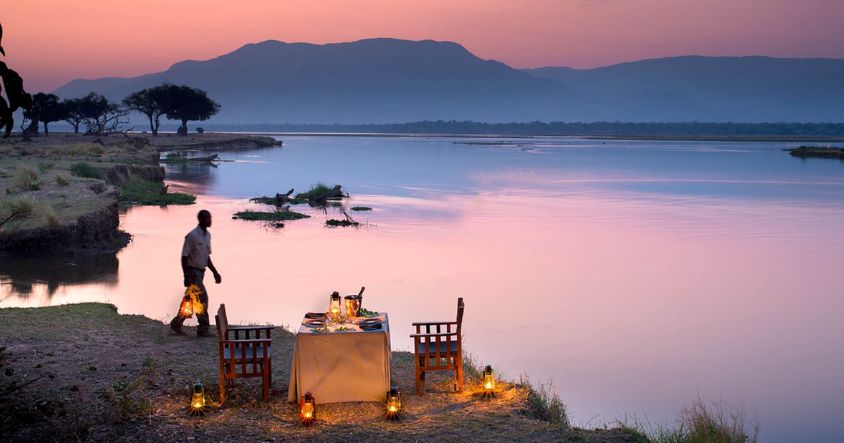
There is a version of safari travel in which comfort, certainty, and convenience are the primary considerations. That version of safari has its place, and it exists in abundance across southern Africa.
Mana Pools National Park is not that version. The camps are tented, mostly unfenced, and sometimes extremely basic. The heat in the late season is serious. The drive in is long and rough if you are not flying. The wildlife is not curated or guaranteed. You will sleep with lions calling nearby, with hippos on the riverbank outside your tent, and with the awareness that the gap between you and the wildest place remaining in Zimbabwe is nothing more than a few metres of canvas.
For experienced safari travellers this is, to a considerable extent, the point. But first-time safari visitors should understand it clearly before booking. Mana Pools rewards those who come to it with patience, genuine curiosity, and the willingness to let the bush work on its own terms and in its own time.
Those who approach it that way tend to leave with the distinct and not entirely comfortable feeling that every safari they take afterwards will be judged against the standard it set.
Zimbabwe Travel Hub, updated May 2026. Most camps operate seasonally from May or June to October or November. Confirm opening dates and availability directly with lodges before booking. Self-drive visitors should verify road conditions before departure.