
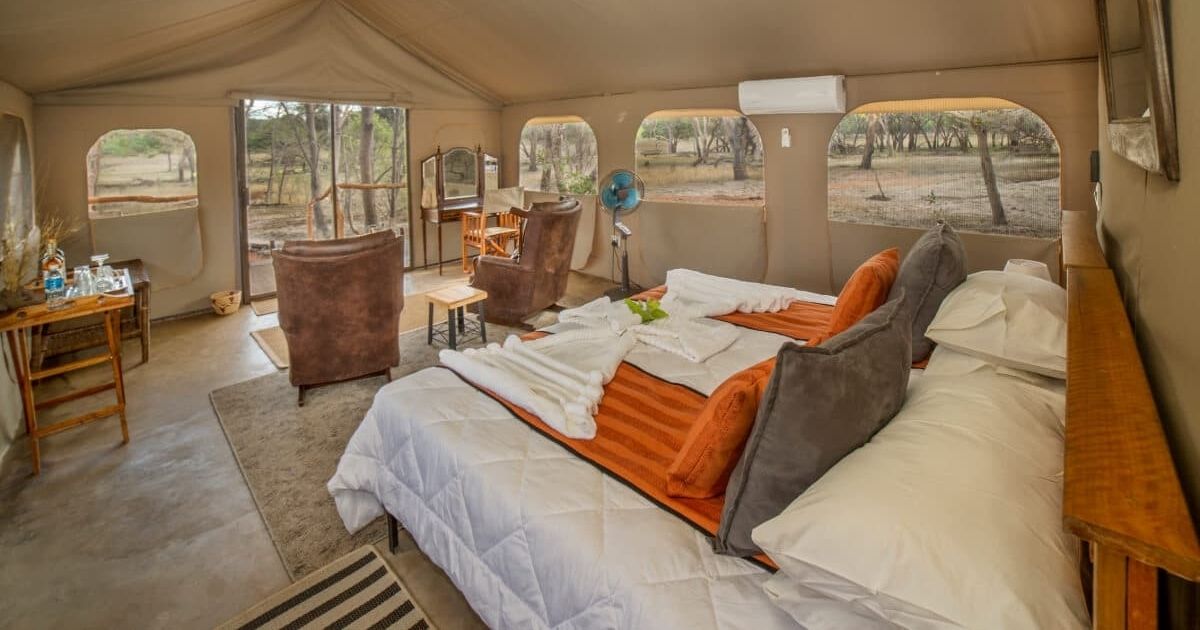
There is a particular kind of magic in falling asleep to the sound of a lion calling across the bush, then waking to coffee delivered to your tent flap and a hot shower waiting behind canvas walls.
This is the appeal of glamping in Zimbabwe, a country that has spent decades perfecting the art of putting guests close enough to the wilderness to feel it, without asking them to give up a proper bed or a decent glass of wine.
Zimbabwe’s glamping scene stretches from the spray of Victoria Falls to the shores of Lake Kariba, through the elephant-thick woodlands of Hwange and the remote river valleys of Mana Pools.
Unlike a conventional safari lodge, a glamping camp keeps the canvas, the sounds, and the closeness to nature that define camping, while adding the comforts that make a longer stay genuinely restful.
Below is a guide to where to find the best of it, and what to expect when you get there.
What Makes Zimbabwe Such a Strong Glamping Destination
Zimbabwe’s national parks estate is unusually generous for its size, and much of it remains lightly developed by regional standards.
That has kept camps small, concessions private, and wildlife encounters unscripted.
Many of the country’s glamping properties sit on private concessions bordering the parks rather than inside busy tourist corridors, which means guests often have a waterhole, a riverbank, or an entire island to themselves.
The tents themselves have moved well beyond the old canvas-and-camp-bed idea.
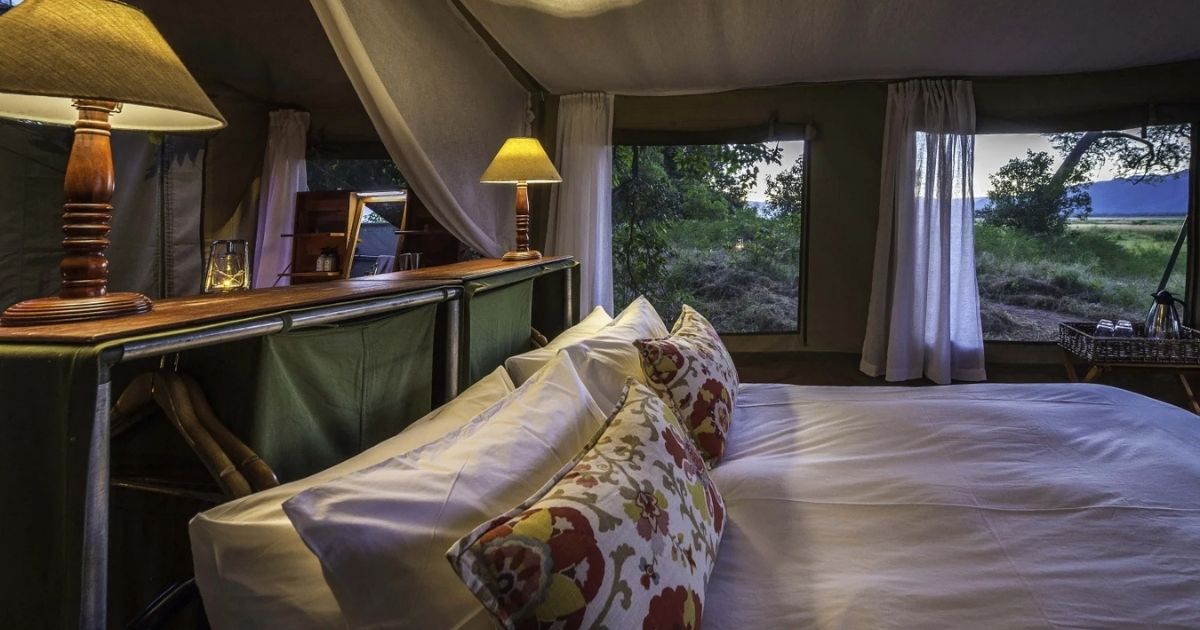
Expect en-suite bathrooms with indoor and outdoor showers, proper beds with quality linen, private decks for watching wildlife, and in some cases plunge pools attached to individual units.
What stays constant is the sense of being genuinely outdoors, with only a layer of canvas between you and the bush.
Victoria Falls and the Zambezi National Park
The area around Victoria Falls offers some of the most accessible glamping in the country, and two very different experiences stand out.
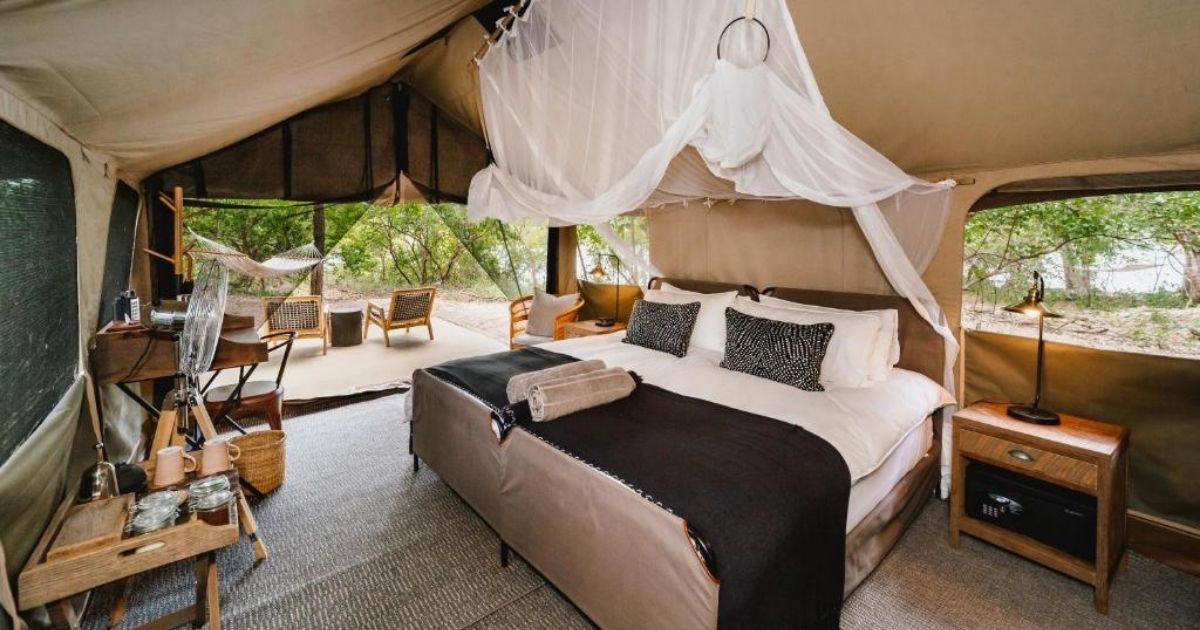
Old Drift Lodge sits within the Zambezi National Park, roughly seven kilometres from Victoria Falls town. The tented suites overlook a stretch of the park frequented by kudu, impala, buffalo, and zebra, with the added draw of birdlife drawn to the riverine vegetation nearby. It is an easy add-on for travellers already spending time at the Falls.
Further upstream, Tsowa Safari Island occupies its own island in the middle of the Zambezi, about 40 kilometres above the Falls and within the Zambezi National Park’s boundaries. Guests reach it by 4×4 and boat transfer, and the payoff is a genuinely secluded camp of just a handful of tents shaded by jackalberry trees and centuries-old baobabs, with canoeing, sundowner cruises, and guided walks among the draws.
Closer to town, properties such as Elephant Camp have built a reputation for pairing tented-suite glamping with easy access to Victoria Falls’ adrenaline activities, from white-water rafting to bungee jumping off the bridge.
Hwange National Park
Zimbabwe’s largest national park, home to some of Africa’s biggest elephant populations, has several private concessions offering excellent tented stays.
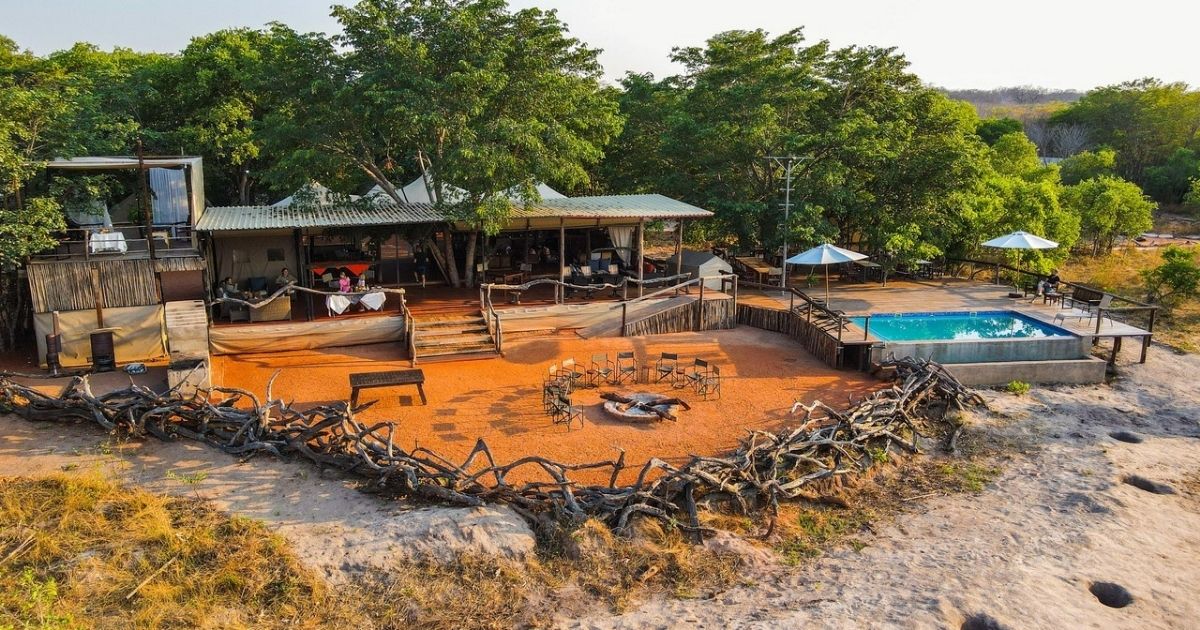
Iganyana Tented Camp sits on a private concession along the Dete Vlei, an ancient riverbed bordering Hwange’s boundary near the park’s main entrance. Its fifteen en-suite tents are arranged around a central deck overlooking the vlei, a natural corridor for wildlife moving through the area, and the camp is a short drive or charter flight from both Victoria Falls and Hwange’s main airport.
Khulu Bush Camp occupies a private concession in the Sikumi Forest Reserve on Hwange’s edge. Built on raised platforms with a thatch-and-canvas finish, the camp overlooks a waterhole that draws large elephant herds, particularly in the dry season, making it a favourite for guests who want wildlife sightings without leaving camp.
Mana Pools National Park
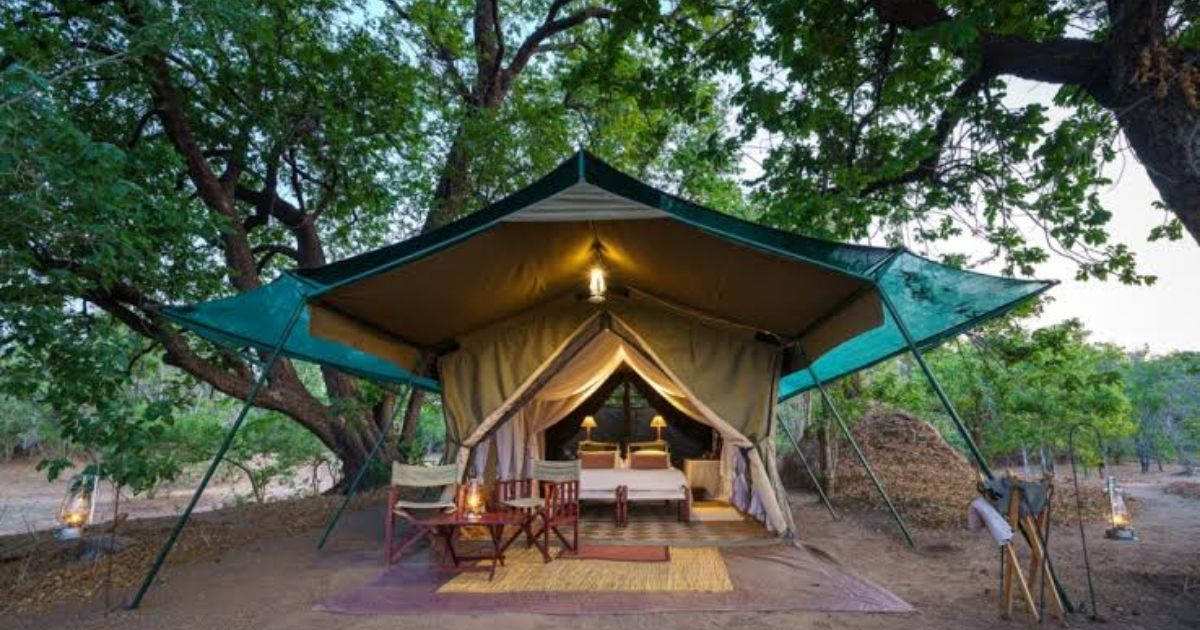
A UNESCO World Heritage Site on the Zambezi’s floodplain, Mana Pools rewards those willing to travel a little further off the beaten track, and its glamping options lean toward the wilder end of the spectrum.
Johns Camp is a semi-permanent tented camp pitched close to the Zambezi River within the park, designed for travellers who want proximity to the wildlife-rich floodplain without sacrificing comfort.
For a more adventurous option, operators running mobile glamping safaris pre-book exclusive campsites at Mana Pools and the dramatic Chitake Springs, moving guests through the bush by 4×4 between fully serviced tented camps, often continuing on to Lake Kariba to finish the trip aboard a houseboat or catamaran.
Lake Kariba and Matusadona National Park
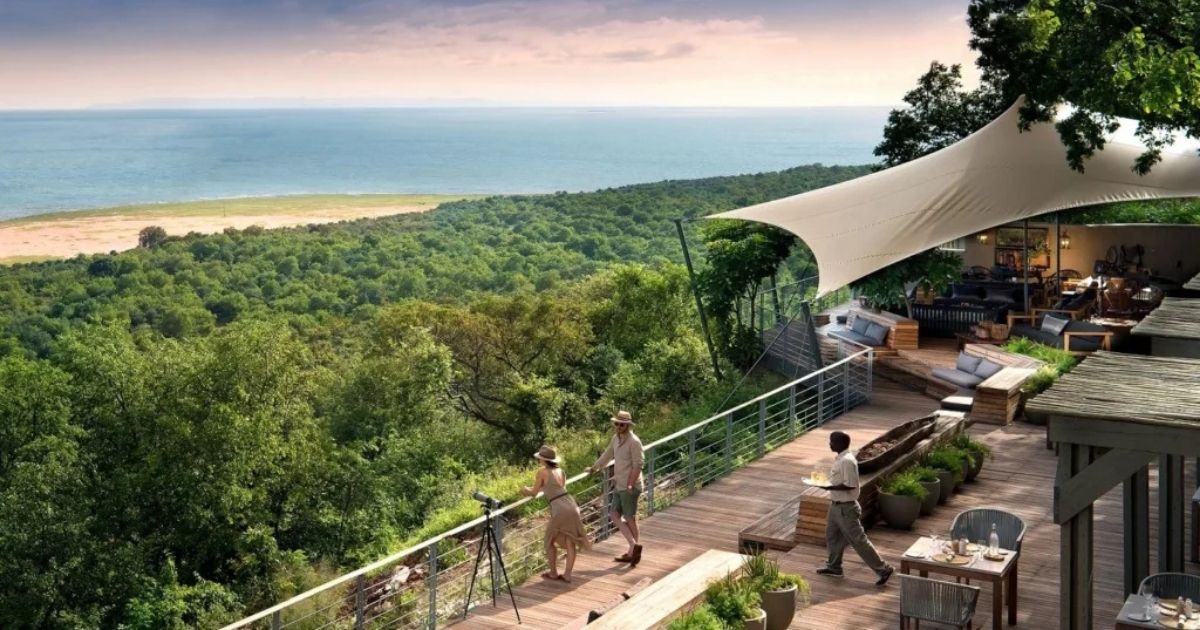
Zimbabwe’s inland sea offers a completely different kind of glamping, built around water rather than open plains.
Musango Safari Camp sits on its own island in Lake Kariba, just off the shoreline of Matusadona National Park. The owner-run camp offers eight tented chalets, including two honeymoon suites with private plunge pools, all facing east across the lake toward the Matusadona mountains. Activities range from game drives and guided walks to tiger fishing and boat safaris, with the added pull of exceptional birdlife along the lake’s drowned forest shoreline.
Gonarezhou and the South-East Lowveld
For a glamping experience at the very top end of the market, the south-eastern lowveld delivers.
Singita Pamushana Lodge operates within the Malilangwe Wildlife Reserve, a 130,000-acre private reserve bordering Gonarezhou National Park. While its villas lean more toward lodge luxury than classic canvas, the property is regularly grouped among Zimbabwe’s finest luxury camping destinations for its remote setting, conservation focus, and unmatched privacy.
What to Expect from a Zimbabwean Glamping Stay
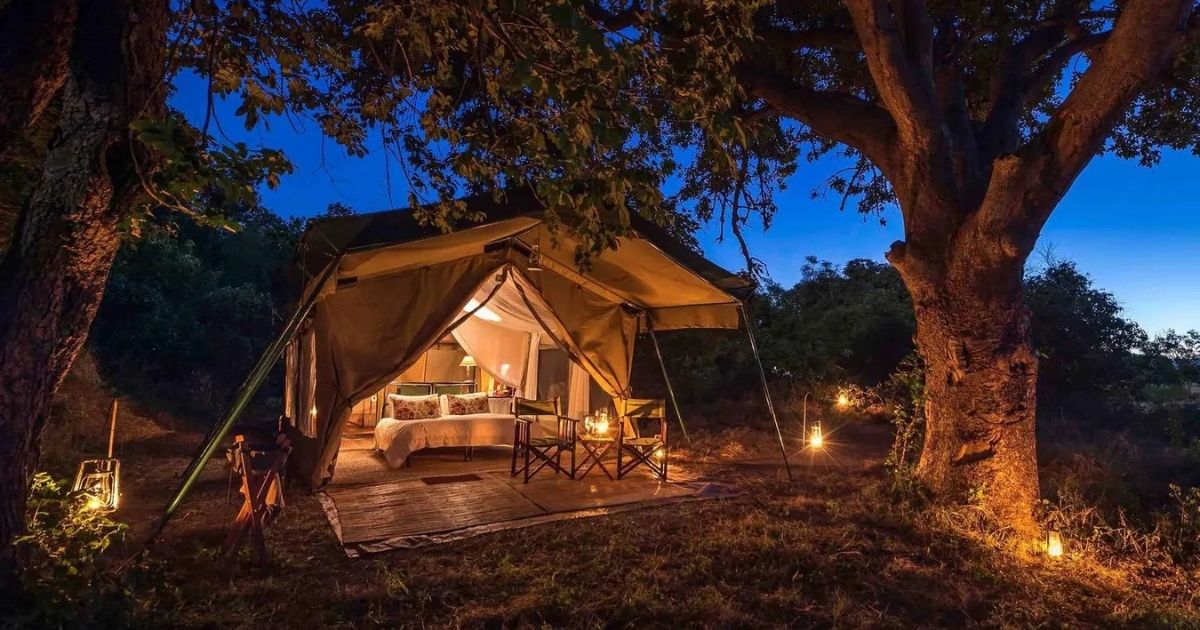
Standards vary by camp and price point, but most tented properties in this category share a few things in common.
Tents are usually raised on decks or platforms, both to keep them dry in the rains and to give guests a clear view over the surrounding bush.
En-suite bathrooms with hot running water are standard even in fairly remote settings, often supplied by solar power or generator.
Meals tend to be served communally, around a fire pit or on an open deck, with many camps growing their own vegetables and sourcing meat and fish locally.
Most camps also include guided activities in their rates, whether game drives, walking safaris, canoeing, or boat cruises, so glamping in Zimbabwe rarely means simply admiring the view from a deck chair.
Wi-Fi tends to be limited or absent by design, a deliberate feature rather than an oversight at many of the more remote camps.
Best Time to Go Glamping in Zimbabwe
The dry season, running roughly from May to October, is the strongest window for glamping in Zimbabwe.
Vegetation thins out, animals concentrate around waterholes and rivers, and roads into remote camps are easier to navigate.
August through October brings the hottest, driest conditions and typically the best game viewing, particularly around elephant-heavy areas like Hwange.
The wet season, from November to April, transforms the bush into lush green scenery and brings excellent birdlife, though some camps close or scale back operations during the heaviest rains in January and February.
Travellers keen on newborn wildlife, dramatic skies, and quieter camps often prefer this window despite the trade-off in game density.
Planning Your Glamping Trip
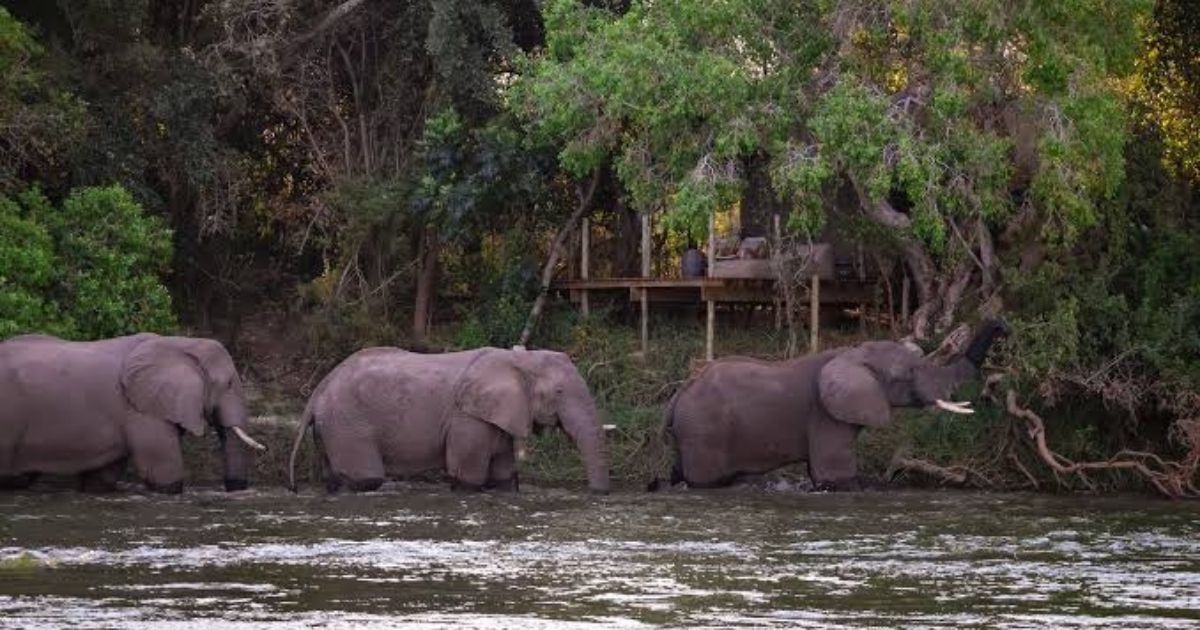
Rates vary considerably depending on location, exclusivity, and season, ranging from a few hundred US dollars per person per night at more accessible camps to well over a thousand dollars at the most exclusive private-island and reserve properties.
Most rates at the higher end include meals, drinks, and activities, so it is worth checking exactly what is bundled before comparing prices.
Access to many camps involves a combination of road transfer and light aircraft charter or boat crossing, particularly for island and river camps like Tsowa and Musango.
Booking well ahead is strongly advised, since the most sought-after camps run small guest numbers by design and fill up quickly during the peak dry season months.
Pack for temperature swings rather than constant heat.
Mornings and evenings can be sharply cold, especially near water and between June and August, so layers matter as much as sun protection.
Neutral-coloured clothing, a good pair of walking shoes, and a reliable pair of binoculars round out the essentials.
Frequently Asked Questions
Is glamping in Zimbabwe safe?
Reputable glamping camps operate with experienced guides, and many rely on unfenced settings by design, which is part of the appeal. Guests are briefed on camp etiquette on arrival and are never left to navigate wildlife encounters alone.
Do glamping camps in Zimbabwe have electricity and hot water?
Most do, typically via solar power or generator, including hot showers and charging points. Wi-Fi is often limited or unavailable, particularly at remote bush and island camps.
Are children allowed at glamping camps in Zimbabwe?
This varies by property. Some camps welcome children of all ages, while others set minimum age limits, often around twelve years, particularly at more intimate or unfenced sites. It is worth checking directly with each camp before booking a family trip.
What should I pack for a glamping safari in Zimbabwe?
Neutral-toned, lightweight clothing for daytime, warm layers for early mornings and evenings, comfortable walking shoes, a hat, sun protection, and binoculars. Most camps offer laundry service, so packing light is generally realistic.
Which is the best region in Zimbabwe for glamping?
It depends on what you are after. Victoria Falls and Hwange suit first-time visitors wanting easy access alongside strong wildlife viewing, while Mana Pools and Lake Kariba reward those seeking a more remote, water-based, or off-grid experience.
Glamping in Zimbabwe offers something increasingly rare: proximity to genuine wilderness without the compromise of true roughing it. Whether it is a tent on the banks of the Zambezi, an island camp on Lake Kariba, or a canvas suite overlooking a Hwange waterhole thick with elephants, the country’s glamping camps prove that comfort and wildness were never mutually exclusive.