
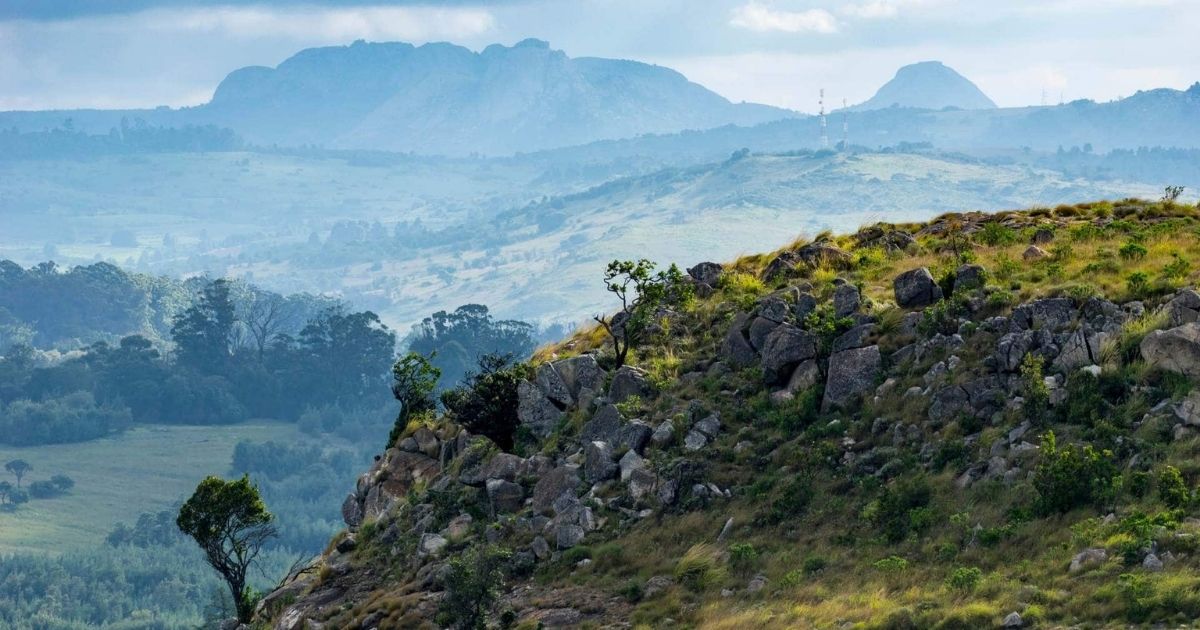
Most people who visit Zimbabwe do not make it to the Eastern Highlands. They come for Victoria Falls, for Hwange, for Mana Pools, and they leave with a version of the country that is extraordinary and entirely legitimate and also, in one significant way, incomplete.
The Eastern Highlands are the part of Zimbabwe that nobody warned you about.
They run for approximately 300 kilometres along the country’s eastern border with Mozambique, a long, irregular spine of mountains, cloud forest, waterfalls, trout streams, botanical gardens, and granite ridgelines that bears almost no resemblance to the Zimbabwe of the safari brochures.
The climate is cool and frequently misty.
The landscape is green for much of the year.
The roads wind upward through tea plantations and pine forests and emerge suddenly onto escarpment viewpoints where the land drops away steeply towards Mozambique, the lowlands visible far below in the warm haze.
Standing on that edge, looking east, you can on very clear days see all the way to the Indian Ocean.
The highlands divide into three distinct mountain ranges, each with its own character and its own reasons to visit: the rolling Nyanga highlands in the north, the mist-drenched Bvumba Mountains in the centre, and the wild quartzite peaks of Chimanimani in the south.
They can be visited independently or, for those with a week to spare, in a single north-to-south journey that constitutes one of the finest road trips in southern Africa.
Mutare: The Gateway
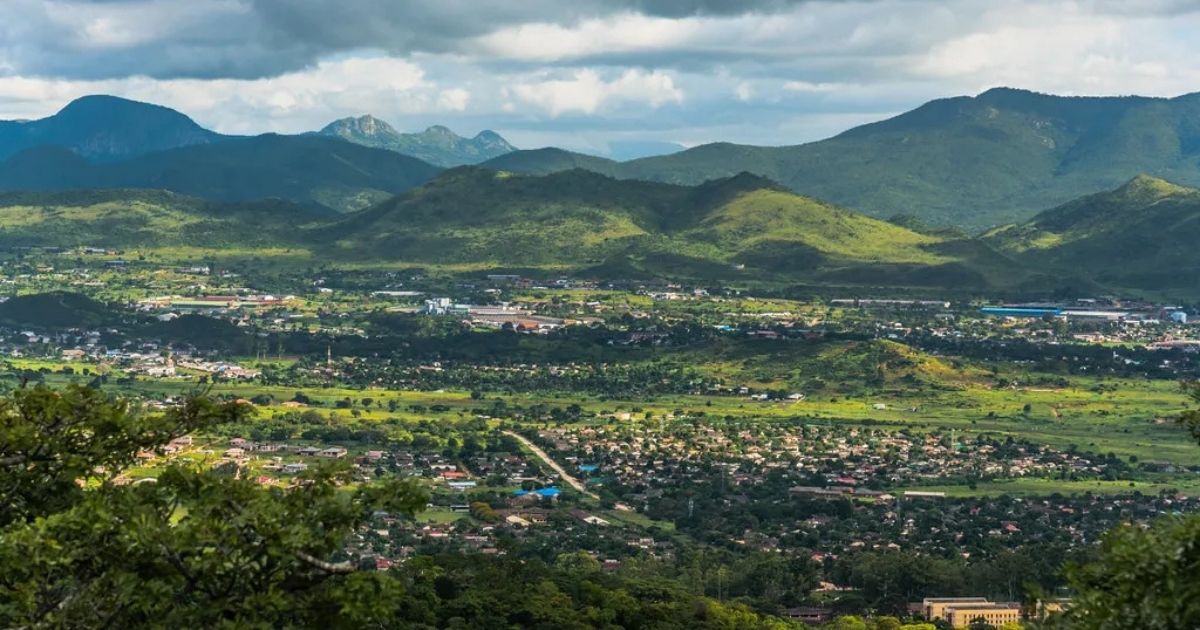
The city of Mutare sits at the foot of Christmas Pass, a spectacular descent from the highveld into the Manicaland lowlands, 263 kilometres southeast of Harare and approximately 290 kilometres west of Beira on the Mozambican coast.
It is Zimbabwe’s fourth-largest city and the administrative capital of Manicaland Province, and for visitors to the Eastern Highlands, it functions as the practical hub: the place where you fill the tank, withdraw cash, stock up on supplies, and connect between the three highland areas.
The drive from Harare to Mutare takes approximately three hours on the main tar road via Rusape and Headlands.
It is a good road and a pleasant journey through the gradually changing highveld landscape as the altitude drops and the scenery begins to shift towards something greener and more dramatic.
The approach to Mutare over Christmas Pass, with the city visible in the valley below and the mountains rising on all sides, is one of the more memorable entrances to any Zimbabwean city.
Mutare itself is not a tourist destination, but the Mutare Museum on Aerodrome Road is worth an hour for its collection of transport history and the scale model of the city that gives a useful sense of the geography of the surrounding highlands.
The Cecil Kop Nature Reserve on the edge of the city offers decent miombo woodland birding for those whose interests run in that direction.
Nyanga: The Roof of Zimbabwe
The Land
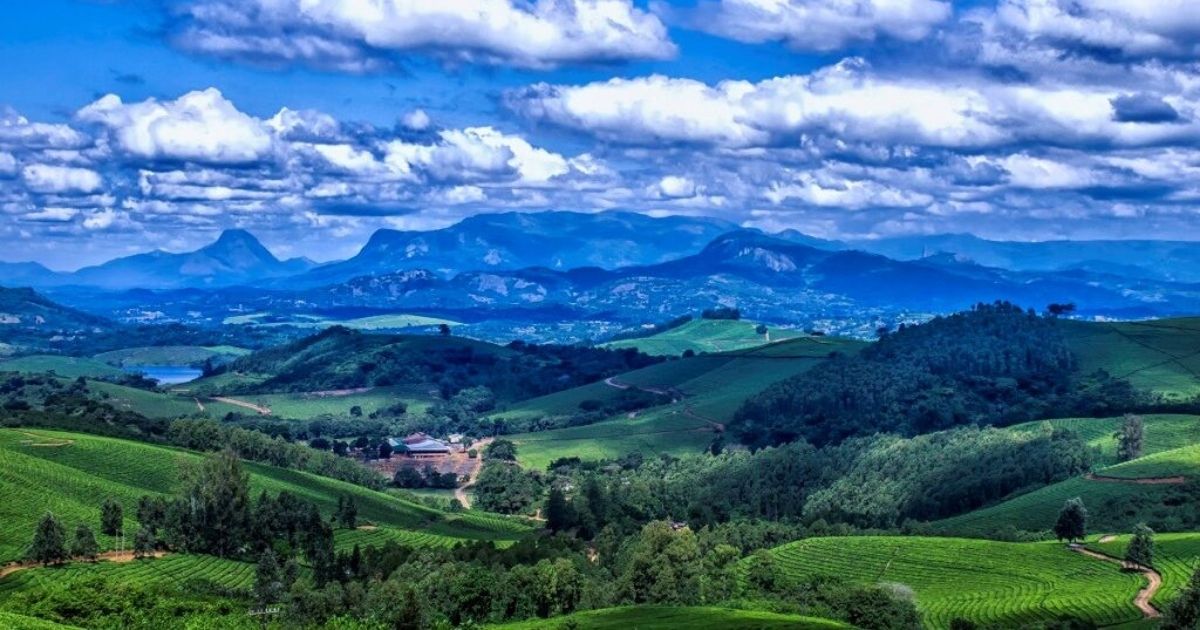
The Nyanga highlands occupy the northernmost section of the Eastern Highlands and have a quality that catches most first-time visitors entirely off-guard.
The first European settlers who came here in the late nineteenth century, many of them coming from Scotland, made the comparison that came naturally to them: the rolling hills, the heather-like vegetation, the grey granite outcrops, and the crisp, clean air reminded them of home.
Cecil Rhodes, who spent considerable time here and eventually bequeathed his Nyanga estate to the nation, reportedly considered it one of the finest landscapes he had ever seen, which is a statement worth reading in the context of a man who had seen a great deal.
Nyanga National Park was established on that estate and remains one of Zimbabwe’s most visited national parks, though visiting here means something different from Hwange or Mana Pools.
People come to Nyanga for the landscape, for the hiking, for the trout fishing, for the sheer pleasure of being at altitude in cool, clean air in a country where altitude and cool air are genuinely rare commodities.
The park sits between 1,800 and 2,593 metres, which is high enough to make mornings brisk, evenings cold, and the quality of light throughout the day something that photographers travel specifically to find.
Mount Nyangani
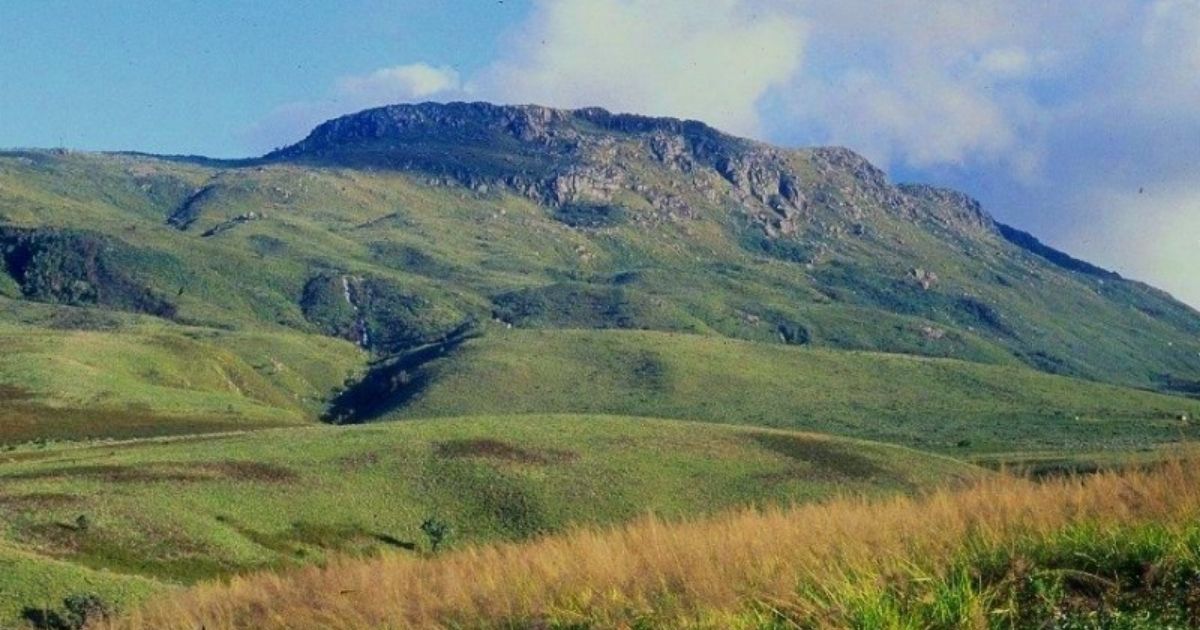
At 2,592 metres above sea level, Mount Nyangani is Zimbabwe’s highest point.
The hike to the summit begins from a car park on the Scenic Road and follows a marked trail through montane grassland and rocky terrain to the summit plateau.
On clear days, the view from the top extends across the full spread of the Eastern Highlands in both directions, north and south, with the Mozambican lowlands visible in the east and the highveld rolling away to the west.
The mountain carries a reputation that deserves to be taken seriously.
Nyangani is prone to extremely rapid weather changes, and the sudden mist that can descend on the summit plateau has disoriented and in some cases caused the disappearance of hikers over the years.
The local Shona community regards the mountain as spiritually significant and attributes certain disappearances to supernatural causes.
Whether or not one shares that interpretation, the practical advice it implies is sound: register at the park office before climbing, start early enough to be off the summit well before the afternoon mist builds, carry warm and waterproof clothing regardless of how clear the morning looks, and stay on the marked path. This is not a mountain for improvisation.
Mutarazi Falls
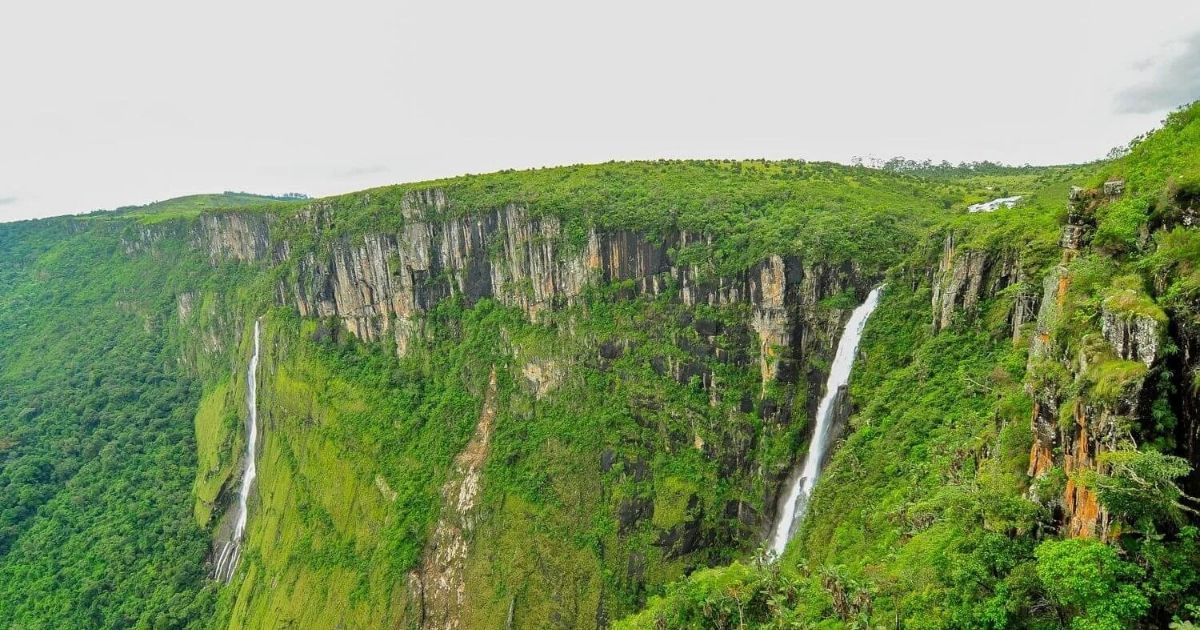
In the southern section of Nyanga National Park, the Mutarazi River drops 762 metres over the edge of the escarpment into the Honde Valley far below.
It falls in two stages over granite cliffs and the total height makes it Zimbabwe’s highest waterfall and the second highest on the African continent.
Visitors leave vehicles at the car park and walk a short distance to the escarpment edge, where the full drop becomes visible and the Honde Valley stretches away 800 metres below, a patchwork of tea plantations and smallholdings that feels impossibly distant.
The falls are most impressive during and immediately after the rains, when the Mutarazi is running at full volume.
In the dry season the flow reduces significantly, and visiting in October or November rather than June or July produces a very different spectacle.
The Pungwe Falls, elsewhere in the park, drop 240 metres into the Pungwe Gorge and are accessible from the Scenic Road.
The gorge itself, accessible only on foot, contains one of the finest riverine forests in the Eastern Highlands.
Trout Fishing
Rainbow trout were introduced to the streams and dams of Nyanga during the colonial period and have been here long enough to seem entirely at home.
The national park maintains a trout hatchery near Purdon Dam, and several rivers and dams within and around Nyanga are stocked with fish that reach a size that makes them worthwhile to pursue.
Trout fishing in Nyanga is a deeply Zimbabwean tradition, popular with Harare families who have been making the three-hour drive for generations.
Rods and permits are available from the national parks lodges and from the Rhodes Nyanga Hotel, which has its own stretch of private fishing water.
The Nyanga Ruins
Scattered across the national park and its surrounding areas are the remains of stone enclosures, terracing, and pit structures built approximately 400 years ago by people whose exact identity and purpose remain subjects of ongoing archaeological discussion.
The most substantial examples within the park are the Nyangwe and Chawomera Forts, which feature the same mortarless dry-stone construction technique as Great Zimbabwe but on a smaller and less elaborate scale.
They are less visited than the ruins in Masvingo and all the more interesting for that: you are likely to have them entirely to yourself.
Bvumba: Mountains of the Mist
The Name Is the Description
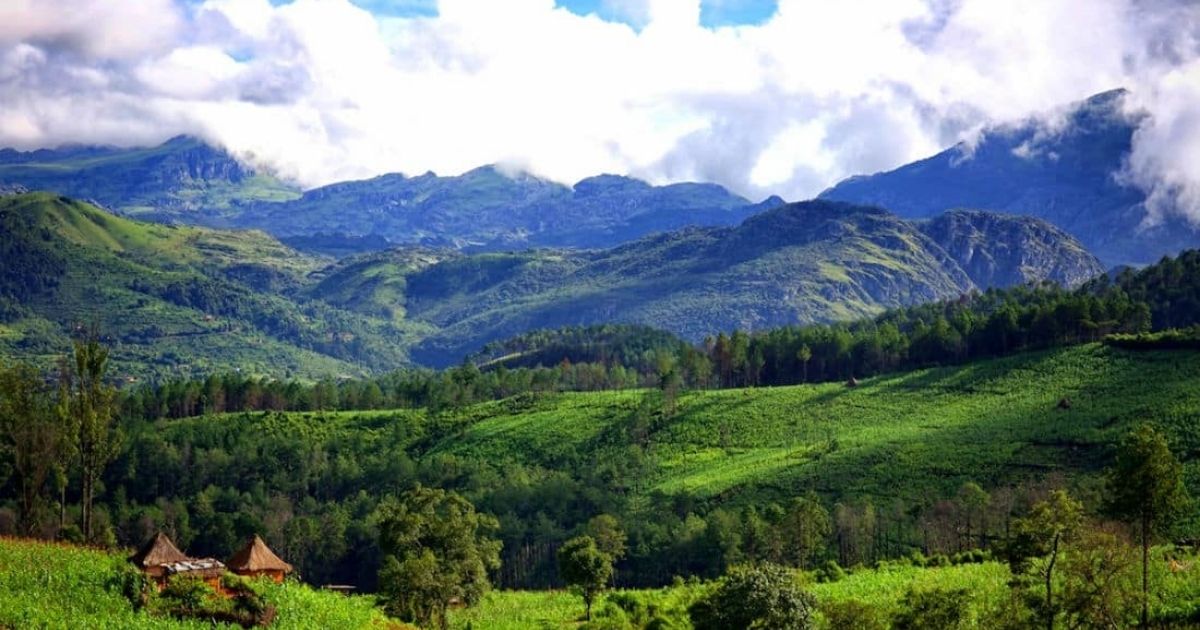
Bvumba is the Manyika word for mist, and the name is not metaphorical. The Bvumba Mountains, which rise to Castle Beacon at 1,911 metres about 25 kilometres southeast of Mutare, sit directly in the path of moisture-laden air moving inland from the Indian Ocean. The result is a microclimate that produces frequent low cloud, forest dripping with humidity, and a lushness of vegetation that is unlike anything else in Zimbabwe.
Mornings often begin grey and close, the mountains invisible behind the cloud, and then by mid-morning the mist lifts and the views open across towards Mozambique, the ocean visible on the clearest days as a blue line along the far horizon.
It is this combination of humidity, altitude, and the particular soil chemistry of the mountain slopes that has produced two of the Bvumba’s most distinctive agricultural products: coffee and soft cheese.
The coffee grown in the Bvumba and the Burma Valley below it is some of the finest produced in southern Africa, with a depth of flavour that reflects the specific conditions of high altitude cultivation in rich volcanic soil. The soft cheeses, produced by a small number of farms in the area, are similarly specific to this particular place and worth seeking out.
Bvumba Botanical Gardens
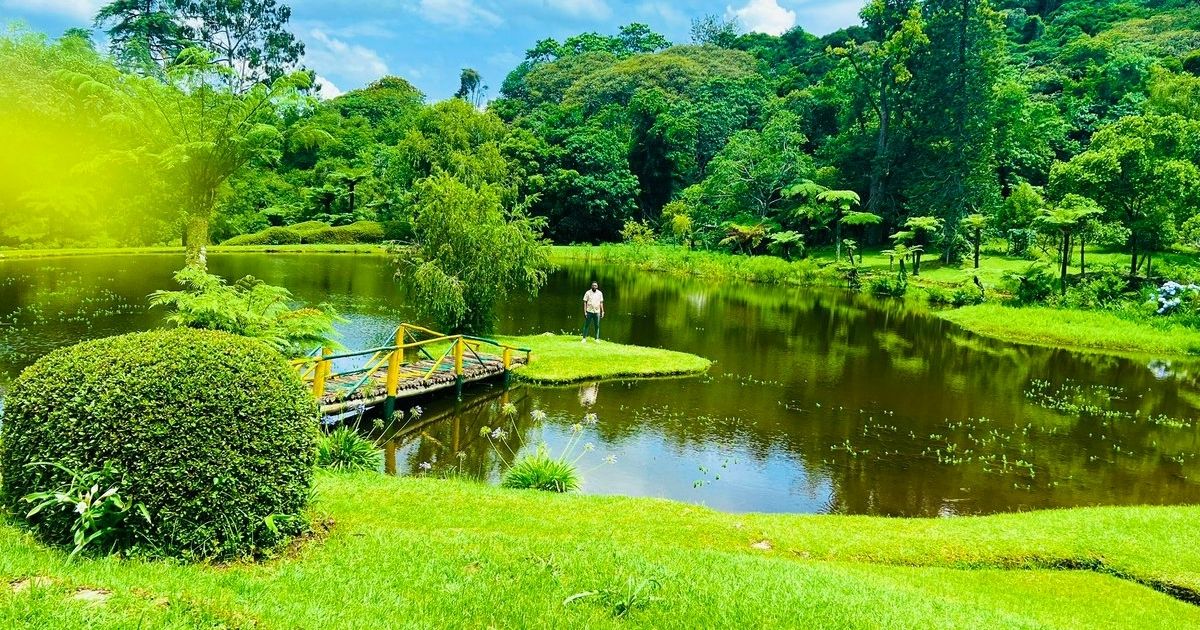
The Bvumba National Botanical Gardens, known to an older generation of Zimbabweans as Manchester Gardens, were originally a private farm purchased in 1926 and gradually developed into gardens by Mr and Mrs Taylor of Mutare, who opened them to the public after enough visitors had persuaded them of the wisdom of doing so.
The gardens were eventually taken over by the government and are now managed as a national botanical garden.
They are arranged around a series of small dams and streams, with indigenous trees preserved alongside planted collections that include hydrangeas, proteas, azaleas, begonias, cycads, and a range of species that flourish in the Bvumba’s cool, wet microclimate but would not survive a month in the lowveld.
Walking trails wind through the property and open periodically onto views over the surrounding mountains towards Mozambique that are genuinely, arrestingly beautiful.
The gardens are also a birding destination of note. The Bvumba is considered one of Zimbabwe’s finest forest birding areas, with several species specific to this narrow highland ecosystem.
The Swynnerton’s Robin, a small and localised bird that lives and breeds in small patches of montane forest, is found here, and the gardens and surrounding forest support several sunbird species and the samango monkey, the blue-grey forest primate found in highland forests along Zimbabwe’s eastern border.
Leopard Rock Hotel
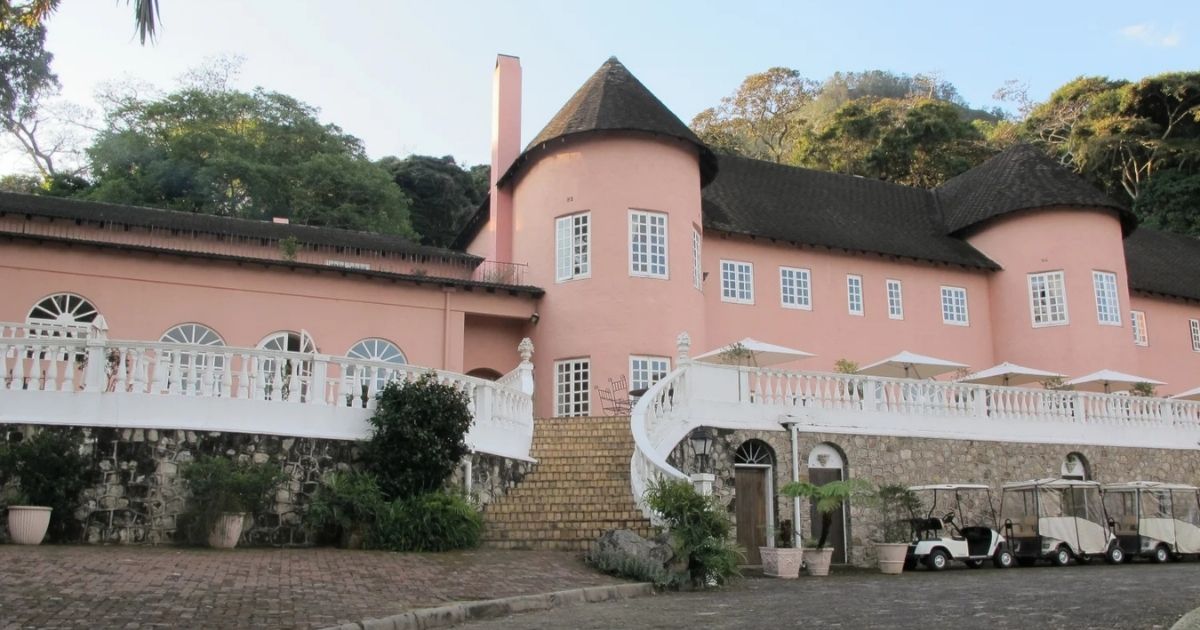
The Leopard Rock Hotel, which sits 30 kilometres from Mutare by tar road through the Bvumba, has been receiving guests since 1946 and carries the kind of unhurried institutional confidence that comes from having been here a very long time.
The Queen Mother visited in 1953 with Princess Margaret, and is reported to have described it as the most beautiful place in Africa, a quotation the hotel has been entirely entitled to use ever since.
The French chateau architecture, the 18-hole golf course cut through the surrounding game reserve, the 58 rooms looking out over either the course and gardens or the forest behind, the casino that appears somewhat improbably in this highland setting: the Leopard Rock is an idiosyncratic and genuinely charming property that does not fit any standard category of African hotel.
The game reserve on the property holds impala, wildebeest, zebra, nyala, and kudu, and horse riding through the indigenous forest is available from the hotel.
Chimanimani: Where the Mountains Take Over
A Different Kind of Place
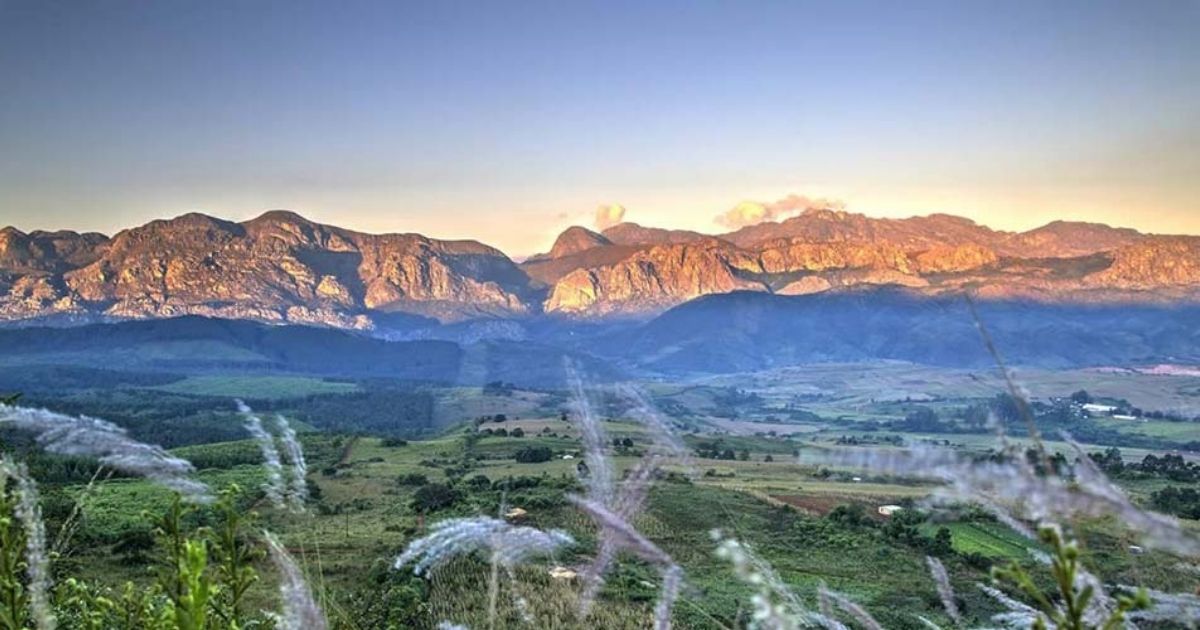
The Chimanimani Mountains in Zimbabwe’s far southeast are the Eastern Highlands at their most austere and, for the right traveller, their most compelling.
Where Nyanga is gentle and pastoral and the Bvumba is misty and quietly beautiful, Chimanimani is neither of these things. The quartzite ridges rise steeply to 2,436 metres at Mount Binga, Zimbabwe’s second highest peak, and the terrain is rocky, demanding, and in places genuinely wild in a way that the other highland areas are not. The Zimbabwe-Mozambique border runs along the highest peaks.
Chimanimani National Park covers 17,110 hectares of this mountain landscape and was designated Zimbabwe’s second UNESCO Biosphere Reserve, a recognition that reflects the extraordinary botanical significance of the area.
The park contains 2,182 plant taxa, representing over 30 percent of Zimbabwe’s entire estimated plant diversity within a single, relatively small protected area.
Of these, 74 species are endemic to the Chimanimani Mountains and found nowhere else on earth.
The quartzite substrate, which creates soil conditions fundamentally different from those in surrounding areas, is responsible for this botanical distinctiveness: plants that have evolved specifically for these conditions over hundreds of thousands of years have nowhere else to go, and nowhere else to be found.
Getting Into the Mountains
The standard approach to Chimanimani National Park begins at Mutekeswane Base Camp, approximately 19 kilometres from Chimanimani village by road.
The base camp has a car park, an information office, and basic facilities, and a game scout stationed there can advise on current trail conditions and the best route for your fitness level and intended duration.
From the base camp, two main routes climb into the mountains. Bailey’s Folly is the shorter and steeper option, gaining altitude quickly on a direct line towards the mountain plateau. The Banana Grove route is longer but less punishing in its gradient, winding through vegetation that changes noticeably as the altitude rises from miombo woodland to montane grassland to the quartzite ridgeline above. The average walker should allow two to three hours to reach the mountain hut on the Bundi River, situated at 1,630 metres.
The mountain hut functions as a refuge and communal rest point rather than a lodge. It is unfurnished, and visitors staying overnight in the mountains carry their own equipment and supplies. Cave camping on the mountain plateau is one of the defining Chimanimani experiences, with a network of caves that shelter hikers from the frequently unpredictable weather and put you inside the mountain landscape rather than simply passing through it.
The most celebrated objective on the mountain is Mount Binga itself, whose summit at 2,436 metres sits directly on the border with Mozambique and provides views into both countries.
The ascent is demanding and the mountain should not be underestimated, but it is accessible to fit and properly equipped walkers with a guide.
Guided hikes are strongly recommended for those unfamiliar with the mountains. Community guides are available at the base camp, know the trails intimately, and their hire directly supports the local economy around Chimanimani village.
The Bridal Veil Falls
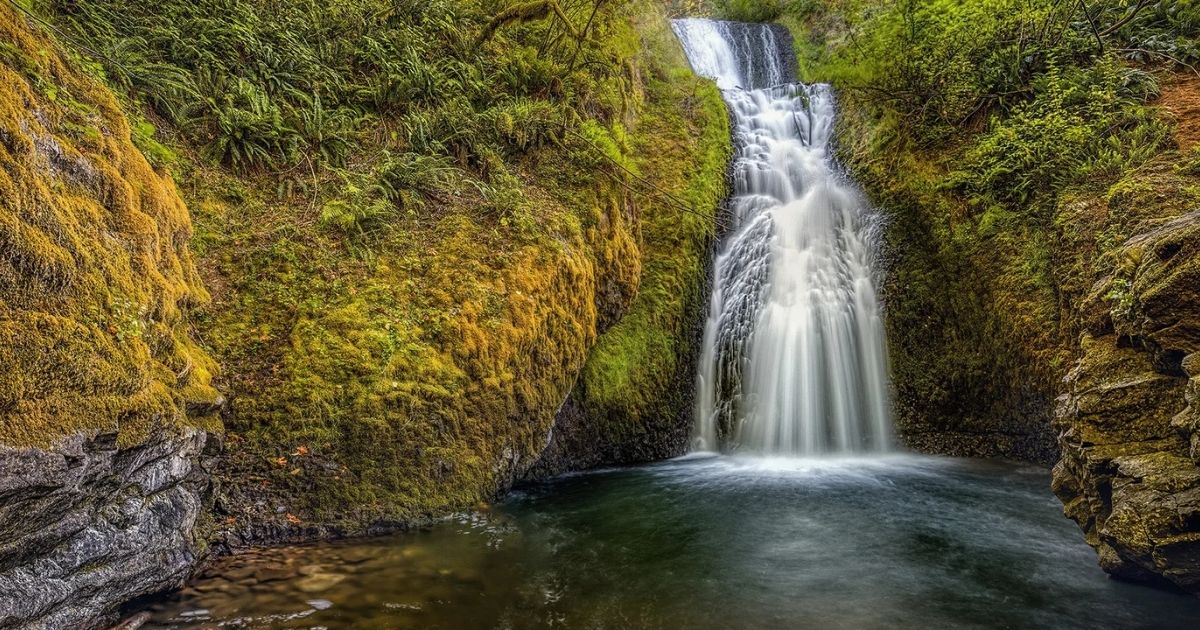
For those who want to experience something of Chimanimani’s beauty without the full mountain commitment, the Bridal Veil Falls are accessible on a relatively straightforward walk from the village and provide one of the most picturesque waterfalls in the Eastern Highlands. The falls drop through indigenous forest into a pool below and, particularly after rains when the flow is strongest, produce the fine spray that gives them their name.
Chirinda Forest
About 60 kilometres south of Chimanimani town near the village of Chipinge, Chirinda Forest Reserve protects what is generally described as Africa’s most southerly tropical rainforest.
The forest covers the slopes of Mount Selinda between 1,076 and 1,250 metres and contains trees of extraordinary age and size, including specimens of the Chirinda fig that have been growing here for centuries.
The understorey is dense, and the forest floor is permanently shaded, and the sense of entering a genuinely ancient ecosystem, unchanged by the landscape around it, is pronounced. A walking trail loops through the reserve and is manageable without a guide, though a local guide adds considerably to the experience.
Practical Information
Getting There
The Eastern Highlands are a three to four hour drive from Harare to Nyanga and approximately five to six hours from Harare to Chimanimani.
Mutare, the central hub, is three hours from Harare on a good tar road.
For Nyanga from Harare, take the Harare-Mutare road east for 170 kilometres to Rusape, turn left and follow the Nyanga road for 90 kilometres, then turn right at the main park entrance. A two-wheel drive vehicle reaches most of Nyanga’s main attractions, though a high-clearance vehicle is advisable for certain sections of the Scenic Road, particularly the route to Mutarazi Falls. The Pungwe Gorge is accessible only on foot.
For the Bvumba from Mutare, follow the tar road southeast for approximately 25 kilometres. All main attractions, including the Botanical Gardens and Leopard Rock Hotel, are on tar road.
For Chimanimani, continue south from Mutare on the main road through Cashel Valley to Chimanimani village, then 19 kilometres further on a dirt road to Mutekeswane Base Camp. A four-wheel drive is strongly recommended for the base camp road and essential for any tracks beyond it.
When to Go
The Eastern Highlands are a year-round destination, and different seasons produce different versions of the same landscape.
The dry season from May to September brings clearer skies, cooler temperatures, and the most settled conditions for hiking.
The Chimanimani mountains are at their most accessible and the views from the Bvumba and Nyanga escarpments are sharpest during these months. Nights can be very cold, dropping to near freezing at the highest elevations in June and July.
The wet season from November to April brings rain, lushness, and the falls at their most dramatic. Mutarazi at full flow in January or February is a substantially different spectacle from the same waterfall in August. Walking in the Chimanimani during the rains requires experience and good equipment; flash flooding in river channels is a real danger and camping near watercourses is inadvisable.
April to June offers something of the best of both seasons: the vegetation is still green from the rains, the waterfalls are still carrying good volume, and the weather is beginning to settle. Many experienced travellers to the highlands consider this the finest window of the year.
What to Bring
The Eastern Highlands are genuinely cold by Zimbabwe standards. Even in summer, evenings in Nyanga and the Bvumba require a fleece or light jacket. In winter, warm layers, a wind and waterproof outer layer, and a hat are not optional. For Chimanimani hiking, full waterproofs, warm mid-layers, and proper hiking boots are essential regardless of the season, as mountain weather can change within an hour. Bring enough cash in small USD denominations before leaving Harare or Mutare, as ATM availability in the highland towns is limited.
One Journey, Three Countries’ Worth of Landscape
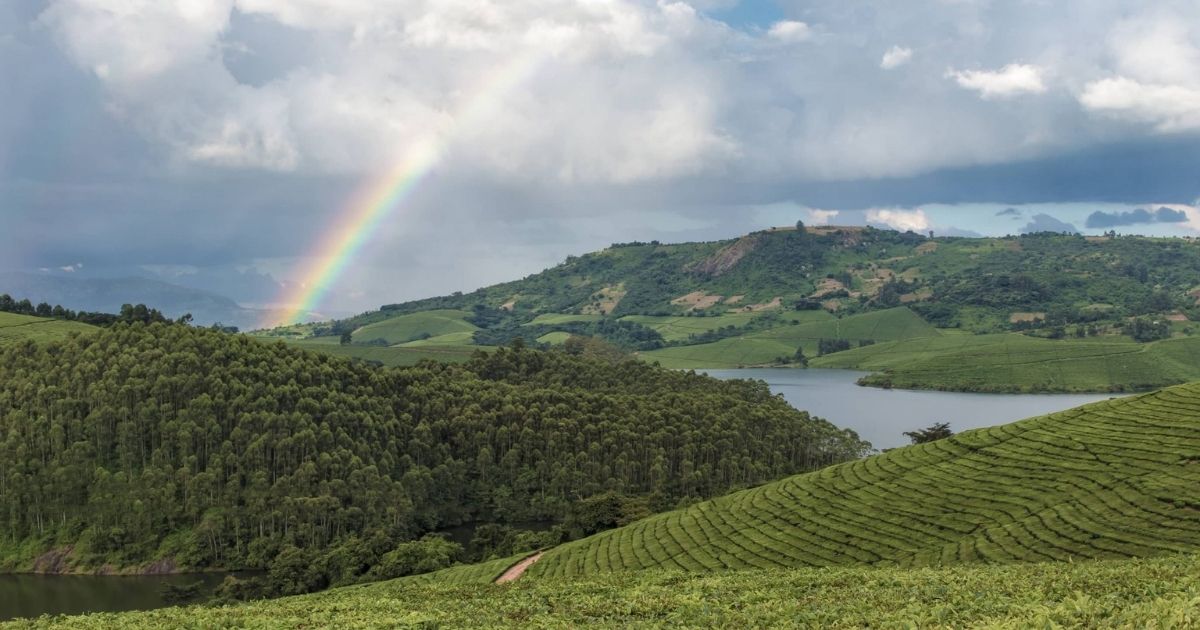
The Eastern Highlands cover a distance of 300 kilometres from north to south, and driving that distance takes you through landscapes that seem to belong to entirely different countries.
From the Scottish moorland quality of Nyanga to the French chateau incongruity of Leopard Rock to the stripped-back, quartzite severity of Chimanimani, the highlands constitute a version of Zimbabwe that is invisible from the safari circuit and that rewards, more than almost any other part of the country, the traveller who is willing to slow down and give it time.
There is a moment somewhere on the road between the Bvumba and Chimanimani, on a clear afternoon with the escarpment edge to your left and Mozambique spread out in all directions below, when the scale of what the Eastern Highlands actually are becomes fully apparent. It is a large, complex, genuinely wild mountain landscape running along the edge of a country that most visitors know only from its lowlands.
That moment, reliably, produces the same response: the wish that you had come sooner, and the certainty that you will come back.
Zimbabwe Travel Hub, updated May 2026. Park entry fees, accommodation, and road conditions in the Eastern Highlands vary by season. Confirm current conditions and accommodation availability before travel, particularly for Chimanimani National Park where base camp facilities are basic.