
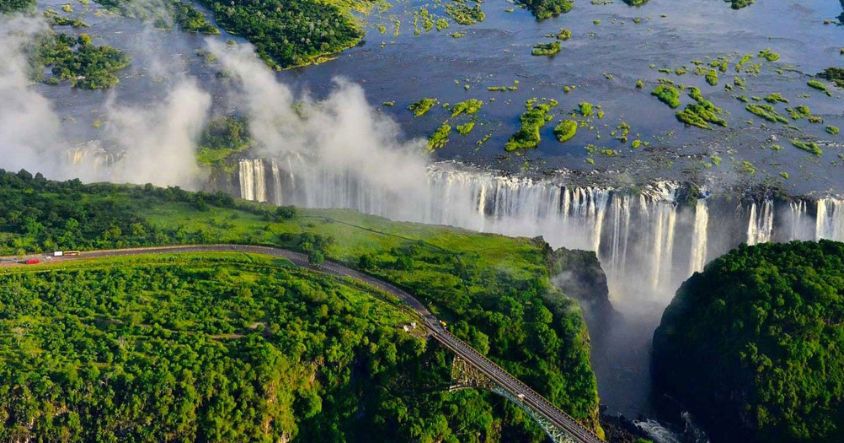
Zimbabwe vs Zambia Victoria Falls debate
Stand at the edge of the Batoka Gorge and look across. On one side, a rainforest path leads past sixteen viewpoints with the full curtain of the falls laid out before you. On the other, a narrow bridge juts out into the spray, close enough to the Eastern Cataract that conversation becomes impossible and staying dry is not an option.
Same waterfall. Entirely different experience.
Victoria Falls straddles the border between Zimbabwe and Zambia with the kind of geographical precision that forces a decision most travellers did not anticipate having to make.
You cannot see both sides simultaneously. Each requires its own entrance fee, its own national park, and depending on your nationality and visa situation, its own paperwork. The question of which side to base yourself on, or whether to visit both, is one that every Victoria Falls visitor eventually has to answer.
This is that answer.
The Falls Themselves: What Each Country Shows You
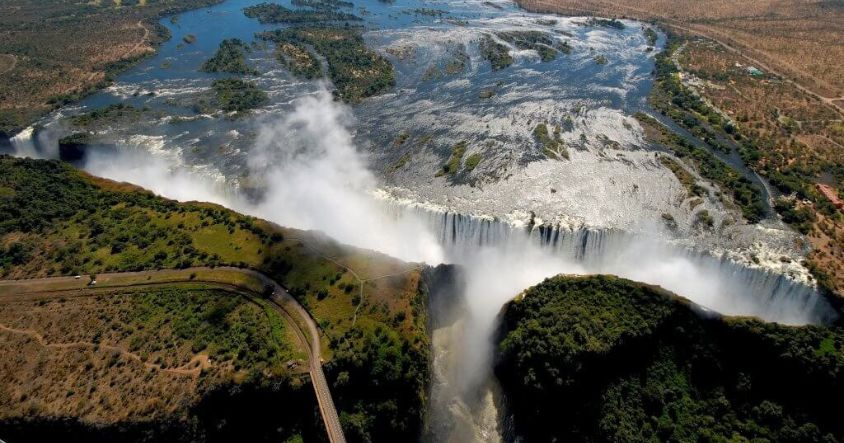
The geography here is non-negotiable. Zimbabwe faces roughly 75 percent of the falls, including the Main Falls, the Devil’s Cataract on the far western end, and the Horseshoe Falls at the centre.
The rainforest trail on the Zimbabwean side runs parallel to the full width of the waterfall, and the sixteen numbered viewpoints along it give a panoramic, continuous engagement with the main curtain of water that no single vantage point can replicate.
These are the images you have seen in photographs. The wide-angle shot showing the Zambezi launching itself over a kilometre of basalt cliff into the gorge below was almost certainly taken from Zimbabwe.
Zambia faces the remaining 25 percent, known as the Eastern Cataract. What the Zambian side lacks in breadth, it more than compensates for in proximity. The Knife Edge Bridge, a narrow walkway that extends into the gorge directly opposite the Eastern Cataract, places you so close to the falling water that the noise is physical and the spray is relentless.
During the high water months between February and May, standing on the Knife Edge Bridge is an act of complete immersion in the falls rather than observation of them. You are not watching Victoria Falls from Zambia. You are inside it.
The two experiences are genuinely different in kind, not just in degree, and understanding that distinction is the starting point for deciding which side suits your visit.
How the Season Changes Everything
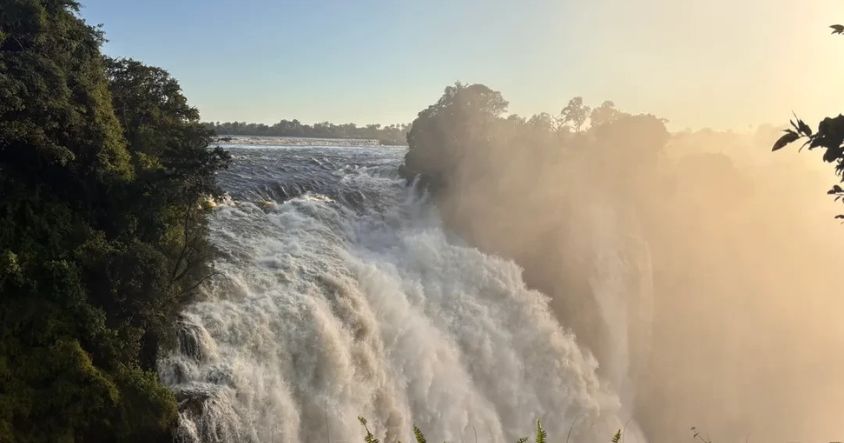
This is the variable that most travel articles underweight, and it is arguably the most important factor in the Zimbabwe vs Zambia decision.
During high water, roughly February to May, the Zambezi is at full flood and Victoria Falls is at its most powerful. On the Zimbabwe side, the spray rises so intensely from the main falls that it can completely obscure the view. You hear the falls before you see them, and at peak flood, standing at some of the central viewpoints means looking into a solid white wall of mist with the actual waterfall hidden somewhere behind it.
The experience is dramatic and atmospheric, but photographers hoping for clear views of the water itself will be frustrated. On the Zambian side during this period, the Knife Edge Bridge delivers total immersion and the Eastern Cataract is roaring at full volume. Zambia in flood season is extraordinary precisely because proximity rather than panorama is the point.
During the dry season, roughly July to October, the dynamic reverses significantly. Water levels drop, the spray reduces to a manageable mist rather than a rainstorm, and Zimbabwe’s viewpoints reveal the falls in their full visual clarity. The complete structure of the waterfall, the basalt cliff face, the separate cataracts, and the gorge below becomes visible and photographable in a way that the flood season simply does not allow. On the Zambian side in the later dry season months, the Eastern Cataract reduces substantially and sections of the cliff face dry out entirely. By October and November the Zambian views can be genuinely disappointing, while Zimbabwe continues to deliver reliable and impressive flows through its section.
The practical conclusion is that Zimbabwe is the stronger choice for most of the year and particularly during the dry season. Zambia earns its case most compellingly between February and May when immersion rather than panorama is what the falls are offering. Outside that window, the view from Zimbabwe is almost always the more rewarding.
Devil’s Pool: The One Thing Zambia Has That Zimbabwe Does Not
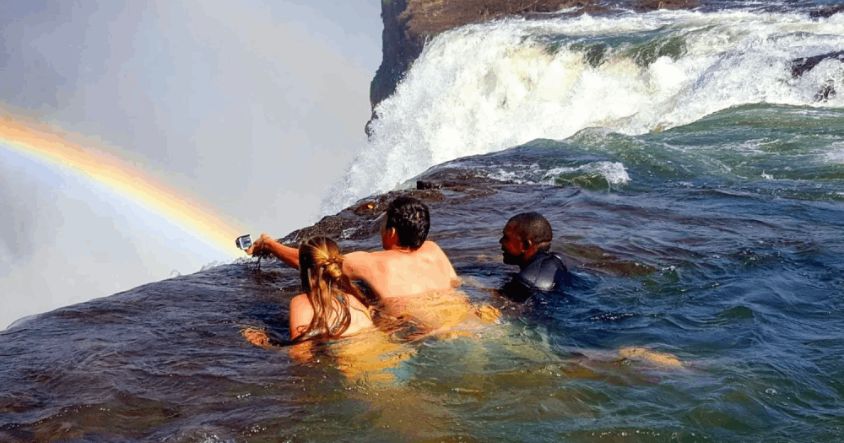
There is a natural rock formation on Livingstone Island, a small island sitting at the very lip of the falls on the Zambian side, where a submerged ledge creates a calm pool at the absolute edge of the waterfall. The Zambezi rushes past on all sides. The gorge drops 108 metres directly below. And in this pool, during the dry season, you can swim.
Devil’s Pool is operated exclusively by Livingstone Island, the only company licensed to run tours to the island, and it has a 100 percent safety record across decades of operation.
Access is by boat from the Zambian side and is only possible between approximately mid-August and early January when water levels drop low enough to make the rock ledge visible and the pool safe. During the peak flood months the island is submerged and the tours do not operate.
Tours are priced from around $159 per person for the Morning Breezer option, which includes a boat transfer, a guided experience on the island, and light refreshments. A lunch tour at $209 per person and an afternoon high tea option are also available.
The walking safari experience, available mid-September to December when water levels are at their lowest, allows guests to walk across exposed sections of the falls themselves, an experience that feels as improbable as it sounds.
It is worth understanding one logistical reality for visitors based in Zimbabwe: crossing to Zambia for Devil’s Pool requires a valid visa for Zambia and, critically, a multi-entry visa for Zimbabwe rather than a single-entry visa, so you can re-enter Zimbabwe after the tour.
The KAZA Univisa, available at Victoria Falls International Airport and the land border, covers both countries for $50 and is the most practical solution for anyone planning to cross in either direction during their stay.
Arriving with a single-entry Zimbabwe visa and attempting to do Devil’s Pool on a day trip is a mistake that has caught out more than a few visitors.
Activities: Where Each Side Holds an Advantage
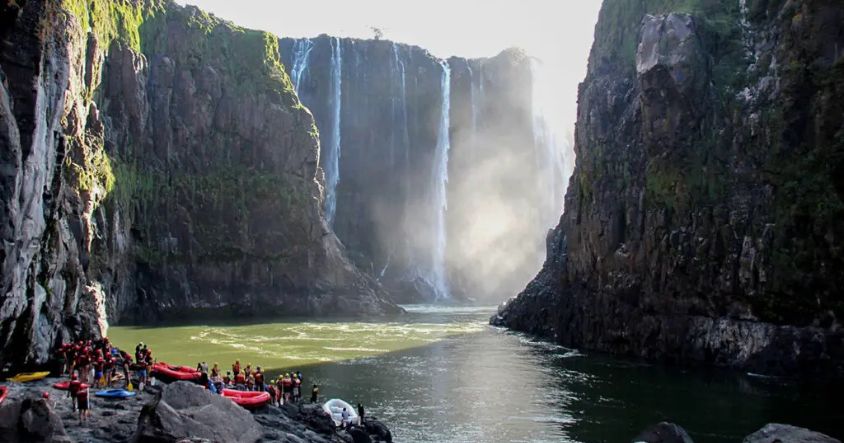
White-water rafting operates from the Zimbabwe side. The put-in point is at the Boiling Pot, directly below the falls at the head of the Batoka Gorge, accessed by a steep descent into the gorge that is strenuous going and more strenuous coming back out.
The rapids below Victoria Falls are among the most intense commercially rafted white water in the world, with grade five rapids carrying names that reflect their character: Commercial Suicide, the Mother, Oblivion, and Creamy White Buttocks among them. Full-day trips from the Zimbabwe side cost approximately $150 to $180 per person and are available from August through to around February when rising water suspends operations. Shearwater Victoria Falls is the longest-established operator, with a comprehensive safety record and experienced guides.
The gorge swing and bungee jump both operate from the Victoria Falls Bridge, which sits on the border between the two countries. A passport is required to reach the bridge from either side. The bungee jump is a 111-metre plunge from the bridge into the gorge above the Zambezi, operated year-round at around $160 per person.
The gorge swing is a free fall of approximately 70 metres that converts into a 95-metre pendulum across the Batoka Gorge, 120 metres above the river. Both are operated by Shearwater and weight restrictions apply: the bungee is available to those between 40 and 120 kilograms, the swing up to 140 kilograms.
Helicopter flights are available from both sides and cover broadly similar ground, with the gorge, the falls, and the upper Zambezi visible from the air. Zimbabwe-based flights tend to offer slightly more comprehensive views, given the orientation of the falls.
Sunset cruises on the upper Zambezi are offered on both sides as well, with the river above the falls providing calm, wide water populated by hippos, elephants, and exceptional birdlife. Several operators run these, with Ilala Lodge’s Ra-Ikane cruise among the most consistently recommended.
Game drives into Mosi-oa-Tunya National Park are available on the Zambian side, with the park holding white rhino alongside elephant, buffalo, zebra, and giraffe. For a dedicated Big Five experience, however, Zimbabwe’s Hwange National Park and the private game reserves adjacent to the Victoria Falls town are considerably more substantial options.
Livingstone vs Victoria Falls Town: The Base Camp Question
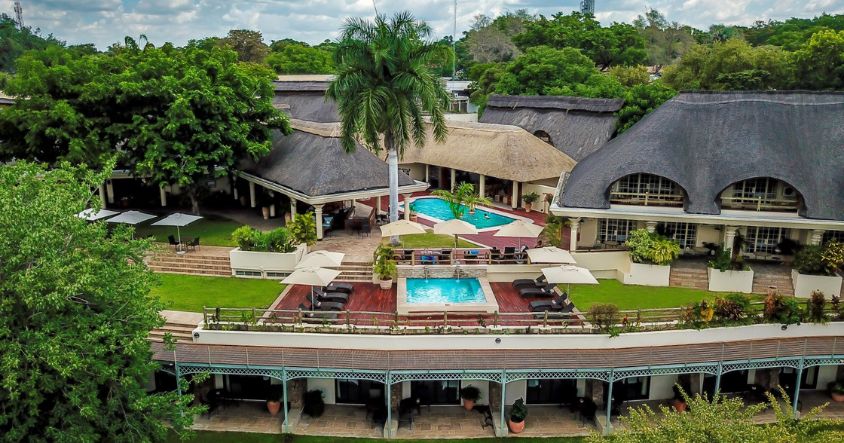
The two towns on either side of the border are different in character in ways that matter when choosing where to stay.
Victoria Falls town in Zimbabwe is compact, well-organised, and built almost entirely around tourism. The falls entrance is walkable from most hotels, activity operators are concentrated along a short stretch of the main road, and the infrastructure, while not flawless, is reliable enough for comfortable travel. The town has a clear centre of gravity and it is easy to navigate.
Livingstone in Zambia is a larger, more spread-out town with a wider range of hotels and lodges, including several luxury riverfront properties on the upper Zambezi that have no direct equivalent on the Zimbabwe side. The Royal Livingstone Hotel and the Avani Victoria Falls Resort, both situated on the Zambian bank with direct views of the spray rising from the falls, represent some of the finest accommodation at Victoria Falls. The distance between Livingstone’s hotels and the falls entrance varies considerably depending on where you stay, and transfers or taxis are often required.
For most first-time visitors, Victoria Falls town on the Zimbabwe side is the more practical base, with the falls genuinely within walking distance and the town’s activity infrastructure concentrated and accessible.
Those whose priority is luxury riverfront accommodation, or who specifically want easy access to Devil’s Pool during the right season, may find Livingstone the more compelling option.
The Honest Verdict
If you can only choose one side, choose Zimbabwe. You see more of the falls, from more angles, across most of the year, with a greater range of activities and more convenient infrastructure.
The dry season panoramas from the Zimbabwe rainforest trail are the definitive Victoria Falls experience, and for the majority of international visitors arriving between June and October, Zimbabwe simply outperforms Zambia at every point of comparison except one.
That one exception is Devil’s Pool, which is genuinely irreplaceable. If your visit falls between mid-August and early January and the prospect of swimming at the edge of one of the world’s great waterfalls appeals to you even slightly, the Zambian crossing for a morning at Livingstone Island is worth every logistical consideration involved.
The best answer, as it often is with decisions framed as either-or, is both.
The KAZA Univisa exists precisely to make this easy. Base yourself in Zimbabwe, spend two or three days seeing the falls from the most comprehensive angle, do the rafting and the bridge activities, and then give yourself a morning on Livingstone Island before you leave.
The two sides together make a complete picture. Either one alone, the Zimbabwe side especially, is already one of the most extraordinary natural spectacles on earth.
Zimbabwe Travel Hub, updated May 2026. Visa requirements, Devil’s Pool access dates, and activity prices are subject to change. Always verify current requirements directly with operators and the Zimbabwe Department of Immigration before travel.