
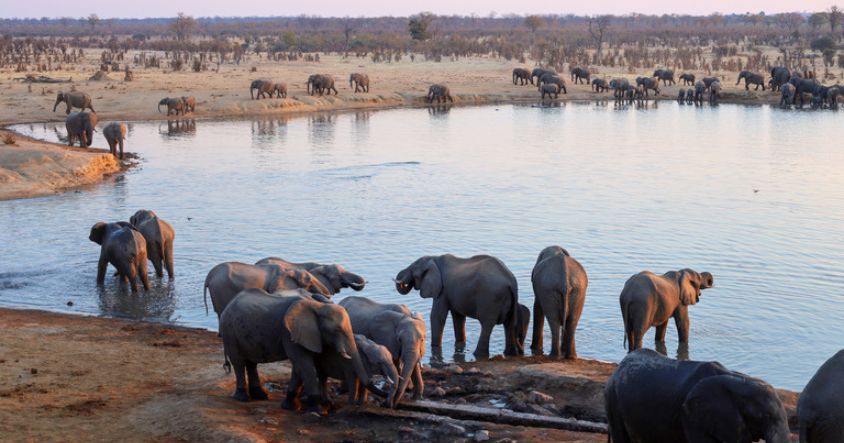
The term Big Five has complicated origins. It was coined by nineteenth-century hunters to describe the five animals considered most dangerous to pursue on foot: lion, leopard, elephant, Cape buffalo, and rhinoceros.
The danger was not always about size. It was about temperament, unpredictability, and the particular quality these animals share of being entirely indifferent to the presence of humans.
Wildlife tourism has since reclaimed the phrase and reframed the challenge. The question is no longer whether you can bring one down. It is whether a country’s ecosystems are healthy enough, its conservation rigorous enough, and its wilderness intact enough to still hold all five in meaningful numbers.
By that measure, Zimbabwe is among a small group of countries in Africa that genuinely deliver.
All five are here. They are not confined to a single showcase reserve, carefully managed behind an electric fence. They move through vast, connected wilderness systems that function the way wilderness is supposed to.
The task for the visitor is not just knowing that the animals exist in Zimbabwe, but understanding which landscapes hold which species and why, so that a two-week trip becomes something purposeful rather than a lucky dip.
The King, the Politics, and Why Hwange’s Lions Are Different
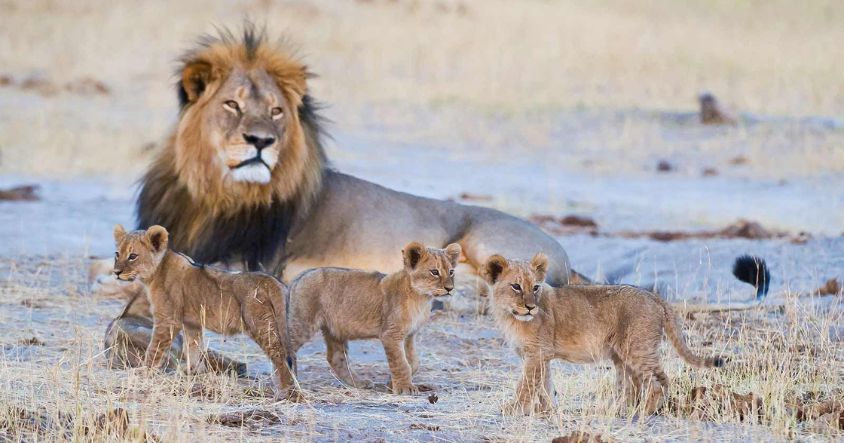
No animal on a Zimbabwe safari carries more weight of expectation than the lion. And Hwange National Park, Zimbabwe’s largest national park, has been delivering on that expectation for decades.
The greater Hwange ecosystem holds somewhere between 500 and 700 lions, making it one of the most significant lion populations in Africa.
These are not animals that occasionally drift through. They have defined territories, documented genealogies, and in some cases, the kind of individual histories that would feel at home in a nature documentary.
Cecil, killed by a trophy hunter in 2015, was a Hwange lion. His death prompted international outcry largely because people felt they already knew him. That degree of familiarity between observer and observed is built into how Hwange works.
What makes Hwange lions genuinely unusual, beyond their numbers, is their behaviour. A handful of prides here have learned to hunt elephants, a strategy so demanding and dangerous that almost no lions anywhere else in Africa attempt it.
During the most brutal months of the dry season, when prey is scarce and competition for water is fierce, these lions take on animals that weigh twenty times what they do. Watching it is not comfortable. It is, however, one of the most extraordinary wildlife spectacles on earth.
For a completely different kind of lion encounter, Mana Pools on the Zambezi offers something Hwange cannot: the chance to watch them on foot. Mana’s lions have grown accustomed to the presence of walking safari guides over many years, and the result is an intimacy that a vehicle simply cannot replicate. A pride moving through open floodplain woodland at dawn, observed from fifty metres away with nothing between you and them but open air and your guide’s quiet instruction, belongs to a different register of experience entirely.
Best for lion: Hwange for volume, familiarity, and the dry-season waterhole drama. Mana Pools for walking encounters and the particular tension of being genuinely in the bush with them.
The Leopard, a Cat You Rarely See — Except Here
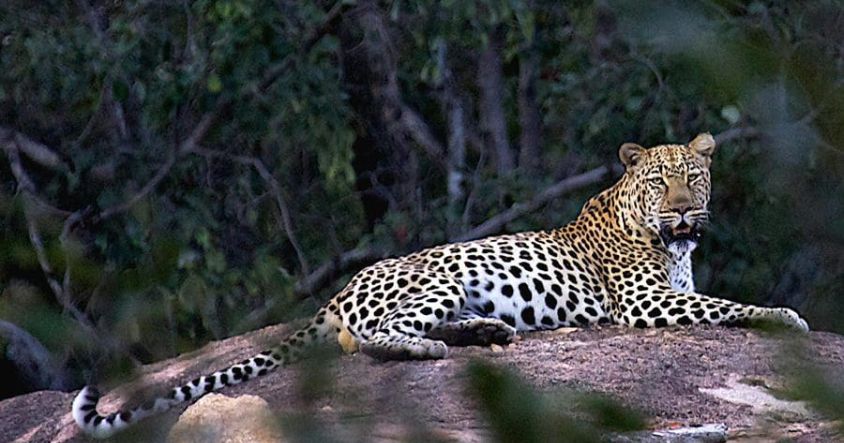
The leopard is the Big Five animal that most safaris across Africa fail to deliver. It is nocturnal by preference, built for concealment, and has survived millennia of predation pressure by being very good at not being found. Most leopard sightings are brief, distant, and involve the back half of an animal disappearing into a thicket.
Matobo National Park, in the ancient granite hills south of Bulawayo, is different. The rocky kopje terrain is ideal leopard country, with endless crevices for denning, elevated boulders for surveying, and a prey base that includes rock hyrax, klipspringer, and impala.
Crucially, Matobo has no resident lion population within its fenced wildlife area, which means leopards here have not been pushed to the margins of their range the way they are in ecosystems where they share territory with a dominant competitor.
They occupy the top of the food chain in Matobo, and they behave accordingly, visible, confident, and often entirely unbothered by a game drive vehicle.
Matobo also carries the distinction of holding one of the highest densities of leopard of any protected area in Africa. This is not marketing language. It is a consequence of the habitat, the prey availability, and decades of protection. A two-night stay here with morning and evening game drives will, in most cases, produce a sighting. Sometimes several.
Mana Pools also offers regular leopard encounters, particularly along the riverine vegetation of the Zambezi bank. The experience there is less concentrated but no less rewarding: a leopard in a winterthorn tree above the river, spotted at dusk from a canoe, is a sighting that tends to stay with people.
Best for leopard: Matobo National Park, without serious competition. Mana Pools as a secondary destination with its own particular character.
The Grey Tide: Nothing Prepares You for Hwange’s Elephants
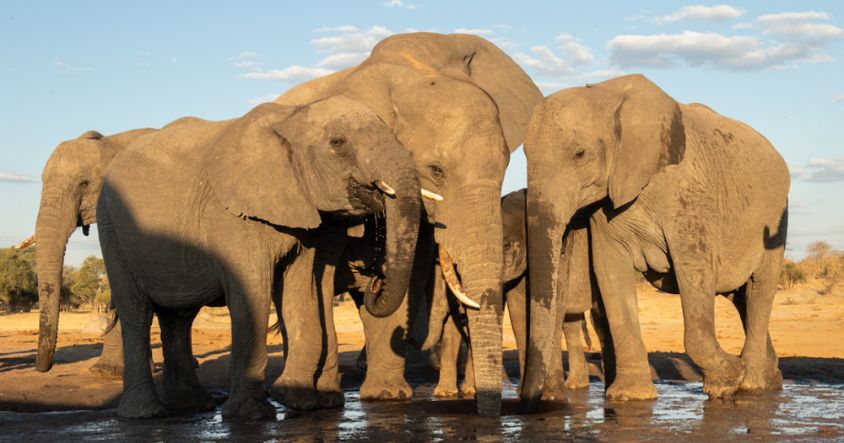
There are elephants on safari, and then there are Hwange’s elephants. The difference is largely one of scale.
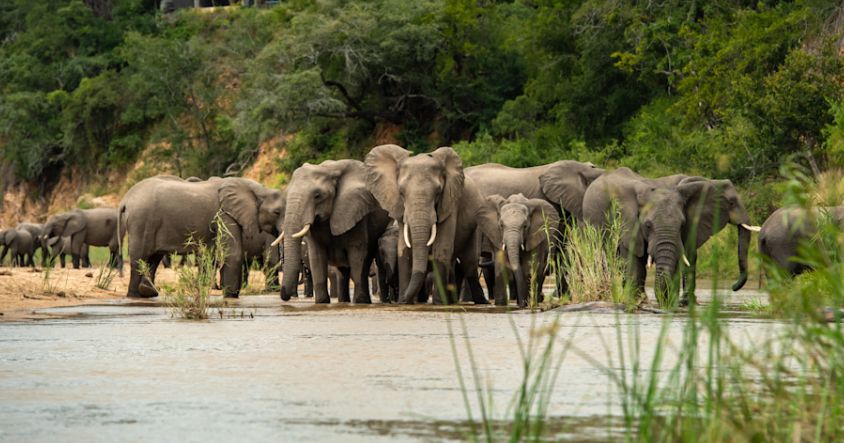
Hwange National Park holds one of the largest elephant populations of any protected area in the world, with estimates ranging between 45,000 and 50,000 animals. To put that in some context: the park covers approximately 14,600 square kilometres. During the dry season, when surface water outside the park has dried up, those elephants converge on Hwange’s network of pump-fed artificial waterholes in concentrations that have to be seen to be understood. Sitting at a waterhole in August or September and watching a continuous procession of herds cycling through, sometimes 400 animals in a single afternoon, is not a wildlife highlight in the usual sense. It is something closer to a geological event.
The social complexity alone is worth the trip. Matriarchs directing herds of thirty with the authority of long experience. Young bulls testing themselves against their elders. Calves barely visible beneath the moving grey wall of adult bodies. Family groups greeting other family groups with a physicality and apparent emotion that leaves most first-time observers genuinely speechless.
Mana Pools offers something different again: the individual encounter. The elephant bulls that have spent years at Mana have developed a behaviour found almost nowhere else, standing on their hind legs to reach the seed pods of the tall Faidherbia albida trees that line the floodplain. It is as improbable-looking as it sounds, a five-tonne animal balanced on two legs like a circus act, and yet entirely natural and entirely routine for Mana’s bulls. Walking among them, close enough to hear them breathe, guided by someone who knows each individual animal, is one of the defining Zimbabwe experiences.
Best for elephant: Hwange for the overwhelming spectacle of numbers. Mana Pools for something more personal and, in its own way, more affecting.
Most People Forget about the Cape Buffalo — Until It Charges
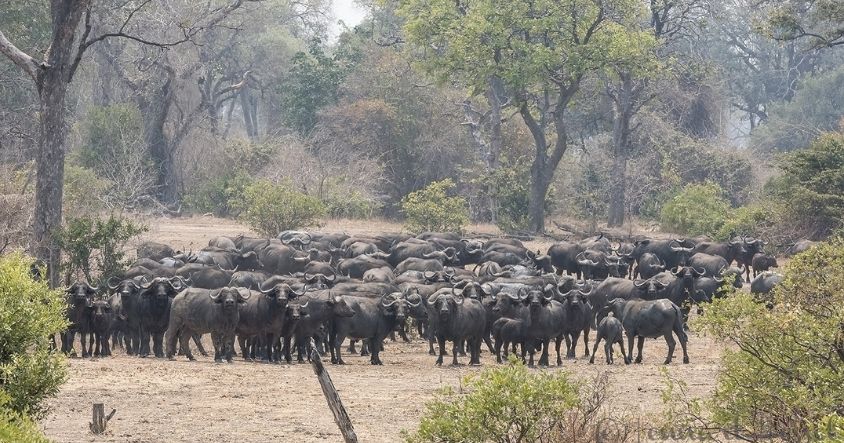
The Cape buffalo does not have the lion’s glamour, the elephant’s charisma, or the leopard’s mystique. It is a large, bad-tempered bovid with an expression that suggests it has considered its options and decided to be angry about all of them.
Old solitary males, the so-called dagga boys whose scarred hides carry the evidence of years of hard living, are among the most genuinely dangerous animals a guide can encounter in the bush.
And yet a large buffalo herd moving through open country is one of the most stirring sights in African wildlife.
The dust, the sound, the oxpeckers riding the backs of the animals in clouds of red and yellow, the sense of a living entity too large and too wilful to be easily categorised. A herd of five hundred buffalo is an argument for wilderness that needs no further commentary.
Mana Pools is where this argument is made most forcefully in Zimbabwe. During the dry season, herds of several hundred animals concentrate along the Zambezi floodplain, pulled there by the permanent water and the remaining vegetation.
Their presence in turn draws the large lion prides and wild dog packs that depend on them, creating the kind of predator-prey dynamics that make Mana one of the most ecologically intense parks in southern Africa.
A morning game drive that begins with a distant dust cloud and ends with you parked fifty metres from a full buffalo herd, with lions visible in the shade beyond, is the sort of morning that changes how you understand wildlife.
Hwange also holds substantial buffalo populations, predictably visible at the pumped waterholes throughout the dry season.
Best for buffalo: Mana Pools for the drama and predator interaction. Hwange for reliable dry-season sightings in combination with other species.
The Hardest Animal to Find — and Why That Makes It Worth It
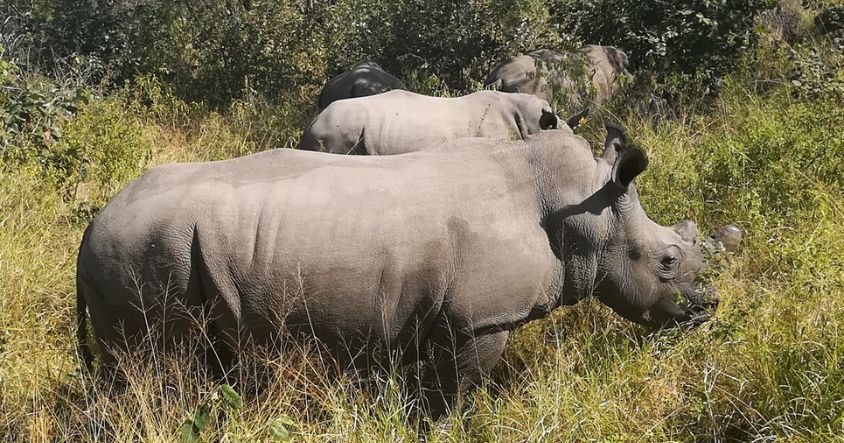
The rhinoceros is the most difficult of the Big Five to encounter in Zimbabwe, and honesty requires acknowledging why. Rhino populations across southern Africa were devastated by poaching in the late twentieth century, and Zimbabwe was not spared. The recovery has been slow, deliberate, and hard-won.
The good news is that it is genuinely happening. Zimbabwe now holds an estimated 1,000 to 1,200 rhinos of both black and white species, and in certain places, the conservation story is one of the more encouraging developments in African wildlife management in recent years.
Matobo National Park, which marked its centenary in 2025 as Zimbabwe’s oldest national park, has seen its rhino population grow steadily over the past decade.
The Matopo Rhino Trust, established in 2013 in partnership with the Zimbabwe Parks and Wildlife Management Authority, has presided over a dramatic reduction in poaching incidents. In the decade to 2025, only nine rhinos were lost to poaching in the park, a figure that compares extremely favourably with protected areas of similar size across the continent.
What Matobo also offers is the most visceral rhino experience in Zimbabwe, and arguably one of the most extraordinary wildlife encounters in Africa, tracking rhino on foot. A guide leads you through the granite kopjes and open grassland, reading spoor, dung, and broken vegetation, following the story of where an animal has been until the story ends with the animal itself, standing in the bush twenty or thirty metres ahead of you.
White rhinos are the primary target, and sightings are reliable. Black rhinos are present but rare and elusive enough that an encounter should be treated as a genuine bonus rather than an expectation.
One important clarification for trip planners is that Mana Pools no longer has a resident rhino population. Anyone whose primary goal is completing the Big Five should plan specifically for Matobo, or consider the private lowveld conservancies of Bubye Valley and Save Valley, which hold significant rhino numbers under intensive protection and offer rhino-focused experiences through their resident operators.
Best for rhino: Matobo National Park, for the on-foot tracking experience in a UNESCO World Heritage landscape. Private lowveld conservancies for dedicated rhino safaris.
The Route That Brings It All Together
Zimbabwe has two parks where all five of the Big Five are present within a single boundary. Hwange National Park in the northwest holds lion, leopard, elephant, buffalo, and rhino, with elephant and lion in particular at concentrations that rival anywhere in Africa. Gonarezhou National Park in the southeast, Zimbabwe’s second largest park, also carries all five, though it receives far fewer visitors and operates with a more wilderness-focused, off-the-beaten-track character that suits experienced safari travellers looking to avoid the crowds entirely.
That said, having all five within a park boundary does not automatically mean encountering all five on a single visit. Rhino in particular require dedicated effort in both parks, and a focused Big Five itinerary still benefits from planning around what each destination does best.
The classic approach that most professional safari operators recommend combines three destinations.
Hwange National Park forms the spine of most itineraries, with three to four nights between July and October delivering elephant at a scale unmatched anywhere in Africa, reliable lion sightings, good buffalo, and a genuine chance of leopard.
Mana Pools National Park on the Zambezi adds two to three nights of walking and canoe safaris with lion, leopard, elephant, and buffalo in a completely different landscape.
And Matobo National Park near Bulawayo provides dedicated rhino tracking on foot in a UNESCO World Heritage landscape, completing any gaps and introducing terrain unlike anything in the other two parks.
This circuit covers ten to twelve days comfortably and delivers three genuinely distinct wilderness experiences alongside the full five.
The One Thing That Makes Zimbabwe Different From All the Others
Any experienced safari traveller comparing Zimbabwe with Kenya, Tanzania, or South Africa will notice fairly quickly that the guides are different.
Zimbabwe’s professional guide licensing examination is among the most rigorous in Africa, requiring candidates to demonstrate deep knowledge of ecology, animal behaviour, dangerous game management, and the practical skills to lead clients safely on foot through territory containing elephant, lion, buffalo, and leopard.
The failure rate is high. The people who pass it are, almost without exception, exceptional.
This matters because the quality of any wildlife encounter is inseparable from the person explaining it, contextualising it, and keeping you safe while it unfolds.
Zimbabwe’s walking safari tradition, particularly in Mana Pools, has produced some of the finest guides on the continent.
Sitting on a termite mound at dawn with a guide who has spent thirty years learning to read that particular landscape is not a service transaction. It is an education, and for many travellers it becomes the thing they talk about long after the specific sightings have blurred together.
The Big Five are a framework, and a useful one. But Zimbabwe, at its best, offers something beyond the checklist.
Zimbabwe Travel Hub, updated May 2026. Wildlife populations and park accessibility are subject to change. Always confirm park opening seasons and lodge availability before booking.