
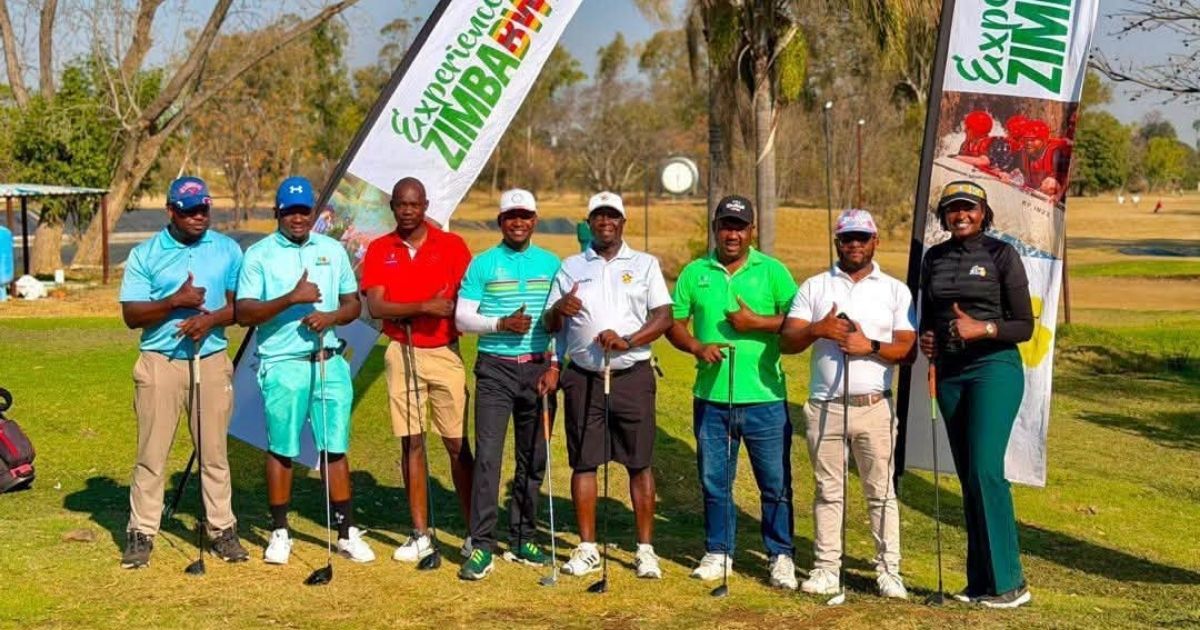
Zimbabwe is turning to sports tourism as a new way of getting people to travel, discover its destinations and experience the country beyond its traditional tourism attractions.
Golf is at the centre of that effort.
The Country Club in Harare hosted the third edition of the Sterling Group International Pairs Golf National Final, bringing together some of the country’s leading amateur players after a nationwide qualifying campaign.
Organised by Albatross Golf Safaris in partnership with the Ministry of Tourism and Hospitality Industry, through the Zimbabwe Tourism Authority (ZTA), the tournament was held under the theme “Experience Zimbabwe – One Fairway at a Time.”
About 1,550 golfers took part in qualifiers held across 28 clubs during the 2026 competition, according to the ZTA.
The numbers demonstrate something more significant than the popularity of a single golfing tournament.
They show how sporting events can create a reason for Zimbabweans to travel within their own country while giving international visitors another reason to consider Zimbabwe.
Golf offers a different way to see Zimbabwe

For many tourists, Zimbabwe is associated with Victoria Falls, Hwange National Park, Great Zimbabwe and the country’s landscapes and wildlife.
Sports tourism creates a different entry point.
A golfer visiting Zimbabwe is not necessarily coming primarily to see a waterfall or go on safari. They may arrive because of a tournament, a golf tour or a competition, with tourism experiences becoming part of the wider trip.
That distinction is important.
It means destinations can attract visitors who might not have considered Zimbabwe for a conventional holiday, while existing tourists can be encouraged to add sporting experiences to their itineraries.
Golf is particularly suited to this approach because it can be combined easily with accommodation, restaurants, transport, leisure and sightseeing.
A tournament in Masvingo could be linked to Great Zimbabwe. A competition in the resort town of Victoria Falls could complement visits to the waterfall and surrounding wildlife areas. Events in the Eastern Highlands could be paired with excursions into Nyanga or Vumba.
The sporting venue can therefore become the beginning rather than the end of a visitor’s Zimbabwean experience.
Taking events beyond Harare
Perhaps the most important aspect of the International Pairs model is its national footprint.
The 2026 qualifiers were staged at golf clubs across the country before the national final in Harare. Earlier in the campaign, organisers said the qualifying programme would involve clubs throughout Zimbabwe, reflecting the tournament’s growing national reach.
The Government’s intention to rotate the national final between provinces adds another dimension.
Large events are often concentrated in Harare and, to a lesser extent, Bulawayo. Moving major tourism-linked competitions around the country can distribute visitor spending more widely.
A tournament brings people who require places to stay, transport between venues, meals and other services. Local businesses therefore become part of the event even when they are not directly involved in the sport.
For smaller towns and emerging tourism destinations, that additional activity can be significant.
It is also closely linked to the Government’s devolution agenda, which seeks to spread development and economic opportunities beyond the country’s major centres.
Why sports tourism matters
Zimbabwe’s tourism strategy increasingly treats sport as a distinct tourism product.
The Ministry of Tourism and Hospitality Industry lists Sports Tourism among its tourism clusters, alongside nature and wildlife, culture and heritage, MICE, rural tourism and holiday and recreation.
The Government’s National Development Strategy 2 for 2026-2030 also identifies sports tourism and sports infrastructure as opportunities to generate revenue, create employment and strengthen Zimbabwe’s ability to host major events.
That makes the sector important for reasons beyond visitor numbers.
A successful sports tourism programme can support hotels, lodges, restaurants, transport operators, tour companies, sporting facilities and other service providers.
It can also help create demand during periods when traditional leisure tourism is weaker.
International events bring an additional benefit: visibility.
Every visiting athlete, coach, official or supporter is potentially exposed to the destination. Their experience can shape how the country is discussed and remembered long after the event has ended.
More than a golf tournament
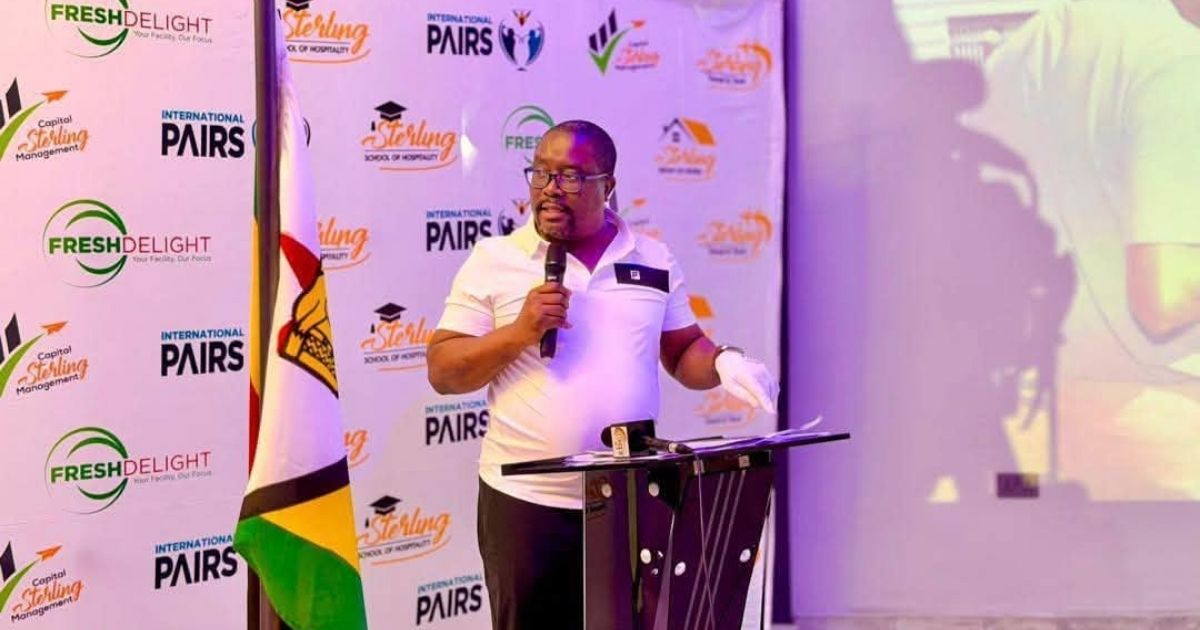
Tourism officials see the International Pairs competition as part of a broader effort to use sport to tell the Zimbabwe story.
Deputy Minister of Tourism and Hospitality Industry Tongai Mafidi Mnangagwa said sporting events could create platforms for presenting Zimbabwe to regional and international audiences, according to the ZTA.
That idea was also central to the launch of the 2026 tournament.
Tourism Minister Barbara Rwodzi previously challenged organisers to pursue a bid for Zimbabwe to host a future International Pairs World Final, arguing that bringing international golfers into the country would allow them to experience Zimbabwe’s attractions first-hand.
Such an event would represent a considerably bigger tourism opportunity than the national tournament.
International competitors would require accommodation, transport and hospitality services, while accompanying supporters could add further spending. The international audience would also give Zimbabwe an opportunity to promote its tourism brand through a major sporting platform.
The international test awaits

Zimbabwe’s national representatives will now carry the campaign onto the international stage.
The 2026 International Pairs World Final is scheduled for Tenerife, Spain, from 5 to 9 October, with Golf del Sur and Amarilla Golf hosting the competition.
For the players, it is a chance to compete internationally.
For Zimbabwe’s tourism industry, it is another opportunity to put the country into conversations beyond its borders.
The value of that exposure should not be underestimated. Tourism is highly competitive, and destinations increasingly have to find distinctive ways of attracting attention.
Sport provides one such platform because it brings together competition, entertainment, travel and human stories.
Beyond golf
The wider opportunity for Zimbabwe is to avoid making sports tourism synonymous with golf alone.
The country has a wide range of sporting activities that can potentially be linked to travel, including cricket, football, athletics, cycling, fishing, canoeing and adventure sports.
Each attracts a different audience.
A major cricket match can draw supporters from neighbouring countries. A cycling event can take competitors through rural landscapes. An adventure race can showcase Zimbabwe’s mountains and waterways.
That creates an opportunity to build sporting calendars around destinations rather than simply staging isolated events.
The strongest model would see a visitor come for the sport but stay for Zimbabwe.
Building a lasting sports tourism industry
There are challenges.
Major sporting events require reliable transport, quality accommodation, suitable facilities and coordinated marketing. Organisers also need to understand who is travelling, where they are staying and how much they are spending.
For Zimbabwe, the next stage should therefore be about turning successful tournaments into structured tourism products.
Golf tours could be combined with safaris and cultural visits. Cycling races could be packaged with accommodation and guided excursions. Major competitions could be promoted internationally as both sporting and tourism experiences.
That would give sports tourism a role in destination development rather than treating it simply as another category of events.
The International Pairs tournament offers a useful starting point.
Its nationwide qualifying campaign has connected golf clubs across Zimbabwe, while the national final has provided a platform for the country to promote itself through sport. The prospect of eventually bringing an international final to Zimbabwe could take that ambition further.
The message behind “Experience Zimbabwe – One Fairway at a Time” is therefore bigger than golf.
It is an argument for seeing sport as a route into the country itself — its cities, landscapes, hospitality, food, culture and attractions.
For Zimbabwe, the challenge now is to make sure that when visitors come for the game, they leave knowing there is much more to discover.