
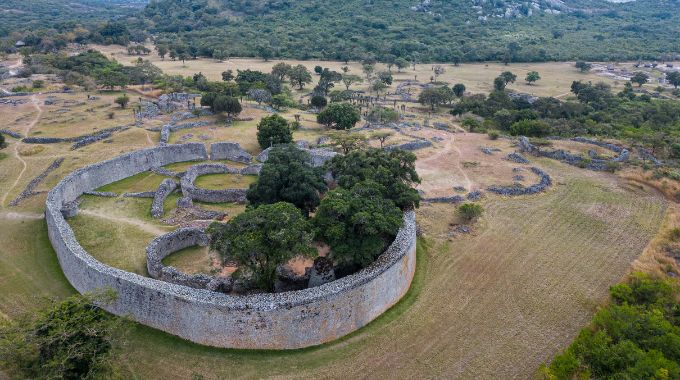
Set among the granite hills of Masvingo Province, the Great Zimbabwe Ruins stand as a breathtaking testament to the ingenuity of ancient African builders.
Constructed entirely without mortar, this vast stone city was once the thriving capital of a mighty kingdom that dominated the interior of southern Africa.
Recognised by UNESCO as a World Heritage Site, Great Zimbabwe is more than a historical attraction — it is a living symbol of national pride and identity.
For centuries, its dry-stone walls and majestic towers have inspired awe, curiosity, and cultural pride among Zimbabweans and visitors from around the world.
The History of Great Zimbabwe: From Powerful Kingdom to Enduring Symbol
Origins and Construction
The origins of Great Zimbabwe trace back to around 1100 CE, during a period of growing social and political complexity among Iron Age communities in Southern Africa.
Built by ancestors of the Shona people, the city evolved over a period of more than 300 years, reaching its peak between 1200 and 1450 CE.
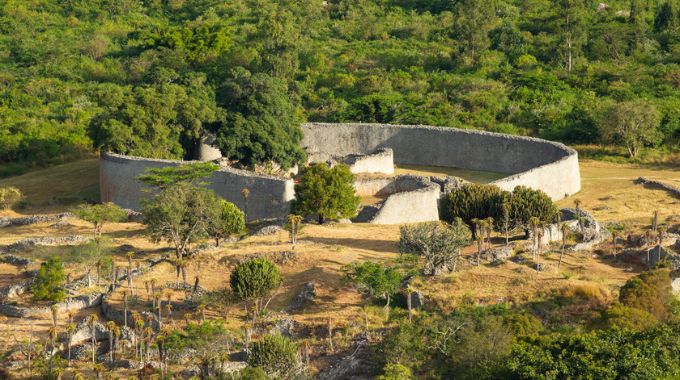
The builders used locally quarried granite, carefully shaping and stacking stones without mortar — a technique known as dry-stone masonry.
Each block was placed with precision to form walls that have survived for centuries, some towering up to 11 metres high and stretching over 250 metres long.
At its height, Great Zimbabwe was home to an estimated 15,000 to 20,000 people, making it one of the largest cities in pre-colonial sub-Saharan Africa.
A Centre of Trade and Power
Great Zimbabwe was not an isolated settlement. Archaeological evidence, including Chinese porcelain, Arabian glass beads, and Persian ceramics, indicates that the city was part of an extensive trade network spanning the Indian Ocean.
Gold and ivory from Zimbabwe’s interior were exchanged for luxury goods brought by Arab and Swahili traders at coastal ports such as Kilwa and Sofala.
These trade connections generated wealth and helped establish the rulers of Great Zimbabwe as powerful leaders.
The city became the political and religious heart of a powerful Shona kingdom, controlling vast areas of present-day Zimbabwe, Mozambique and parts of South Africa.
The Hill Complex: Seat of Royal Authority
The oldest part of the city, the Hill Complex, was built on a rocky granite outcrop overlooking the valley. This elevated position likely served both defensive and spiritual purposes.
Archaeologists believe it was the royal acropolis, housing the king and his inner court.
From here, the ruler could oversee his people and conduct important ceremonies.
The Hill Complex also contains ritual enclosures, passageways, and terraces that suggest it was a place of ancestral worship and governance.
Even today, the site holds sacred significance for local communities who view it as a connection to their forebears.
The Great Enclosure: A Monument of Grandeur
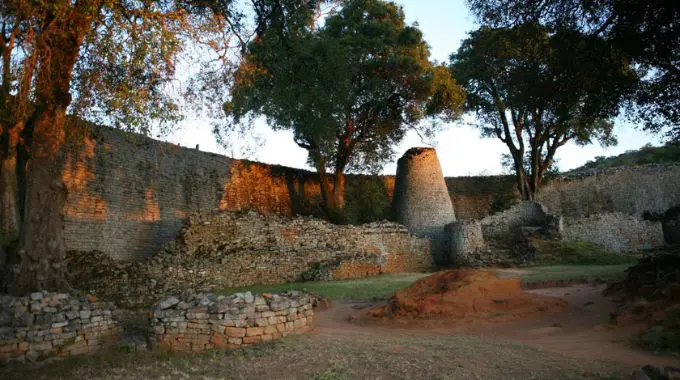
Constructed later, between 1200 and 1450 CE, the Great Enclosure stands as the largest ancient structure south of the Sahara. Its elliptical wall, built from thousands of interlocking granite blocks, encloses a space that may have been used for royal rituals or as a residence for the queen.
Within the enclosure stands the Conical Tower, a mysterious solid structure whose exact function remains debated. Some scholars interpret it as a symbol of fertility and abundance, while others see it as a granary or royal emblem of power. Whatever its purpose, the tower remains one of Africa’s most iconic ancient monuments.
The Valley Complex: Heart of the City
Spreading out below the Great Enclosure and the Hill Complex are the Valley Ruins, a cluster of stone-built homes, workshops, and enclosures.
Here lived the city’s artisans, traders, and ordinary citizens. Excavations have revealed iron-smelting furnaces, pottery, and tools, showing that Great Zimbabwe was a self-sustaining urban centre with specialised crafts and industries.
Decline and Legacy
By the late 15th century, Great Zimbabwe was gradually abandoned. The reasons are uncertain, but historians suggest that overgrazing, deforestation, and depletion of natural resources contributed to its decline.
Trade routes may have shifted toward the coast, giving rise to successor states such as the Mutapa Kingdom in northern Zimbabwe.
Despite its fall, the memory of Great Zimbabwe endured in oral traditions and became a symbol of African achievement.
When modern Zimbabwe gained independence in 1980, the nation adopted the site’s name and the iconic Zimbabwe Bird as national emblems — reclaiming the legacy of its ancient builders.
Architectural Mastery and Design
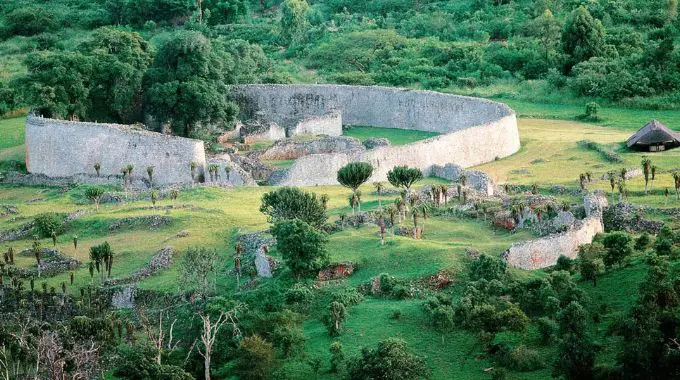
The engineering of Great Zimbabwe is remarkable for its precision and artistry. The builders used no binding material, yet created walls so strong that they have withstood centuries of weathering. Stones were carefully chosen, shaped, and stacked in a tapered pattern for stability.
The curved walls, narrow passages, and hidden doorways suggest not only functional design but also symbolic meaning, possibly representing hierarchy and separation of sacred spaces. This architectural genius is a defining feature of Shona culture and craftsmanship.
Visiting The Great Zimbabwe Ruins Today
Location and Access
The ruins are located about 30 kilometres southeast of Masvingo, a four-hour drive from Harare and roughly the same from Bulawayo.
The journey passes through scenic countryside, with well-marked signs leading to the site. Local taxis or guided tours from Masvingo can easily be arranged.
Opening Hours and Fees
Great Zimbabwe is open daily, generally from 8:00 a.m. to 5:00 p.m. Admission fees are affordable and payable in either Zimbabwean dollars or U.S. dollars. Licensed local guides are available and highly recommended, as they bring the site’s history vividly to life.
Visitor Facilities
The site includes a museum and interpretive centre, displaying artefacts such as pottery, iron tools, ornaments, and replicas of the soapstone birds. There are toilets, shaded areas, and small shops selling drinks, snacks, and local crafts. Photography is permitted throughout the site.
What to Bring
Wear comfortable walking shoes, as the site involves uneven paths and uphill climbs. Bring water, sunscreen, and a hat, especially during summer.
A camera or smartphone with a wide-angle lens is perfect for capturing the grandeur of the Great Enclosure and the Hill Complex views.
When to Visit Great Zimbabwe
The dry season (May to September) offers cool, pleasant weather, ideal for walking and photography.
During the rainy season (November to March), the landscape becomes lush and green, though trails can be slippery.
Early morning or late afternoon visits provide the best lighting for photos and a serene atmosphere.
Accommodation and Nearby Attractions
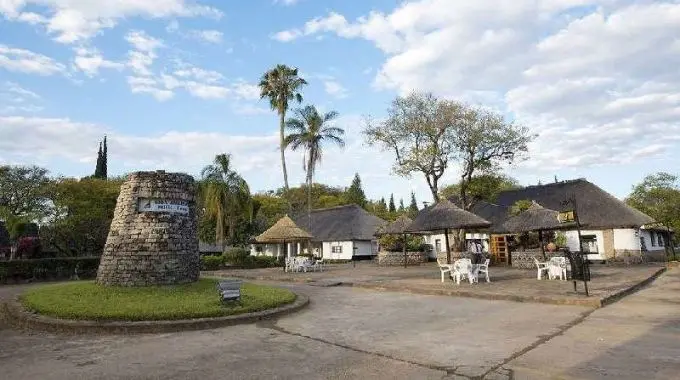
Visitors can stay at the Great Zimbabwe Hotel, located just a few minutes from the monument, or in Masvingo town, which offers a range of lodges, guesthouses, and budget options.
Nearby attractions include:
Lake Mutirikwi (formerly Lake Kyle): a vast reservoir perfect for boating, fishing, and picnics.
Lake Mutirikwi National Park: home to antelope, zebra, and giraffe, ideal for a short wildlife excursion.
Craft markets near the ruins: offering handmade stone carvings, soapstone sculptures, and beadwork.
For those exploring further, the Khami Ruins near Bulawayo and the Matobo Hills are excellent additions to a heritage tour of Zimbabwe.
Conservation Efforts and Modern Developments
In recent years, Great Zimbabwe has seen renewed investment in heritage conservation and infrastructure. Projects supported by UNESCO, the U.S. Embassy, and international partners have provided modern equipment, training for site managers, and restoration of damaged walls.
These initiatives ensure that Great Zimbabwe remains both a protected archaeological treasure and a vibrant cultural attraction. Efforts also focus on community involvement, providing employment and promoting sustainable tourism that benefits residents.
Responsible Tourism
Visitors are urged to respect the site’s sacred nature. Avoid climbing on fragile walls or removing stones, and refrain from littering.
Supporting local guides, craft vendors, and community-run lodges helps sustain the economy and preserve this historic wonder for future generations.
Why Great Zimbabwe Should Be on Every Traveller’s List
To walk among the Great Zimbabwe Ruins is to step back nearly a thousand years, into a world of innovation, trade, and royal splendour.
The city’s enduring walls, rising from the granite hills, speak of a civilisation that mastered architecture, governance, and spirituality long before European contact.
More than a historical site, Great Zimbabwe is a source of inspiration and identity — a place where Zimbabwe’s past, present, and future converge in stone and spirit.
For travellers seeking depth, history, and wonder, few destinations in Africa can compare.