
Hwange National Park: Wildlife, History & Travel Guide
On the sun-scorched plains of western Zimbabwe, not far from the roaring drama of Victoria Falls, lies one of Africa’s best-kept safari secrets, Hwange National Park.
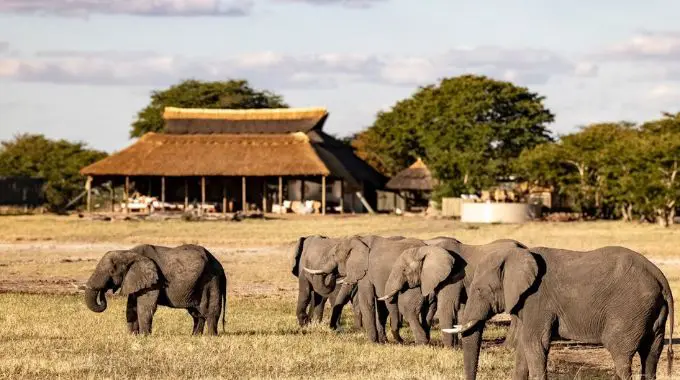
Vast, wild, and teeming with life, it is a place where elephants gather in their hundreds, lions stalk the savannah, and the rhythms of nature remain untouched by time.
Hwange is Zimbabwe’s largest and oldest game reserve, a sprawling sanctuary that stretches across nearly 15,000 square kilometres of mopane woodland, Kalahari sandveld, and open grassland.
More than just a destination, it is a story of resilience, of wildlife, ecosystems, and the people working tirelessly to protect them.
A Legacy of Conservation
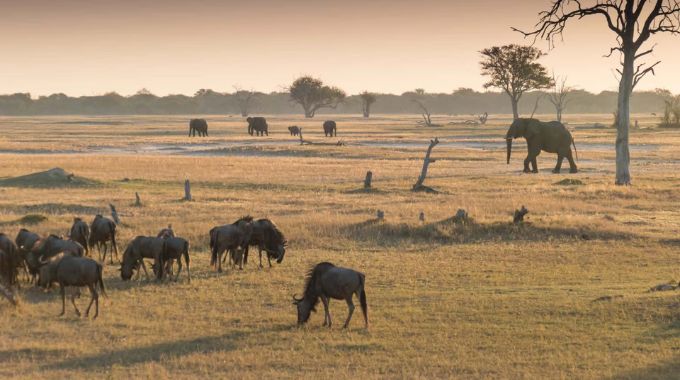
Originally known as Wankie Game Reserve, Hwange was proclaimed a national park in 1961, though its roots as a protected area stretch back to 1928.
It was the vision of conservationist Ted Davison, Hwange’s first warden, that transformed the region from an overhunted wilderness into a refuge for endangered species.
Long before colonial boundaries were drawn, this land was part of the territory ruled by Ndebele kings.
Its conversion into a game reserve was both a nod to its ecological importance and a recognition of its deep cultural roots.
Today, Hwange stands as a symbol of coexistence, where conservation efforts increasingly involve local communities, blending ancient traditions with modern environmental stewardship.
Wildlife Without Borders
Few parks on the continent match Hwange for sheer biodiversity.
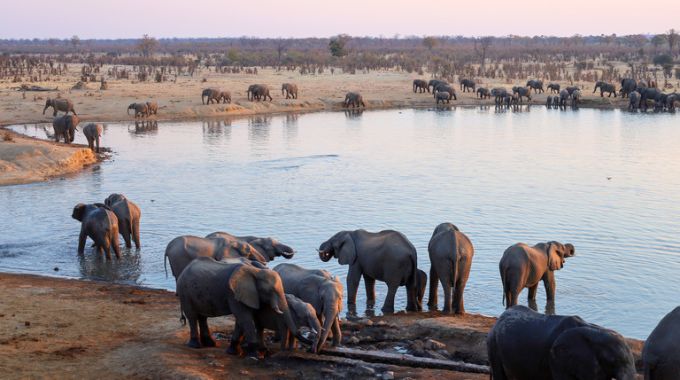
It is home to over 100 mammal species and more than 400 species of birds. Towering above all is the African elephant, boasting one of the largest elephant populations in Africa, with numbers estimated to exceed 45,000.
The park is also a stronghold for predators, including lions, leopards, cheetahs, hyenas, and the endangered African wild dog.
Hwange supports one of the continent’s larger surviving wild dog populations and hosts a Painted Dog Conservation Center focused on protecting them.
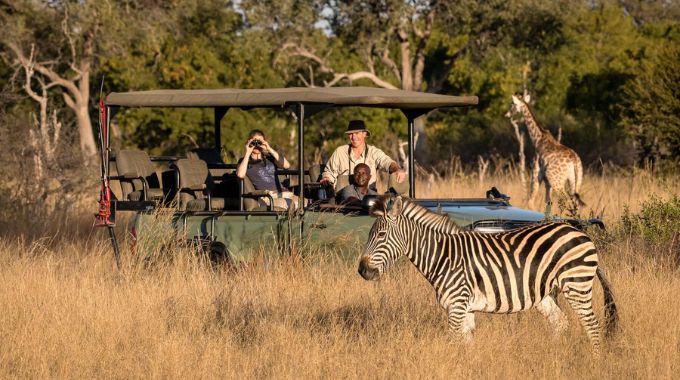
Herds of buffalo, zebra, giraffe, and antelope (sable, roan, kudu) dot the landscape, creating a dynamic ecosystem that enthrals both seasoned safari-goers and first-time visitors.
What makes Hwange remarkable is its artificial waterhole system. In the dry season, when natural pans vanish under the African sun, more than 60 pumped waterholes sustain wildlife across the park.
These oases attract dramatic congregations of game, especially in the early morning and late afternoon, offering unforgettable sightings.
A Safari for Every Traveller
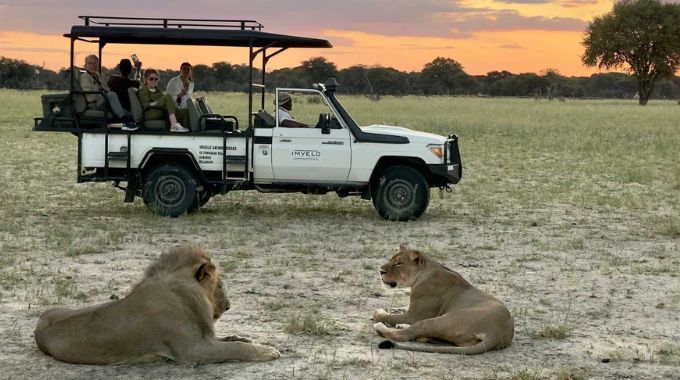
Whether you seek the quiet thrill of a walking safari or the classic adventure of a 4×4 game drive, Hwange caters to every type of explorer.
Guided drives, both day and night, provide the best chance of spotting big game, while self-drive options allow visitors to explore the park’s vast network of trails at their own pace.
Walking safaris, led by experienced rangers, reveal the quieter side of the bush, tracks in the sand, the call of a distant bird, or the silent movement of a herd grazing under thorn trees.
For photographers and birdwatchers, hides positioned near key waterholes offer unmatched opportunities to capture wildlife undisturbed.
Unlike more crowded parks in East Africa, Hwange offers a sense of solitude. A single game vehicle may go hours without encountering another, reinforcing the feeling that this corner of Zimbabwe is a world unto itself.
Conservation in Action
Despite its beauty, Hwange has faced its share of challenges, poaching, habitat loss, and climate change among them.
Yet it has also become a model for progressive conservation.
In October 2013, poachers carried out a devastating mass poisoning of waterholes, killing dozens of elephants and other animals, the largest illegal kill in the region in decades.
Collaborative efforts between the Zimbabwe Parks and Wildlife Management Authority, international NGOs, and grassroots initiatives have improved anti-poaching surveillance and rewilding strategies.
Projects like the Presidential Elephant Conservation initiative and Painted Dog Conservation help protect iconic species and engage local communities through education and employment.
Ecotourism and lodging operators also play a crucial role. Many safari camps and lodges in and around Hwange invest their revenues back into conservation and local development. A flagship example is the Imvelo Safari Lodges program. Imvelo lodges have funded 18 wildlife borehole pumps and 80 community wells. These waterpoints sustain both animals and villagers alike, drastically reducing water stress.
Hwange also forms part of the Kavango-Zambezi Transfrontier Conservation Area (KAZA TFCA), the world’s largest cross-border nature reserve.
This allows wildlife to move freely between Zimbabwe, Botswana, Namibia, Angola and Zambia, supporting genetic diversity and migration patterns critical to long-term survival.
Planning Your Visit to Hwange National Park
Getting There
Hwange is easily accessible by road, approximately two hours from Victoria Falls along a tarred highway. It is also accessible from Bulawayo.
The drive is straightforward in dry weather but a 4×4 vehicle is recommended if you plan to continue deeper into the park or travel in the rainy season, when sandy roads can become treacherous.
Most travelers fly into Victoria Falls International Airport and then take a shuttle or rental car south to Hwange. Transfer services and guided tours can be arranged from either Victoria Falls or Bulawayo.
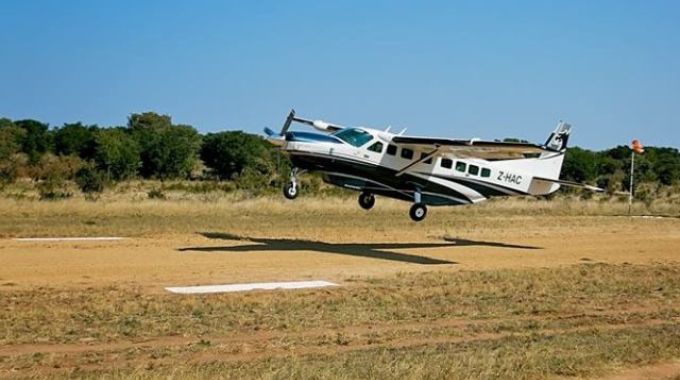
For those flying in, chartered bush flights are available to airstrips within the park. Transfers can be arranged by most lodges and safari operators.
Best Time to Visit
The prime wildlife-watching season in Hwange is the dry winter from July through October. As the rivers and pans shrink, animals crowd around remaining waterholes, and the thinning foliage makes game easier to spot. Days are sunny and warm (though mornings can be quite cold). This period is also high season (June–October) with the best game-viewing, so accommodations may book up well in advance.
By contrast, the summer rainy season (November–March) turns Hwange lush and green. Many migrant birds arrive, and newborn impala, zebra and other wildlife are common.
However, heavy rains often make some dirt roads difficult or impassable. Park busyness drops and lodge rates may be lower, but note that many camps shut down in the peak rains (January–March).
Birders who relish the wetlands might enjoy the rainy months, but most photographers and big-game hunters prefer the drier months.
Entry Fees
As of 2025, international visitors pay US$20 per person per day to enter the park.
Regional SADC visitors are charged US$10, while local Zimbabweans pay the equivalent of US$5.
Vehicle entry and accommodation fees are charged separately.
Where to Stay At Hwange National Park
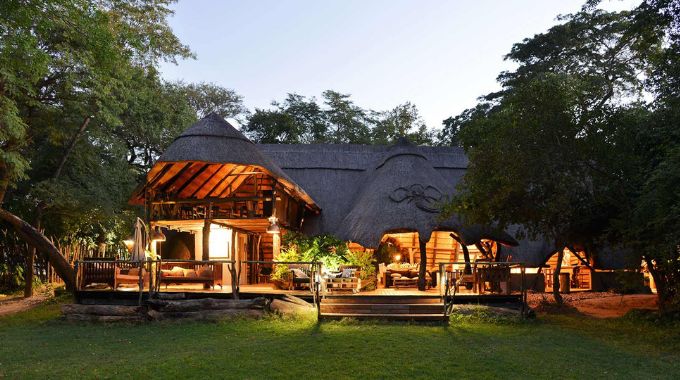
Hwange National Park offers a wide range of accommodation to suit every budget and travel style.
The Main Camp and Sinamatella Camp (inside the park) are government-run facilities with basic chalets and campsites. Main Camp has self-catering huts and a communal kitchen, plus shady camping sites (standards are simple but functional).This is also where the park warden’s office and Main Gate are located.
Most guests stay at private safari lodges on park concessions. These range from luxury tented camps and lodges with full service to smaller mid-range camps. Examples include Camelthorn, Camelot, Little Makalolo, and Chronicals Lodges, among others (on-park or just outside the boundary)
A network of campsites and budget camps is available for frugal travelers. In addition to Main Camp camping, there are well-equipped public campsites (with showers, toilets and braai stands) at camps like Kapula Camp and Sinamatella. Robin’s Camp is a popular rustic campground-lodge hybrid. These budget options allow self-drive and camping safaris at lower costs.
High-end camps like Hwange Safari Lodge and Changa Safari Camp offer all-inclusive safari packages with en-suite tents or lodges, gourmet meals, and guided game drives. Many of these are on the park edge or in private concessions contiguous with Hwange. They often include activities like night drives and walking safaris.
Travel Tips and Safety Advice
General Safety: Hwange National Park is generally safe for tourists, especially on organized tours. Practice standard wildlife safety, such as staying in vehicles unless in designated picnic or viewing areas, following ranger and guide instructions, keeping a safe distance from animals, and never feeding wildlife. Avoid night driving on your own.
Health & Malaria: Hwange lies in a malaria zone. Take prophylactic anti-malarial medication and use insect repellent (DEET) and long sleeves/ pants in the evenings. Drink bottled or purified water. Vaccinations (e.g. tetanus, yellow fever) may be recommended; consult a travel clinic.
Wildlife Etiquette: The park is a habitat, not a zoo. Keep noise low and windows partly open for unobstructed viewing. In camps, lock food away and remove leftovers to avoid attracting baboons or hyenas. Follow any posted rules (no walking after dark, etc.).
Other Tips: Prepare for remote travel: cellphone signal is limited in the park. Bring extra cash (USD) for fees, tips, and park souvenirs. Fuel up before entering (fuel is only at park gates). Let someone know your itinerary if going on a self-drive. Finally, pack binoculars and a camera to capture Hwange’s wildlife spectacle.
The Heartbeat of the Wild
In Hwange National Park, time slows to the pace of the wild. Dust swirls on distant horizons. A lion’s roar echoes across the plains. Elephants emerge from the brush like ghosts of ancient Africa. Every encounter is unscripted. Every moment, a reminder of nature’s enduring majesty.
This is not just Zimbabwe’s greatest park, it is one of Africa’s great untamed treasures.
Whether you come in search of wildlife, silence, or something you can’t quite name, Hwange National Park will leave its mark long after the dust has settled on your boots.