
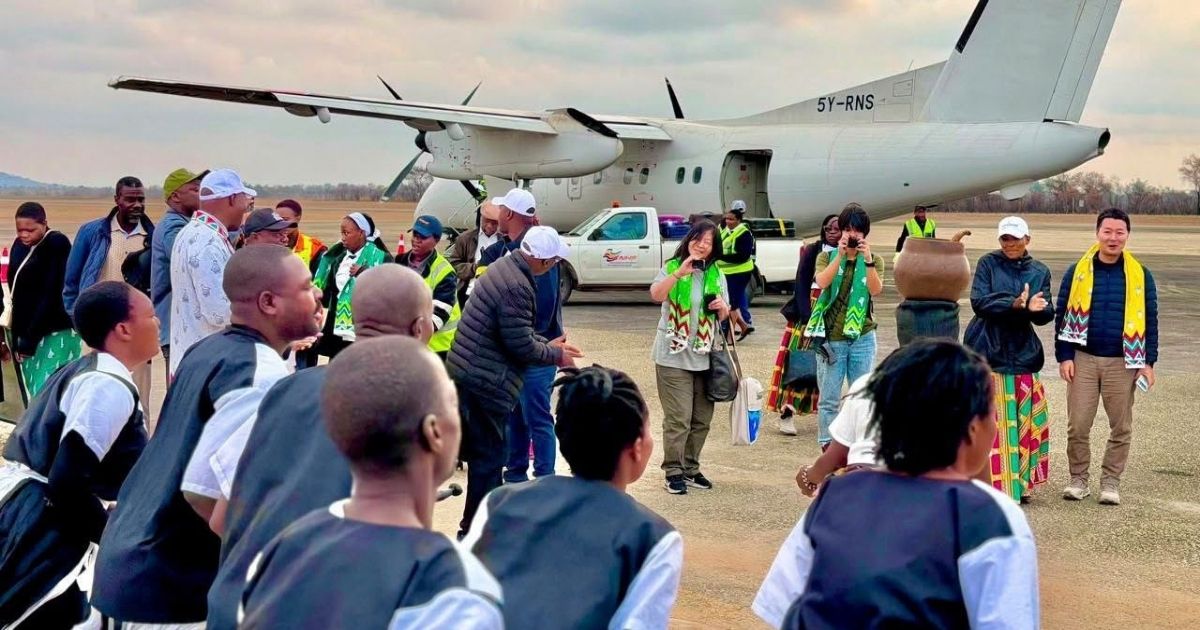
A delegation of tourism buyers from Japan has landed at Masvingo Airport, arriving ahead of the Sanganai/Hlanganani World Tourism Expo 2026, which opens in the city on 9 September.
Their arrival is more than a courtesy visit. It puts Zimbabwe’s tourism products directly in front of trade players with the power to decide where Japanese holidaymakers spend their money.
Global interest in Destination Zimbabwe has been building for months, and the Japanese contingent is one of dozens of international delegations converging on the ancient city this week, drawn by an expo that has grown far beyond its origins as a regional trade fair.
A source market worth cultivating
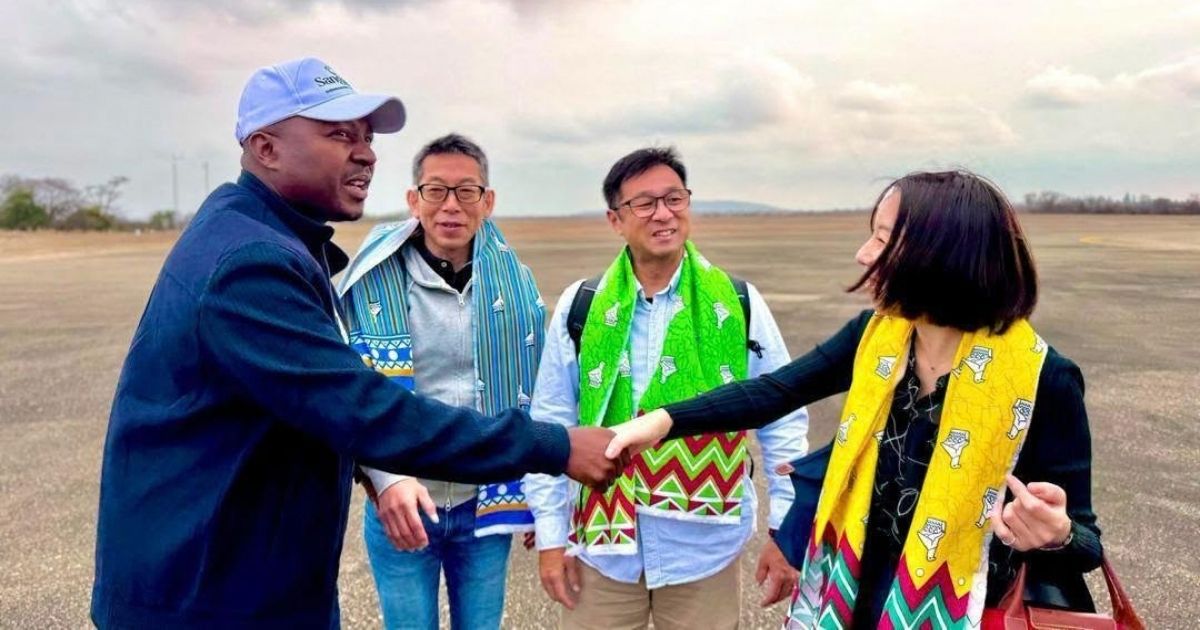
Over the coming days, the Japanese buyers will tour Masvingo’s attractions, meet local tour operators face to face, and assess which experiences can realistically be packaged and sold back home.
That, organisers say, is where the expo earns its keep. Turning a stone monument or a game drive into a bookable product on a Tokyo travel agent’s shelf takes more than a good photograph.
It requires buyers who trust what they have seen and sellers who understand what an overseas market wants.
It is this business-to-business exchange, rather than the exhibition stands themselves, that officials point to as the real measure of success, converting a showcase in Masvingo into confirmed itineraries in source markets thousands of kilometres away.
What Sanganai/Hlanganani actually is
Sanganai/Hlanganani, organised annually by the Zimbabwe Tourism Authority, is Zimbabwe’s flagship international tourism trade fair.
The name reflects the country’s linguistic diversity: Sanganai/Hlanganani means “meet together” in Shona and Ndebele, and this year’s edition carries the added title Dzimbahwe, a reference to the stone-built heritage for which the country is named.
The event began in Bulawayo in 2008 and has since grown into the continent’s most prominent tourism and investment platform, drawing exhibitors, hoteliers, tour operators, airlines and destination marketers from across Africa and beyond.
Government has since moved the expo away from its old base in Harare and Bulawayo, rotating it through the provinces as part of a wider devolution drive. Mutare hosted the 2025 edition. This year, for the first time in its 19-year history, Masvingo takes the stage.
Masvingo’s moment
Handing the expo to Masvingo is a deliberate choice. The province is home to Great Zimbabwe, the UNESCO World Heritage Site of dry-stone walls built between the 11th and 15th centuries.
Organisers have built this year’s theme, Dzimbahwe, around that attraction. But the ambition extends further than the monument that gives the country its name.
Buyers arriving this week have been dispersed across the wider province rather than concentrated in the city centre, with delegations sent to Chiredzi, Tugwi-Mukosi, Bikita and Zaka.
Tourism and Hospitality Industry Minister Barbara Rwodzi said the aim was to ensure visitors return home able to sell Masvingo Province as a whole, not just its best-known landmark.
Attractions earmarked for promotion include Gonarezhou National Park, Lake Mutirikwi and the Tugwi-Mukosi Dam, giving the province a heritage, wildlife and adventure-tourism offering to sit alongside its ancient stone walls.
Record numbers on the ground
Organisers had confirmed 133 international buyers ahead of the expo, a 49.4 percent jump on the 89 who attended in Mutare last year.
By the time delegations began landing this week, arrivals had already passed that figure, with more than 140 buyers registered from Japan, China, India, the United States, the United Arab Emirates, France, Germany, Spain, Singapore, the United Kingdom, South Africa and other African markets.
Exhibitor numbers have kept pace. A total of 392 exhibitors had registered against a target of 400, with nine countries taking exhibition space, among them South Africa, Botswana, Namibia, Zambia, Rwanda, Ghana and Indonesia.
Provincial authorities say Masvingo recorded more than 50,000 visitors in 2025 and now has over 900 hotel rooms available across the city and its surrounds to absorb the expected influx.
Getting to Masvingo
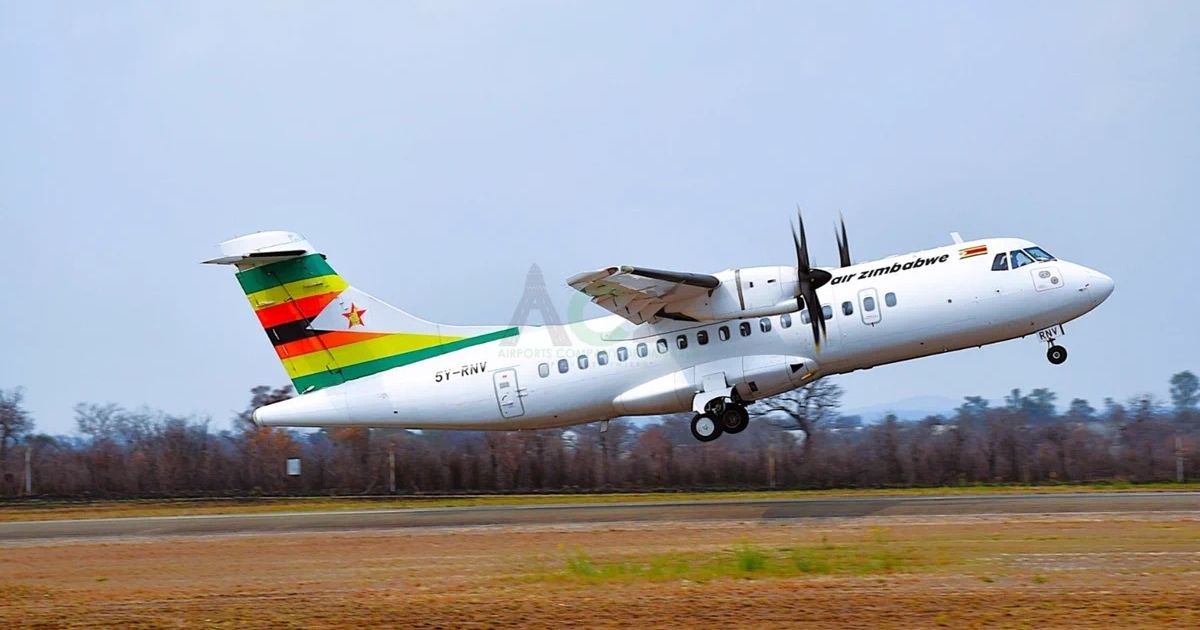
Access has long been Masvingo’s weak point, with the city more reliant on road travel than scheduled flights.
That has changed ahead of the expo.
Masvingo Airport has been upgraded with new arrival and departure wings and an extended runway, while national carrier Air Zimbabwe has launched direct flights connecting Harare to Masvingo, cutting a five-hour drive to around 45 minutes.
Return fares on the route are priced at US$175, with a service linking Masvingo to Victoria Falls also introduced.
A parallel route to Chiredzi began operating from 5 September, opening up the Lowveld’s safari country to buyers already in the province for the expo.
Four days, three phases

The expo runs from 9 to 12 September at the Gymkhana Events and Conference Centre, just outside the city on the Masvingo–Bulawayo highway, and is structured in stages.
Conference sessions run on 9 and 10 September, business-to-business meetings between exhibitors and buyers follow on 10 and 11 September, and a public day is expected to draw large crowds of local visitors before the event closes.
President Emmerson Mnangagwa was due to officially open proceedings, with Minister Rwodzi, her deputy Tongai Mnangagwa, Permanent Secretary Dr Takaruza Munyanyiwa and Zimbabwe Tourism Authority chief executive Dr George Manyaya among the officials leading the government delegation.
The expo itself was preceded by more than a week of build-up designed to draw attention to the host city, including a sports tourism programme from 1 to 4 September, a street carnival and children’s entertainment on 5 September, and a gastronomy and music carnival celebrating traditional Zimbabwean cuisine and mbira music.
Turning interest into arrivals
None of this activity is happening in isolation. Zimbabwe has spent recent months courting outbound markets directly, including a destination presentation in Manchester in June that introduced 45 UK travel trade representatives to the country’s offering, held alongside Ethiopian Airlines’ 80th anniversary celebrations.
Officials describe such events as groundwork for the kind of buyer visits now underway in Masvingo.
For a province long defined by a single, if extraordinary, historical site, the test now is whether this week’s buyers, Japanese and otherwise, leave with more than photographs.
If Masvingo’s wider attractions make it onto itineraries in Tokyo, Berlin and beyond, the expo will have done what it set out to do: move Destination Zimbabwe from a stand in a conference hall onto the travel shelves of the world.