
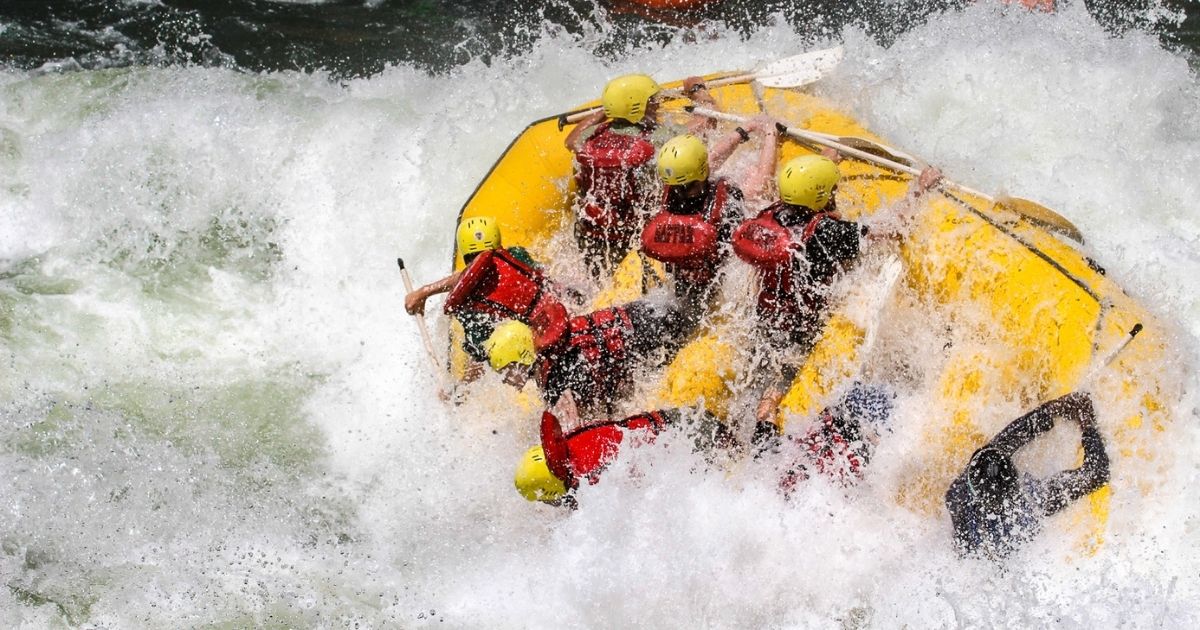
White water rafting the Zambezi
Below Victoria Falls, where the spray has barely settled and the roar of the falls still rings in your ears, the Zambezi River funnels into a basalt gorge and turns into something else entirely.
The wide, languid river that idles past Livingstone and Victoria Falls town above the falls becomes, for the next 24 kilometres, one of the most ferocious stretches of navigable white water on earth.
This is the Batoka Gorge, and running it by raft is widely regarded, by rafting guides and adventure travellers alike, as the single best one-day white water trip in the world.
It is not a gentle introduction to the sport.
The Zambezi is a high-volume river with few exposed rocks, which means its rapids form not as boulder-strewn obstacle courses but as enormous standing waves, holes and hydraulics that can flip a raft in an instant.
Riders drop into rapids with names that do not pretend otherwise, among them the Overland Truck Eater, Gnashing Jaws of Death and the Washing Machine.
For anyone who has wondered what it actually feels like to be inside a wave the size of a house, this is where you find out.
A gorge carved by water, run by raft
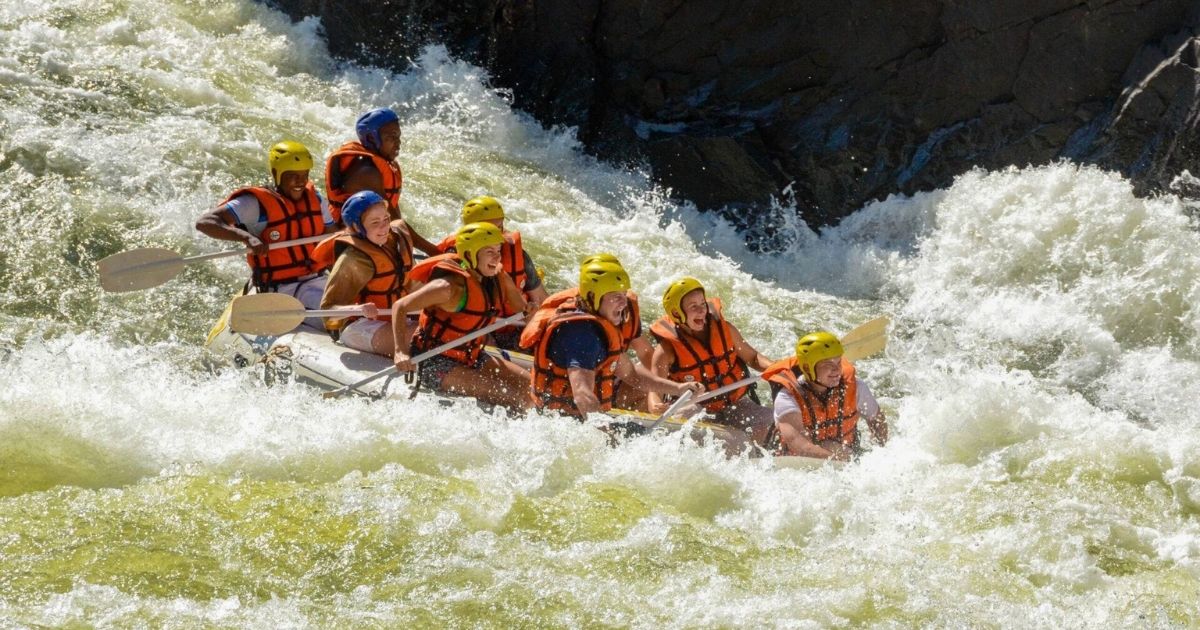
The Batoka Gorge was first paddled commercially in the early 1980s, and the industry that grew up around it, on both the Zimbabwean and Zambian banks, has since made this stretch of river one of southern Africa’s signature adventure experiences.
Trips typically begin near the Boiling Pot, a churning pool directly beneath the falls where the river doubles back on itself before surging downstream, and continue through a sequence of numbered rapids that carry rafters deep into a canyon whose sheer, dark walls climb well over a hundred metres on either side.
The rapids are graded on the international white water scale, and several on the Zambezi reach grade five, the highest classification considered commercially raftable.
Between the rapids, though, the character of the trip changes entirely. Long, flat pools open up beneath the cliffs, giving paddlers a chance to catch their breath, look up at fish eagles riding the thermals above the gorge, and take in scenery that few visitors to Victoria Falls ever see from this angle.
What a day on the river actually involves
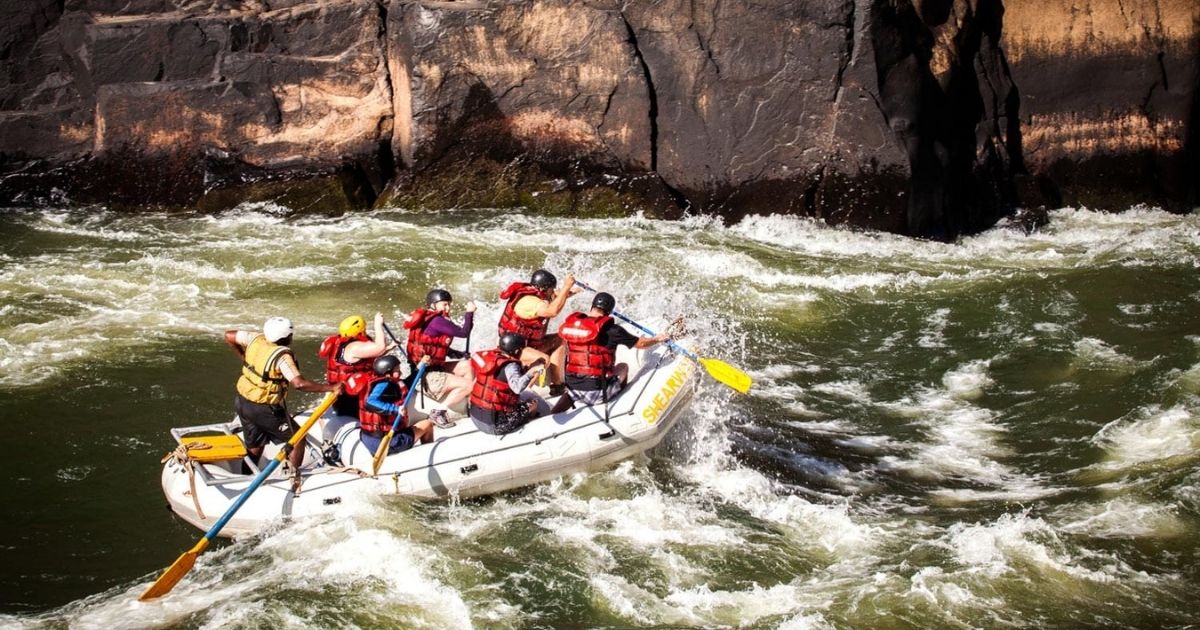
Most operators run trips from both the Zimbabwean side, out of Victoria Falls town, and the Zambian side, out of Livingstone, with the river itself forming the border between the two countries for this stretch.
A typical day begins early with a hotel pick-up, a safety briefing, and a steep, often slippery descent into the gorge, which can take the best part of an hour on foot.
This is worth planning for. The climb back out at the end of the day, after hours of paddling in the sun, is the part of the experience that catches the most people off guard, and it demands a reasonable level of fitness rather than any particular rafting skill.
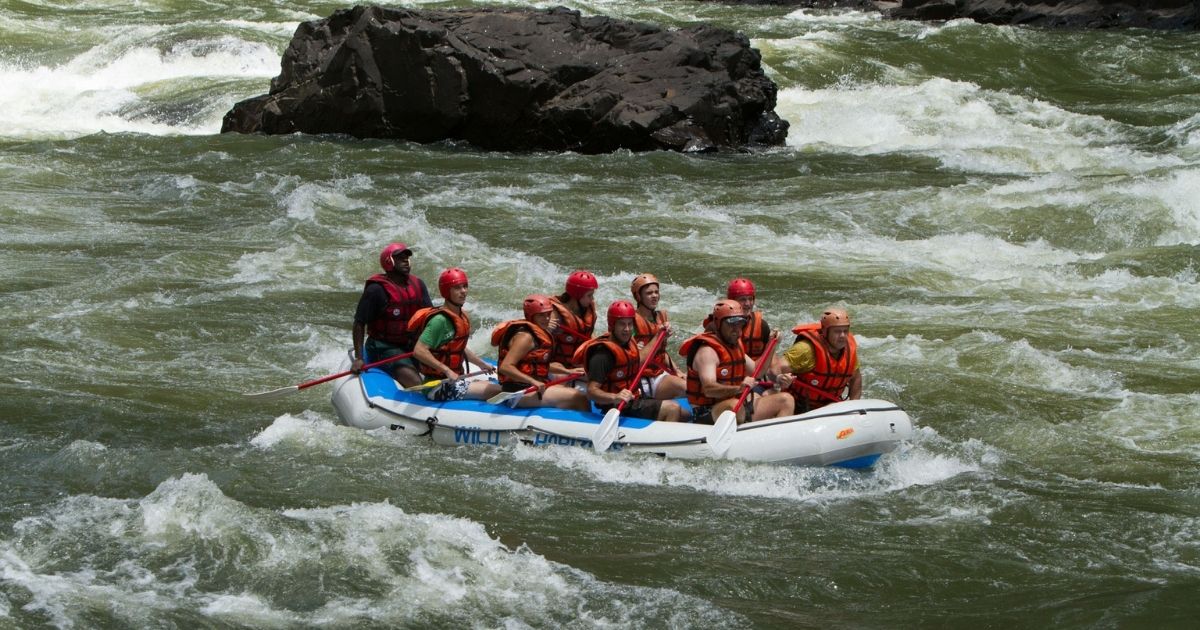
Once on the water, guests are split into rafts of six to eight paddlers with a qualified guide steering from the back, supported by safety kayakers who shadow the group through the more serious rapids.
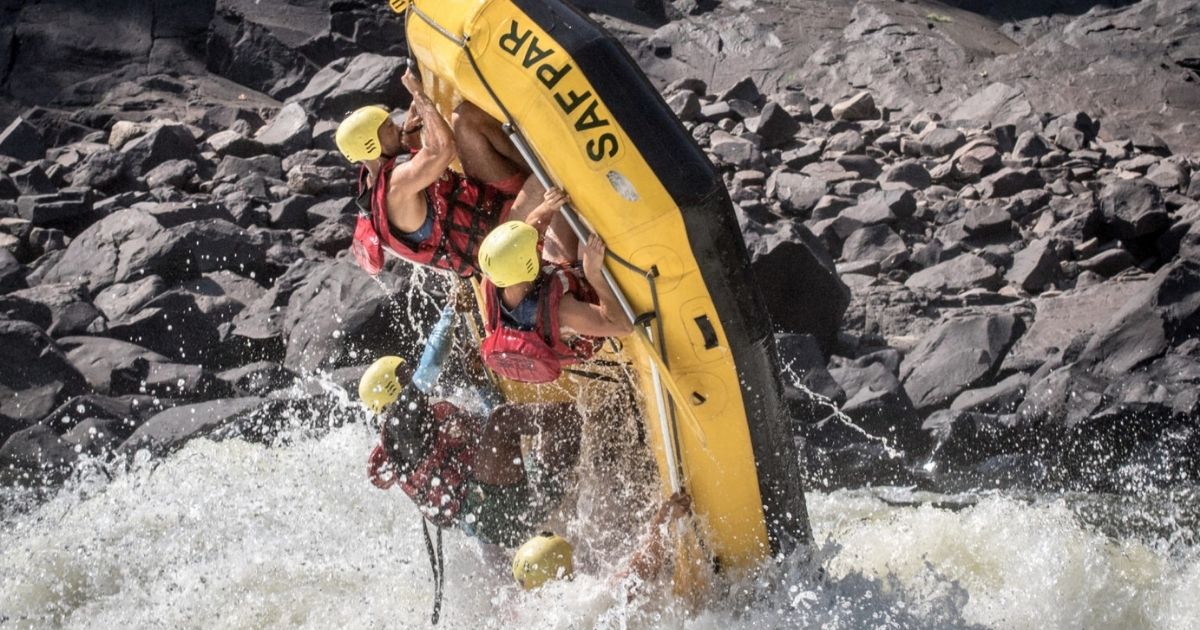
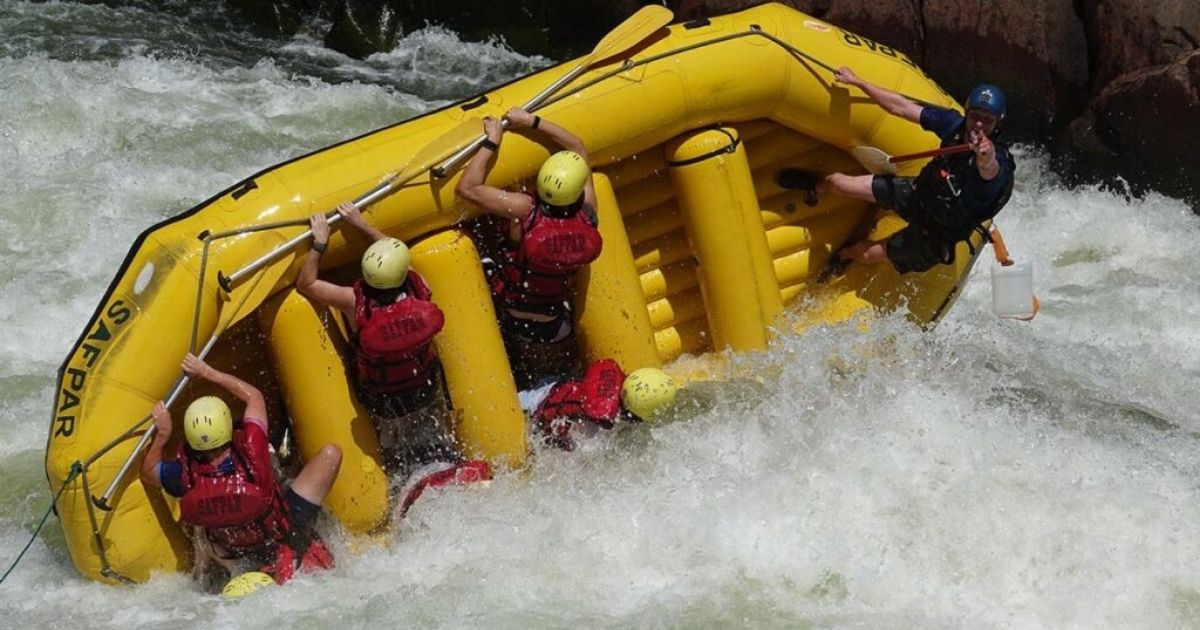
Flipping is common, expected, and treated by most guides as part of the fun rather than a mishap to be avoided at all costs.
Lunch is usually taken partway through the day at a beach or a lookout point within the gorge, and the trip ends with that climb out, followed by cold drinks and, on many trips, a slideshow of the day’s photographs back at base.
When to go: understanding the two seasons
The character of the rafting changes dramatically depending on when in the year you go, because the Zambezi is a rain-fed river and its volume swings enormously between seasons.
Low water season, roughly August through to December, is when the river drops and the rapids become sharper, more technical and more explosive. This is the classic Zambezi experience, the one that appears in most of the adrenaline-fuelled footage associated with the trip, and it is generally regarded as the more thrilling and more physically demanding of the two.
High water season, from around January through to July, brings the rains and a much larger volume of water down the gorge. Some of the technical rapids wash out into big, powerful waves rather than distinct drops, and the trip typically launches further downstream, skipping the uppermost rapids altogether. During the peak of the flood, usually April and May, water levels can become too dangerous or simply too high to run at all, and operators may suspend trips entirely until levels drop. Anyone planning a visit during these months should check directly with operators before finalising a trip, as conditions can shift from one week to the next.
There is no single “correct” time to raft the Zambezi. Low water suits those chasing the sharpest, most technical white water. High water suits those who want big, forgiving waves and a slightly less punishing scramble in and out of the gorge.
Grading, fitness and who should go
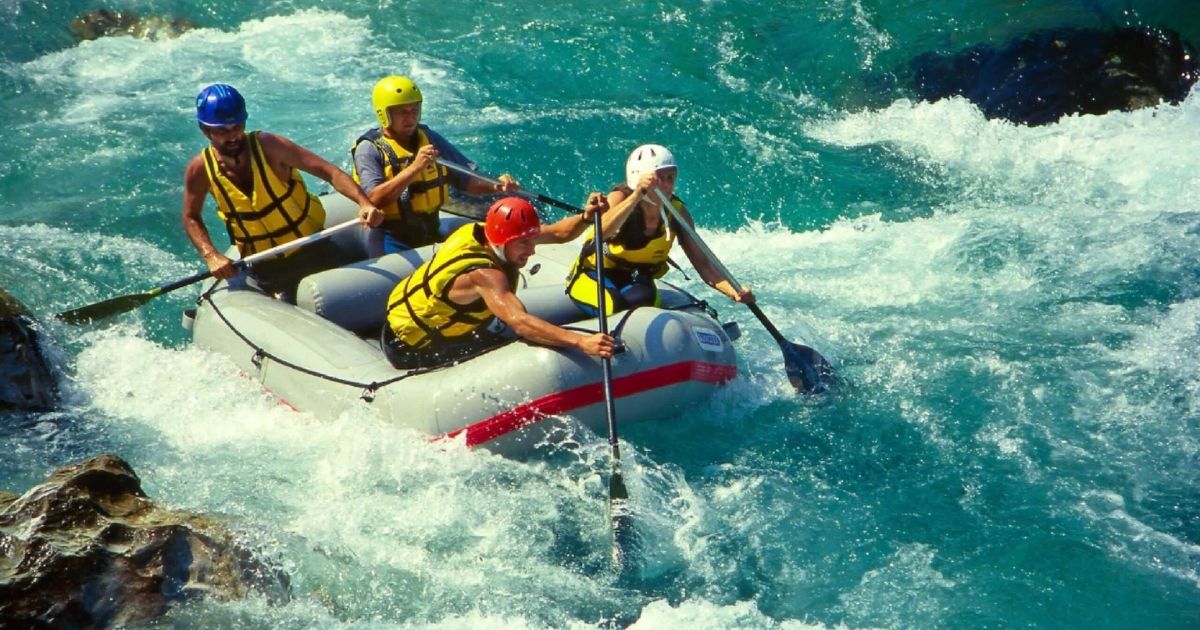
This is not an activity to take lightly. Guests generally need to be reasonably fit, confident in water, and free of back, neck or heart conditions, and most operators set a minimum age of around fifteen for the full grade five day trip.
Families travelling with younger children are not entirely excluded, however. Several operators run gentler, family-friendly trips on calmer stretches of the river, suitable for children from around seven or eight years old, that offer a taste of the Zambezi without the grade five drops.
Life jackets and helmets are provided and compulsory, and safety briefings cover exactly what to do if thrown from the raft, which, on a river this size, happens to almost everyone at some point during the day.
Choosing an operator
Rafting on the Zambezi is run by a handful of established operators on each side of the border, including Wild Horizons, Shearwater and Shockwave Adventures on the Zimbabwean side, and Safari Par Excellence and Bundu Adventures on the Zambian side, among others.
Most offer half-day, full-day and multi-day options, with prices generally including transfers, equipment, a guide, safety support and lunch.
It is worth confirming in advance whether park entry fees are included in the quoted price or are payable separately in cash, as this varies by operator and can catch first-time visitors out.
Multi-day rafting and camping trips, which continue further downstream through more remote sections of the gorge, are also available through several operators, typically during the low water months, for those who want more than a single day on the river.
Practical planning notes
Pack light, quick-drying clothing rather than anything heavy like denim, and expect to spend most of the day in direct sun, so sunscreen, a hat and a long-sleeved top are worth having even if the water feels cold.
Closed shoes or rafting sandals are strongly recommended for the hike in and out of the gorge.
Most operators provide a dry bag for personal items and a change of clothes waiting at the end point, though valuables such as phones and cameras are best left at your hotel or entrusted to the operator’s own photographer, who will usually sell footage of the day afterwards.
Travellers based in Victoria Falls town or Livingstone can generally book directly through their hotel or lodge, and cross-border pick-ups between the two towns are common, particularly given that the KAZA UniVisa allows straightforward movement between Zimbabwe and Zambia for this purpose.
Looking beyond the rapids
The Batoka Gorge is not only a rafting venue. It is also at the centre of a long-running and unresolved proposal to build a hydroelectric dam roughly 50 kilometres downstream of the falls, a scheme that has been delayed repeatedly for decades over funding and environmental concerns.
Should it ever proceed, it would flood the entire commercial rafting section of the gorge. For now, the river runs free, and the rafting industry along with it, but it is a reminder, for those inclined to think about it mid-paddle, that this stretch of the Zambezi will not necessarily look like this forever.
Quick Facts: White Water Rafting the Zambezi
- Location: Batoka Gorge, below Victoria Falls, on the Zimbabwe–Zambia border
- Rapids: Up to grade five on the international white water scale
- Low water season: Roughly August to December (most technical rapids)
- High water season: Roughly January to July (often closed April–May at peak flood)
- Minimum age: Around 15 for full grade five trips; family trips available from age 7–8
- Trip lengths: Half-day, full-day and multi-day camping options
- Starting point: Near the Boiling Pot, directly below Victoria Falls
- Fitness required: Moderate to high, particularly for the climb out of the gorge
Frequently Asked Questions
Is white water rafting the Zambezi safe?
It carries genuine risk, as with any grade five white water activity, but reputable operators use certified guides, safety kayakers and full safety equipment, and serious incidents are rare relative to the volume of trips run each year.
Which side is better to raft from, Zimbabwe or Zambia?
Both sides access the same river and largely the same rapids, so the choice usually comes down to where you are staying rather than any real difference in the experience itself.
Do I need rafting experience to do this?
No prior experience is needed. Guides handle steering and strategy, and paddlers are briefed thoroughly before setting off.
What is the best month to raft the Zambezi?
For the most technical, high-adrenaline rapids, aim for the low water months between August and December. For bigger, wave-heavy water, the early high water months of January to March tend to work well.
How physically demanding is it?
The paddling itself is manageable for most reasonably fit adults, but the hike into and out of the gorge, particularly the climb out at the end of the day, is genuinely strenuous.