

UN Tourism Ministers’ Summit
The future of global tourism is being shaped by emerging destinations — and Zimbabwe is making clear it intends to lead from the front.
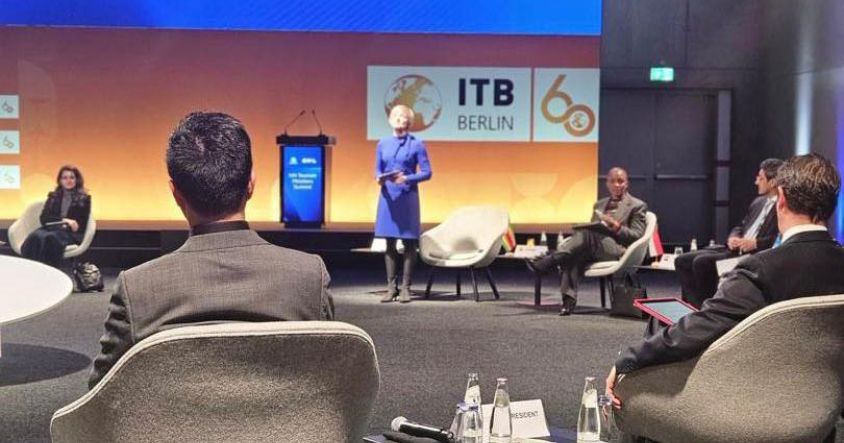
Ahead of the official opening of ITB Berlin, tourism ministers from around the world gathered for the UN Tourism Ministers’ Summit under the theme “Empowering Emerging Destinations: From Potential to Performance.”
The high-level meeting was hosted by the UN Tourism Secretary-General, Ms Shaikha Al Nowais, and focused on unlocking growth in developing markets.
Representing Zimbabwe, the Minister of Tourism and Hospitality Industry, Hon Barbara Rwodzi, outlined Africa’s growing influence in the global travel sector — and Zimbabwe’s own upward trajectory.
Africa’s Tourism Surge

Minister Rwodzi told delegates that Africa recorded 80 million international arrivals in 2025, generating US$55 billion in receipts — figures that underscore the continent’s steady recovery and expansion.
Zimbabwe, she said, mirrored that momentum.
The country recorded 1,777,569 international arrivals, marking a 10% increase. The growth, she noted, has been driven by renewed destination confidence, strategic infrastructure upgrades and targeted tourism development strategies.
In particular, Zimbabwe has invested in strengthening its brand as a safe, authentic and culturally rich destination — a move officials say is restoring trust among global travellers.
Heritage-Based Tourism and Community Empowerment
At the centre of Zimbabwe’s strategy is heritage-based tourism — an approach that places local culture, history and community participation at the heart of the visitor experience.
Minister Rwodzi highlighted gastronomy tourism as one of the country’s emerging strengths. By promoting Zimbabwean cuisine, culinary traditions and local food value chains, communities are directly benefiting from tourism revenues.
The model, she said, is not only about attracting visitors but about ensuring inclusive growth, job creation and grassroots empowerment.
This approach aligns with Zimbabwe’s Vision 2030 agenda, which seeks to transform the country into an upper-middle-income economy through sustainable development across key sectors, including tourism.
Regional Cooperation Through KAZA
Regional collaboration also featured prominently in Zimbabwe’s address.
The Minister emphasised the importance of the Kavango Zambezi Transfrontier Conservation Area (KAZA) — one of the world’s largest conservation areas, spanning five Southern African countries.
KAZA allows tourists to experience shared ecosystems, wildlife corridors and cross-border travel, strengthening Southern Africa’s appeal as a unified destination.
Zimbabwe’s iconic Victoria Falls, one of the Seven Natural Wonders of the World, remains a central anchor within this regional tourism ecosystem. Officials believe that greater inter- and intra-regional connectivity — including improved air links and streamlined travel processes — will unlock even greater value from such cross-border initiatives.
Innovation and Skills Development
Beyond visitor numbers, Zimbabwe’s tourism strategy focuses on long-term sustainability.
Minister Rwodzi identified innovation, skills development, clear policy frameworks and strong government–stakeholder collaboration as critical enablers for success.
Digital transformation, youth participation and public-private partnerships are being positioned as drivers of resilience in a competitive global market.
As emerging destinations seek to convert potential into measurable performance, Zimbabwe’s message at the summit was one of confidence.
From Potential to Performance
The UN Tourism Ministers’ Summit provided a platform for nations to share strategies on turning natural assets into economic engines.
Zimbabwe’s contribution centred on sustainable growth — ensuring that tourism expansion does not come at the cost of heritage, environment or community wellbeing.
With steady growth figures, expanding regional partnerships, and a renewed global presence at platforms such as ITB Berlin, Zimbabwe is seeking to position itself not merely as a recovering destination but as a model for emerging markets.
As global tourism evolves, the message from Berlin was clear: emerging destinations are no longer waiting on the sidelines. Zimbabwe, officials say, is ready to help write the next chapter.